
Arid Zone Research ›› 2025, Vol. 42 ›› Issue (8): 1463-1472.doi: 10.13866/j.azr.2025.08.10
• Plant Ecology • Previous Articles Next Articles
SHI Xiujuan( ), LI Weiwei, ZHAO Ruiming()
Received:2025-04-17
Revised:2025-06-27
Online:2025-08-15
Published:2025-11-24
SHI Xiujuan, LI Weiwei, ZHAO Ruiming. Differences in the nutrient and microbial diversity of rhizosphere soil between wild and cultivated Lycium ruthenicum[J].Arid Zone Research, 2025, 42(8): 1463-1472.
Add to citation manager EndNote|Reference Manager|ProCite|BibTeX|RefWorks
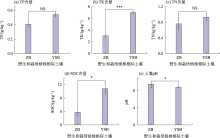
Fig. 1
Rhizosphere soil factors in wild vs. cultivated Lycium ruthenicum"

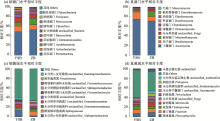
Fig. 2
Relative abundance of dominant bacterial and fungal taxa at phylum and genus levels in rhizosphere soil of wild vs. cultivated Lycium ruthenicum"

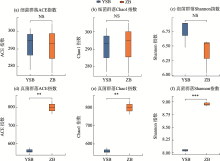
Fig. 3
Analysis of α-diversity in rhizosphere soil microbial communities of wild and cultivated Lycium ruthenicum"

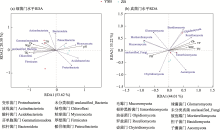
Fig. 4
Redundancy analysis of physicochemical properties of rhizosphere soil and phylum-level microbial community structure in wild and cultivated Lycium ruthenicum"
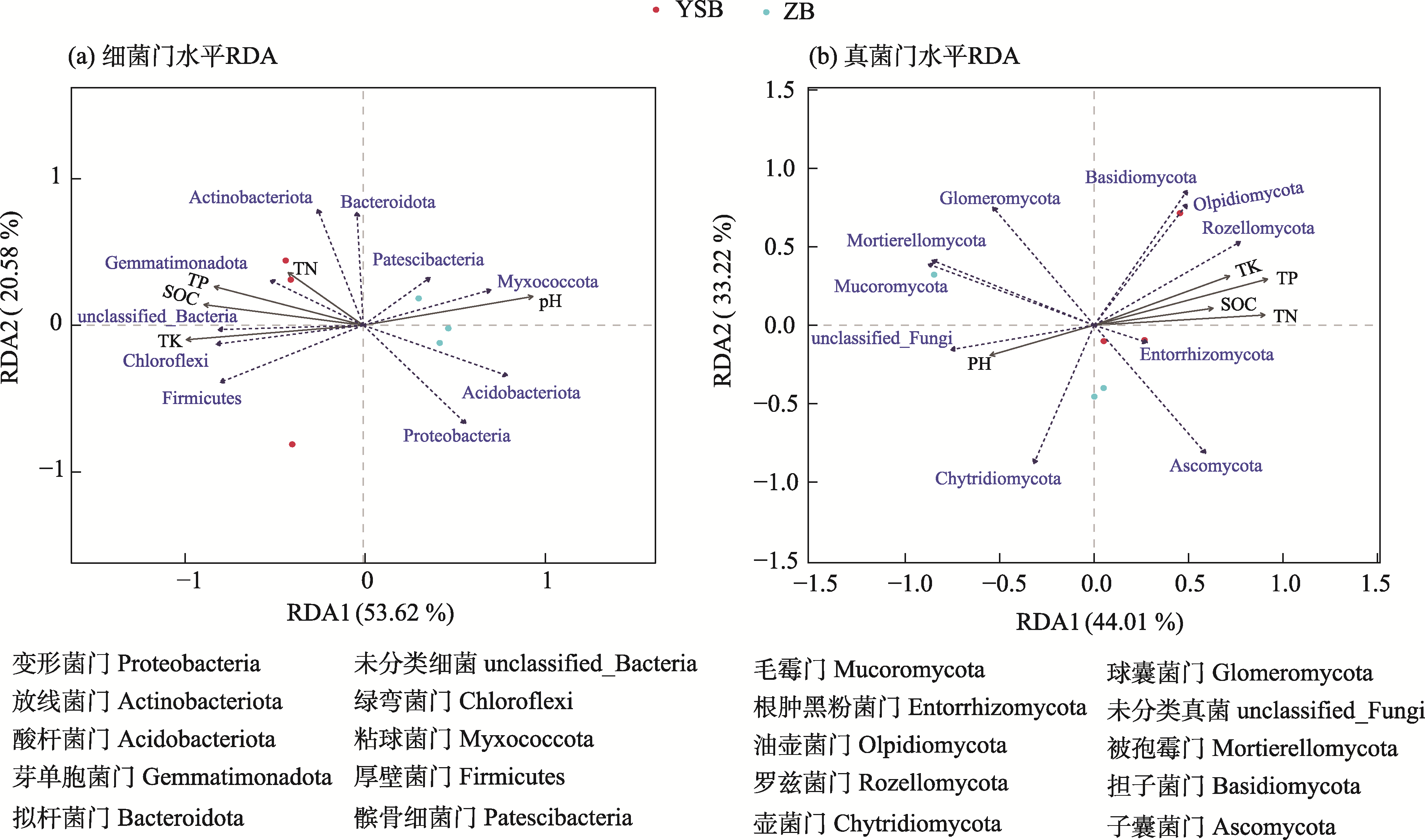
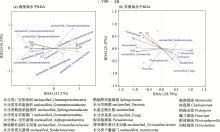
Fig. 5
Redundancy analysis of physicochemical properties of rhizosphere soil and genus-level microbial community structure in wild and cultivated Lycium ruthenicum"

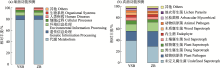
Fig. 6
Functional potential prediction of rhizosphere soil microbial communities in wild and cultivated Lycium ruthenicum"

| [1] | 张亮, 魏彦强, 王金牛, 等. 气候变化情景下黑果枸杞的潜在地理分布[J]. 应用与环境生物学报, 2020, 26(4): 969-978. |
| [Zhang Liang, Wei Yanqiang, Wang Jinniu, et al. The potential geographical distribution of Lycium ruthenicum Murr. under different climate change scenarios[J]. Chinese Journal of Applied and Environmental Biology, 2020, 26(4): 969-978.] | |
| [2] | 胡翠娟. 野生药用植物人工栽培品种选择技术[J]. 黑龙江科技信息, 2014(22): 80. |
| [Hu Cuijuan. Selection technology of wild medicinal plants cultivated varieties[J]. Heilongjiang Science and Technology Information, 2014(22): 80.] | |
| [3] | 宋燕芳, 彭彤, 马少兰, 等. 枸杞叶片酚酸类物质的自毒作用分析[J]. 江苏农业学报, 2024, 40(2): 213-222. |
| [Song Yanfang, Peng Tong, Ma Shaolan, et al. Analyzing the autotoxicity of phenolic acids from Lycium barbarum L. leaves[J]. Jiangsu Journal of Agricultural Sciences, 2024, 40(2): 213-222.] | |
| [4] |
Zhao Y M, Cheng Y X, Ma Y N, et al. Role of phenolic acids from the rhizosphere soils of Panax notoginseng as a double-edge sword in the occurrence of root-rot disease[J]. Molecules, 2018, 23(4): 819.
doi: 10.3390/molecules23040819 |
| [5] | Ding M, Dai H, He Y, et al. Continuous cropping system altered soil microbial communities and nutrient cycles[J]. Front Microbiol, 2024, 15: e1374550. |
| [6] | 阳雅荧, 毛洁莹, 陈保冬, 等. 土著AM真菌接种对古银杏实生苗生长和生理特性的影响[J]. 生态学报, 2025, 45(3): 1429-1443. |
| [Yang Yaying, Mao Jieying, Chen Baodong, et al. Effect of inoculation with indigenous AM fungi on growth and physiological characteristics of ancient Ginkgo biloba seedlings in Shanghai[J]. Acta Ecologica Sinica, 2025, 45(3): 1429-1443.] | |
| [7] |
Xu W, Whitman W B, Gundale M J, et al. Functional response of the soil microbial community to biochar applications[J]. Global Change Biology Bioenergy, 2021, 13(1): 269-281.
doi: 10.1111/gcbb.v13.1 |
| [8] | Hu J, Hu X, Zhang H, et al. Moderate NaCl alleviates osmotic stress in Lycium ruthenicum[J]. Plant Growth Regulation, 2022, 97(3): 581-591. |
| [9] |
Zeng H T, Zheng T, Peng X, et al. Transcriptomic and targeted metabolomics analysis of detached Lycium ruthenicum leaves reveals mechanisms of anthocyanin biosynthesis induction through light quality and sucrose treatments[J]. Metabolites, 2023, 13(9): 1004.
doi: 10.3390/metabo13091004 |
| [10] |
Naylor D, DeGraaf S, Purdom E, et al. Drought and host selection influence bacterial community dynamics in the grass root microbiome[J]. The ISME journal, 2017, 11(12): 2691-2704.
doi: 10.1038/ismej.2017.118 |
| [11] | 张瑞福. 根际微生物: 农业绿色发展中大有作为的植物第二基因组[J]. 生物技术通报, 2020, 36(9): 1-2. |
| [Zhang Ruifu. Rhizosphere microorganisms: A promising plant second genome in the green development of agriculture[J]. Biotechnology Bulletin, 2020, 36(9): 1-2.] | |
| [12] |
Noman M, Ahmed T, Ijaz U, et al. Plant-microbiome crosstalk: Dawning from composition and assembly of microbial community to improvement of disease resilience in plants[J]. International Journal of Molecular Sciences, 2021, 22(13): 6852.
doi: 10.3390/ijms22136852 |
| [13] |
Ebrahimi-Zarandi M, Etesami H, Glick B R. Fostering plant resilience to drought with actinobacteria: Unveiling perennial allies in drought stress tolerance[J]. Plant Stress, 2023, 10: 100242.
doi: 10.1016/j.stress.2023.100242 |
| [14] |
Yuan J, Zhao J, Wen T, et al. Root exudates drive the soil-borne legacy of aboveground pathogen infection[J]. Microbiome, 2018, 6(1): 156.
doi: 10.1186/s40168-018-0537-x pmid: 30208962 |
| [15] |
Laurent P, M Jos R, Philippe L, et al. Going back to the roots: The microbial ecology of the rhizosphere[J]. Nature Reviews Microbiology, 2013, 11(11): 789-799.
doi: 10.1038/nrmicro3109 pmid: 24056930 |
| [16] | 徐宜峰. 高寒草甸灌木长期移除和模拟增温对土壤细菌拮抗作用与群落结构的影响机制研究[D]. 兰州: 兰州大学, 2022. |
| [Xu Yifeng. The Mechanism of Long-term Shrub Removal and Simulated Warming Effects on Soil Bacterial Antagonism and Community Structure in Alpine Meadow[D]. Lanzhou: Lanzhou University, 2022.] | |
| [17] | 李浩然, 林伟, 王天一, 等. 人参化感作用研究进展[J/OL]. 分子植物育种, [2025-03-07]. http://kns.cnki.net/kcms/detail/46.1068.S.20240715.1254.002.html. |
| [Li Haoran, Lin Wei, Wang Tianyi, et al. Research progress on allelopathic effects of Ginseng[J/OL]. Molecular Plant Breeding, [2025-03-07]. http://kns.cnki.net/kcms/detail/46.1068.S.20240715.1254.002.html.. | |
| [18] |
Chen H N, Wang F, Gao Y M, et al. Integrating cover crops and manure to boost goji berry yield: Responses of soil physicochemical properties and microbial communities[J]. Microorganisms, 2025, 13(3): 696.
doi: 10.3390/microorganisms13030696 |
| [19] | 韩进军. 气候变化背景下柴达木盆地荒漠化时空演变及驱动力研究[D]. 西宁: 中国科学院大学(中国科学院青海盐湖研究所), 2023. |
| [Han Jinjun. Study on Spatiotemporal Evolution and Driving Forces of Desertification in Qaidam Basin Under the Background of Climate Change[D]. Xining: University of Chinese Academy of Sciences (Qinghai Institute of Salt Lakes, Chinese Academy of Sciences), 2023.] | |
| [20] | 鲍士旦. 土壤农化分析[M]. 北京: 中国农业出版社, 2000. |
| [Bao Shidan. Soil Agrochemica Analysis[M]. Beijing: China Agriculture Press, 2000.] | |
| [21] | 萨仁格尔力. 浅谈柴达木黑果枸杞种植技术及经济价值[J]. 柴达木开发研究, 2020(6): 27-31. |
| [Sarengelli. Discussion on the planting technology and economic value of Qaidam black wolfberry[J]. Chaidamu Development Research, 2020(6): 27-31.] | |
| [22] | 高明霞, 孙瑞, 崔全红, 等. 长期施用化肥对塿土微生物多样性的影响[J]. 植物营养与肥料学报, 2015, 21(6): 1572-1580. |
| [Gao Mingxia, Sun Rui, Cui Quanhong, et al. Effect of long-term chemical fertilizer application on soil microbial diversity in anthropogenic loess soil[J]. Journal of Plant Nutrition and Fertilizers, 2015, 21(6): 1572-1580.] | |
| [23] | 白生堆. 榆阳区黑果枸杞人工栽培管理技术[J]. 陕西林业科技, 2019, 47(5): 112-114, 117. |
| [Bai Shengdui. Artificial cultivation and management of Lycium ruthenicum in Yuyang District[J]. Shaanxi Forest Science and Technology, 2019, 47(5): 112-114, 117.] | |
| [24] | York A. Aboveground-belowground linkages: Biotic interactions, ecosystem processes, and global change[J]. Austral Ecology, 2012, 37(8): 26-27. |
| [25] | 许文鼎, 吴云莺, 梁君, 等. 柴达木盆地南缘诺木洪地区水化学特征及分布规律[J]. 河北省科学院学报, 2009, 26(2): 63-66. |
| [Xu Wending, Wu Yunying, Liang Jun, et al. The water chemical characteristics and distribution pattern of Nuomuhong District in the southern margin of Qaidam Basin[J]. Journal of Hebei Academy of Sciences, 2009, 26(2): 63-66.] | |
| [26] | 李小等. 青海省诺木洪地区地下水化学特征及演化规律[D]. 西安: 长安大学, 2012. |
| [Li Xiaodeng. Study on the Groundwater Chemistry Evolution of Nuomuhong Area in Qinghai Province[D]. Xi’an: Chang’an University, 2012.] | |
| [27] | 严小功, 张金旭, 杨占云, 等. 柴达木盆地盐碱地现状及改良措施[J]. 农业与技术, 2020, 40(7): 18-20. |
| [Yan Xiaogong, Zhang Jinxu, Yang Zhanyun, et al. Status and improvement measures of saline-alkali land in Qaidam Basin[J]. Agriculture and Technology, 2020, 40(7): 18-20.] | |
| [28] |
Liu C, Gong X, Dang K, et al. Linkages between nutrient ratio and the microbial community in rhizosphere soil following fertilizer management[J]. Environmental Research, 2020, 184: 109261.
doi: 10.1016/j.envres.2020.109261 |
| [29] |
Trivedi P, Delgado-Baquerizo M, Trivedi C, et al. Keystone microbial taxa regulate the invasion of a fungal pathogen in agro-ecosystems[J]. Soil Biology and Biochemistry, 2017, 111: 10-14.
doi: 10.1016/j.soilbio.2017.03.013 |
| [30] |
Fierer N, Jackson R B. The diversity and biogeography of soil bacterial communities[J]. Proceedings of the National Academy of Sciences, 2006, 103(3): 626-631.
doi: 10.1073/pnas.0507535103 |
| [31] |
顾美英, 唐光木, 冯雷, 等. 南疆野生黑果枸杞果实抗氧化成分与土壤理化性质、微生物特征的相关性[J]. 新疆农业科学, 2017, 54(10): 1930-1940.
doi: 10.6048/j.issn.1001-4330.2017.10.019 |
|
[Gu Meiying, Tang Guangmu, Feng Lei, et al. Relativity study on antioxidant composition of wild Lycium ruthenicum Murr. and soil physico-chemical properties and microbial characteristics in southern Xinjiang[J]. Xinjiang Agricultural Sciences, 2017, 54(10): 1930-1940.]
doi: 10.6048/j.issn.1001-4330.2017.10.019 |
|
| [32] | 陈军豪, 杨生茂, 汪玉瑛, 等. 盐胁迫下生物炭添加对紫苏生长及根际微生物群落的影响[J]. 农业环境科学学报, 2024, 43(12): 2947-2958. |
| [Chen Junhao, Yang Shengmao, Wang Yuying, et al. Effects of biochar addition on perilla growth and the rhizosphere microbial community under salt stress[J]. Journal of Agro-Environment Science, 2024, 43(12): 2947-2958.] | |
| [33] | 吴阳. 高盐胁迫对土壤碳氮磷代谢的影响及其微生物学机制[D]. 杨陵: 西北农林科技大学, 2023. |
| [Wu Yang. Effects of High Salt Stress on Soil Carbon, Nitrogen, and Phosphorus Metabolism and its Microbiological Mechanisms[D]. Yangling: Northwest A & F University, 2023.] | |
| [34] |
Francioli D, Rijssel V Q S, Ruijven V J, et al. Plant functional group drives the community structure of saprophytic fungi in a grassland biodiversity experiment[J]. Plant and Soil, 2021, 461(1/2): 91-105.
doi: 10.1007/s11104-020-04454-y |
| [35] |
张玲豫, 齐雅柯, 焦健, 等. 河西走廊沙地芦苇(Phragmites australis)根际土壤微生物群落多样性[J]. 中国沙漠, 2021, 41(6): 1-9.
doi: 10.7522/j.issn.1000-694X.2021.00071 |
|
[Zhang Lingyu, Qi Yake, Jiao Jian, et al. Microbial community diversity of reed rhizosphere soil in different sandy land habitats of Hexi Corridor, Gansu, China[J]. Journal of Desert Research, 2021, 41(6): 1-9.]
doi: 10.7522/j.issn.1000-694X.2021.00071 |
|
| [36] |
Zin Nur A, Noor A B. Biological functions of Trichoderma spp. for agriculture applications[J]. Annals of Agricultural Sciences, 2020, 65(2): 168-178.
doi: 10.1016/j.aoas.2020.09.003 |
| [37] |
Qiu L, Zhang Q, Zhu H, et al. Erosion reduces soil microbial diversity, network complexity and multifunctionality[J]. The ISME journal, 2021, 15(8): 2474-2489.
doi: 10.1038/s41396-021-00913-1 |
| [38] | 卢圣鄂, 肖波, 任风鸣, 等. 基于Illumina Miseq分析黄精根腐病根际土壤真菌群落结构及多样性[J]. 世界科学技术-中医药现代化, 2021, 23(1): 13-19. |
| [Lu Sheng’e, Xiao Bo, Ren Fengming, et al. Fungal community structure and diversity of rhizosphere soil of Polygonatum Sibiricum with root-rot analyzed by Illumina Miseq high-throughput sequencing technology[J]. Modernization of Traditional Chinese Medicine and Materia Medica-World Science and Technology, 2021, 23(1): 13-19.] | |
| [39] |
贾晨波, 郭洋, 马成莲, 等. 宁杞 1 号枸杞健康株与根腐病患病株的土壤微生物群落和功能差异[J]. 生态环境学报, 2021, 30(9): 1831-1840.
doi: 10.16258/j.cnki.1674-5906.2021.09.007 |
| [Jia Chenbo, Guo Yang, Ma Chenglian, et al. Difference on soil microbial community and function of healthy and diseased plants of Lycium barbarum Ningqi-1[J]. Ecology and Environmental Sciences, 2021, 30(9): 1831-1840.] | |
| [40] |
Han L, Zhou X, Zhao Y T, et al. First report of Plectosphaerella plurivora causing root rot disease in Panax notoginseng in China[J]. Journal of Phytopathology, 2020, 168(7-8): 375-379.
doi: 10.1111/jph.12901 |
| [1] | ZHU Zhaohua, ZHAI Yixiao, LI Xinrong, Miao Yingxiang, MA Tong, LI Shanjia. Community composition and functionalities of endophytic microorganisms in Haloxylon ammodendron seeds [J]. Arid Zone Research, 2025, 42(9): 1640-1649. |
| [2] | LI Jinhui, HU Jing, JIN Hongxi, WANG Qi, YAO Ze. Effects of environmental factors on anthocyanin accumulation in Lycium ruthenicum from various provenances [J]. Arid Zone Research, 2025, 42(8): 1525-1535. |
| [3] | CHENG Yanlin, WANG Jiayuan, GAO Guanglei, DING Guodong, ZHANG Ying, ZHAO Peishan, ZHU Binbin. Structure and functional group characteristics of generalized and specialized species of soil and root-associated fungi in Pinus sylvestris var. mongolica forests of the Hulunbuir Desert [J]. Arid Zone Research, 2025, 42(6): 1055-1066. |
| [4] | GAO Haiyan, ZHANG Shengnan, YANG Zhiguo, ZHANG Lei, HUANG Haiguang, YAN Deren. Structure and function of soil fungal community in Pinus tabuliformis sand-fixing forests in Horqin Sandy Land [J]. Arid Zone Research, 2025, 42(1): 118-126. |
| [5] | CUI Guolong, LI Qiangfeng, GAO Ying, LIU Weijun, ZHANG Mei. Characteristics of soil microbial communities structure and influencing factors in typical vegetation in the Beichuan River Source Area of Datong, Qinghai [J]. Arid Zone Research, 2024, 41(7): 1195-1206. |
| [6] | DU Huadong, LIU Yan, BI Yinli, CHE Xuxi, BAI Mengtong. Characteristics of soil properties and fungal community changes in different microgeomorphic units in an arid gravel desert area [J]. Arid Zone Research, 2024, 41(3): 421-431. |
| [7] | BAI Lili, WANG Wenying, Dequelamu , LIU Yanfang, DENG Yanfang. Elevational variations in ecological soil C, N, and P stoichiometry among five typical vegetation types in the Qilian Mountains [J]. Arid Zone Research, 2024, 41(3): 444-455. |
| [8] | LI Juan, LIU Yang, LIU Guangxiu, CHENG Liang, GUO Qingyun, ZHANG Wei, ZHANG Gaosen. Study on bacterial community structure and influencing factors in the northern margin of the Shanshan Kumtag Desert [J]. Arid Zone Research, 2023, 40(8): 1358-1368. |
| [9] | Reyilamu MAIMAITUERXUN, Halibunuer , Aysajan ABDUSALAM. Seed germination and dormancy traits of fruit heteromorphism species Lycium ruthenicum in an elevational heterogeneity environment [J]. Arid Zone Research, 2023, 40(7): 1152-1163. |
| [10] | WANG Siqi, ZHANG Jianjun, ZHANG Yanqin, ZHAO Jiongchang, HU Yawei, LI Yang, TANG Peng, WEI Zhaoyang. Understory plant community diversity of Robinia pseudoacacia plantation with different densities in the loess plateau of western Shanxi Province [J]. Arid Zone Research, 2023, 40(7): 1141-1151. |
| [11] | ZHANG Lijuan, DU Han, YUN Fengze, MA Yinghui, ZHANG Xinqiang, Awaguli TUERSUN, MA Zhenghai. Analysis of the microbial diversity of the surface snow from Glacier No. 1 at the headwaters of Urumqi River, Tianshan Mountains [J]. Arid Zone Research, 2023, 40(4): 670-680. |
| [12] | WU Rui, CAO Hongyu, GAO Guanglei, YU Minghan, DING Guodong, ZHANG Ying, ZHAO Peishan. Effects of irrigation and salinity treatments on the soil bacterial community and plant physiological characteristics of Cyperus esculentus farmland in Horqin Sandy Land [J]. Arid Zone Research, 2023, 40(12): 1938-1948. |
| [13] | ZHANG Manyu, WANG Zhitao, DENG Lei, ZHOU Hong. Differences in the physical and chemical properties of biological soil crusts in different shrub communities in the Gonghe Basin [J]. Arid Zone Research, 2023, 40(11): 1797-1805. |
| [14] | Relationship between the grassland and soil conditions in the Eastern Qilian Mountains. Relationship between the grassland and soil conditions in the Eastern Qilian Mountains [J]. Arid Zone Research, 2020, 37(2): 374-381. |
| [15] | GUO Chun-xiu, LIU Kai-lin, MA Jun-mei, WANG Li-de, HE Fang-lan, ZHAO Peng, FU Gui-quan, ZHAO Yan-li. Distribution Patterns of Lycium ruthenicum Population in Different Site Types in Lower Reaches of the Shiyang River [J]. Arid Zone Research, 2020, 37(1): 178-184. |
|
||
