
Arid Zone Research ›› 2025, Vol. 42 ›› Issue (10): 1925-1938.doi: 10.13866/j.azr.2025.10.15
• Agricultural Ecology • Previous Articles Next Articles
YUE Shengru1,2( ), HU Xuefei1, HOU Xiaohua1(), MENG Fujun1
Received:2025-04-07
Revised:2025-08-04
Online:2025-10-15
Published:2025-10-22
Contact:
HOU Xiaohua
E-mail:nmgndysr@163.com;CHTarim@126.com
YUE Shengru, HU Xuefei, HOU Xiaohua, MENG Fujun. Cotton production assessment in the Tarim River Basin based on CMIP6 models[J].Arid Zone Research, 2025, 42(10): 1925-1938.
Add to citation manager EndNote|Reference Manager|ProCite|BibTeX|RefWorks
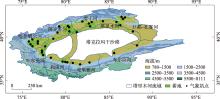
Fig. 1
Location of the study area"

Tab. 1
Thirteen-model information in phase 6 of the Coupled Model Intercomparison Project (CMIP6)"
| 编号 | 名称 | 国家 | 发布年份 | 空间分辨率(经向×纬向) |
|---|---|---|---|---|
| 1 | ACCESS-ESM1-5 | 澳大利亚 | 2019年 | 1.875°×1.241° |
| 2 | BCC-CSM2-MR | 中国 | 2017年 | 1.125°×1.125° |
| 3 | CMCC-ESM2 | 意大利 | 2017年 | 1.25°×0.9375° |
| 4 | ESM2-0 | 中国 | 2022年 | 1.875°×1.875° |
| 5 | INM-CM4-8 | 俄罗斯 | 2016年 | 2.00°×1.50° |
| 6 | INM-CM5-0 | 俄罗斯 | 2016年 | 2.00°×1.50° |
| 7 | IPSL-CM6A-LR | 法国 | 2017年 | 2.50°×1.26° |
| 8 | MPI-ESM1-2-HR | 德国 | 2017年 | 0.9375°×0.9375° |
| 9 | MPI-ESM1-2-LR | 德国 | 2017年 | 1.875°×1.875° |
| 10 | MRI-ESM2-0 | 日本 | 2017年 | 1.125°×1.125° |
| 11 | NESM3 | 中国 | 2016年 | 1.875°×1.875° |
| 12 | NorESM2-MM | 挪威 | 2017年 | 2.50°×2.50° |
| 13 | TaiESM1 | 中国 | 2018年 | 1.25°×0.9375° |
Tab. 2
Meteorological station information of the Tarim River Basin"
| 区站号 | 站点名称 | 纬度 | 经度 | 海拔/m | 区站号 | 站点名称 | 纬度 | 经度 | 海拔/m |
|---|---|---|---|---|---|---|---|---|---|
| 51559 | 和静 | 42.32°N | 86.40°E | 1100.90 | 51720 | 柯坪 | 40.50°N | 79.05°E | 1161.80 |
| 51567 | 焉耆 | 42.08°N | 86.57°E | 1055.30 | 51722 | 阿瓦提 | 40.65°N | 80.40°E | 1044.30 |
| 51568 | 和硕 | 42.25°N | 86.80°E | 1085.40 | 51730 | 阿拉尔 | 40.55°N | 81.27°E | 1012.20 |
| 51627 | 乌什 | 41.22°N | 79.23°E | 1395.80 | 51765 | 铁干里克 | 40.63°N | 87.70°E | 846.00 |
| 51628 | 阿克苏 | 41.12°N | 80.38°E | 1107.10 | 51777 | 若羌 | 39.03°N | 88.17°E | 887.70 |
| 51629 | 温宿 | 41.27°N | 80.23°E | 1133.10 | 51802 | 英吉沙 | 38.93°N | 76.17°E | 1297.50 |
| 51633 | 拜城 | 41.78°N | 81.90°E | 1229.20 | 51810 | 麦盖提 | 38.92°N | 77.63°E | 1178.20 |
| 51636 | 新和 | 41.55°N | 82.65°E | 1009.80 | 51811 | 莎车 | 38.43°N | 77.27°E | 1231.20 |
| 51639 | 沙雅 | 41.23°N | 82.78°E | 980.40 | 51814 | 叶城 | 37.92°N | 77.40°E | 1360.40 |
| 51642 | 轮台 | 41.82°N | 84.27°E | 982.00 | 51815 | 泽普 | 38.20°N | 77.27°E | 1274.70 |
| 51644 | 库车 | 41.72°N | 82.97°E | 1081.90 | 51818 | 皮山 | 37.62°N | 78.28°E | 1375.40 |
| 51655 | 尉犁 | 41.35°N | 86.27°E | 884.90 | 51826 | 策勒 | 37.02°N | 80.80°E | 1336.50 |
| 51656 | 库尔勒 | 41.73°N | 85.82°E | 899.80 | 51827 | 墨玉 | 37.17°N | 79.63°E | 1348.90 |
| 51704 | 阿图什 | 39.72°N | 76.17°E | 1298.70 | 51828 | 和田 | 37.13°N | 79.93°E | 1375.00 |
| 51707 | 伽师 | 39.50°N | 76.78°E | 1204.70 | 51829 | 洛浦 | 37.08°N | 80.17°E | 1347.90 |
| 51708 | 阿克陶 | 39.15°N | 75.95°E | 1325.10 | 51839 | 民丰 | 37.07°N | 82.72°E | 1409.50 |
| 51709 | 喀什 | 39.48°N | 75.75°E | 1385.60 | 51855 | 且末 | 38.15°N | 85.55°E | 1247.20 |
| 51716 | 巴楚 | 39.80°N | 78.57°E | 1116.50 | 51931 | 于田 | 36.85°N | 81.65°E | 1422.00 |
| 51717 | 岳普湖 | 39.25°N | 76.78°E | 1206.30 |
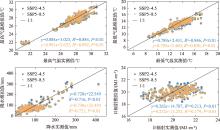
Fig. 2
Distribution characteristics of observed and simulated values at the study area stations on the growing season scale"

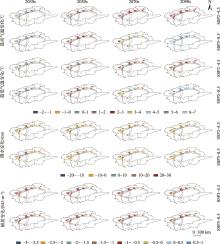
Fig. 3
Spatial characteristics of climate change under future scenarios"

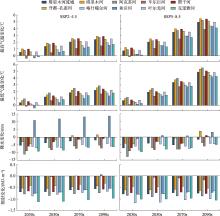
Fig. 4
Climate change under future scenarios at the basin scale"

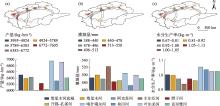
Fig. 5
Characteristics of cotton yield, irrigation amount and water productivity in the historical period"

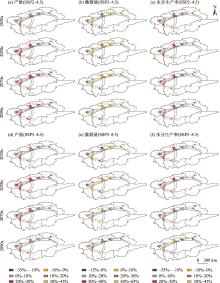
Fig. 6
Spatial variation characteristics of cotton yield, irrigation amount and water productivity under future scenarios"

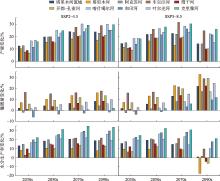
Fig. 7
Changes in future cotton yield, irrigation amount and water productivity at the sub-basin scale"

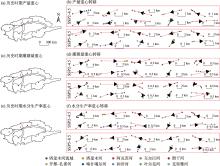
Fig. 8
Center of gravity shift of future cotton yield, irrigation amount and water productivity at the sub-basin scale"

| [1] | Lin S D, Wang Q J, Deng M J, et al. Assessing the influence of water fertilizer, and climate factors on seed cotton yield under mulched drip irrigation in Xinjiang Agricultural Regions[J]. European Journal of Agronomy, 2024, 152: 127034. |
| [2] | 李娜. 气候变化对棉花生长和产量的影响[D]. 西安: 西北农林科技大学, 2021. |
| [Li Na. Effects of Climate Change on Cotton Growth and Yield[D]. Xi’an: Northwest A & F University, 2021. ] | |
| [3] | Wu H, Xu M, Peng Z Y, et al. Quantifying the potential impacts of meltwater on cotton yields in the Tarim River Basin, Central Asia[J]. Agricultural Water Management, 2022, 269: 107639. |
| [4] | Adhikari P, Ale S, Bordovsky J P, et al. Simulating future climate change impacts on seed cotton yield in the Texas High Plains using the CSM-CROPGRO-Cotton model[J]. Agricultural Water Management, 2016, 164: 317-330. |
| [5] | 李萌. 南疆膜下滴灌棉花灌溉和施肥调控效应及生长模拟研究[D]. 杨凌: 西北农林科技大学, 2020. |
| [Li Meng. Study on Effect of Irrigation and Fertilization Regulation and Simulation of Cotton Growth under Film-mulched Drip Irrigation in Southern Xinjiang[D]. Yangling: Northwest A & F University, 2020. ] | |
| [6] | 杜江涛, 张楠, 龚珂宁, 等. 基于DSSAT模型的南疆膜下滴灌棉花灌溉制度优化[J]. 生态学杂志, 2021, 40(11): 3760-3768. |
| [Du Jiangtao, Zhang Nan, Gong Kening, et al. Optimization of cotton irrigation schedule under mulch drip irrigation in southerm Xinjiang based on DSSAT model[J]. Chinese Journal of Ecology, 2021, 40(11): 3760-3768. ] | |
| [7] | Zhou T J, Chen Z M, Chen X L, et al. Interpreting IPCC AR6: Future global climate based on projection under scenarios and on near-term information[J]. Advances in Climate Change Research, 2021, 17(6): 652. |
| [8] | 陈发虎, 谢亭亭, 杨钰杰, 等. 我国西北干旱区“暖湿化”问题及其未来趋势讨论[J]. 中国科学:地球科学, 2023, 53(6): 1246-1262. |
| [Chen Fahu, Xie Tingting, Yang Yujie, et al. Discussion of the “warming and wetting” trend and its future variation in the drylands of Northwest China under global warming[J]. Science China Earth Sciences, 2023, 53(6): 1246-1262. ] | |
| [9] |
山建安, 朱睿, 尹振良, 等. 基于CMIP6模式的中国西北地区干旱时空变化[J]. 干旱区研究, 2024, 41(5): 717-729.
doi: 10.13866/j.azr.2024.05.01 |
|
[Shan Jianan, Zhu Rui, Yin Zhenliang, et al. Spatial and temporal variation of drought in Northwest China based on CMIP6 model[J]. Arid Zone Research, 2024, 41(5): 717-729. ]
doi: 10.13866/j.azr.2024.05.01 |
|
| [10] | Tian X, Dong J Z, Jin S Y, et al. Climate change impacts on regional agricultural irrigation water use in semi-arid environments[J]. Agricultural Water Management, 2023, 281: 108239. |
| [11] |
徐杨, 李秀芬, 葛全胜, 等. 气象干旱对中亚棉花产量的影响[J]. 地理学报, 2022, 77(9): 2338-2352.
doi: 10.11821/dlxb202209014 |
|
[Xu Yang, Li Xiufen, Ge Quansheng, et al. Effect of meteorological drought on cotton yield in Central Asia[J]. Acta Geographica Sinica, 2022, 77(9): 2338-2352. ]
doi: 10.11821/dlxb202209014 |
|
| [12] | Qin Y, Abatzoglou J T, Siebert S, et al. Agricultural risks from changing snowmelt[J]. Nature Climate Change, 2020, 10(5): 459-465. |
| [13] | Wen M N, Chen L Y. Global food crop redistribution reduces water footprint without compromising species diversity[J]. Journal of Cleaner Production, 2023, 383: 135437. |
| [14] | Xie W, Zhu A F, Ali T, et al. Crop switching can enhance environmental sustainability and farmer incomes in China[J]. Nature, 2023, 616(7956): 300-305. |
| [15] |
罗磊, 李曦光, 李萧婷, 等. 气候变化下沙棘在新疆潜在分布格局的变化[J]. 干旱区研究, 2025, 42(3): 511-522.
doi: 10.13866/j.azr.2025.03.11 |
| [Luo Lei, Li Xiguang, Li Xiaoting, et al. Potential distribution pattern of Hippophae rhamnoides in Xinjiang under climate change predicted using the MaxEnt model[J]. Arid Zone Research, 2025, 42(3): 511-522. ] | |
| [16] | Shi X Y, Wang C, Zhao J C, et al. Increasing inconsistency between climate suitability and production of cotton (Gossypium hirsutum L.) in China[J]. Industrial Crops and Products, 2021, 171: 113959. |
| [17] | Li L L, Wu H Q, Gao Y M, et al. Predicting ecologically suitable areas of cotton cultivation using the MaxEnt model in Xinjiang, China[J]. Ecologies, 2023, 4(4): 654-670. |
| [18] | Zhu Y Q, Sun L, Luo Q Y, et al. Spatial optimization of cotton cultivation in Xinjiang: A climate change perspective[J]. International Journal of Applied Earth Observation and Geoinformation, 2023, 124: 103523. |
| [19] | Mai J F, Liu G L. Modeling and predicting the effects of climate change on cotton-suitable habitats in the Central Asian arid zone[J]. Industrial Crops and Products, 2023, 191: 115838. |
| [20] | 王兴鹏, 辛朗, 杜江涛, 等. 基于DSSAT模型的南疆膜下滴灌棉花生长与产量模拟[J]. 农业机械学报, 2022, 53(9): 314-321. |
| [Wang Xingpeng, Xin Lang, Du Jiangtao, et al. Simulation of cotton growth and yield under film drip irrigation condition based on DSSAT model in southern Xinjiang[J]. Transactions of the Chinese Society for Agricultural Machinery, 2022, 53(9): 314-321. ] | |
| [21] | Fan X W, Duan Q Y, Shen C W, et al. Global surface air temperatures in CMIP6: Historical performance and future changes[J]. Environmental Research Letters, 2020, 15(10): 104056. |
| [22] | Jin Z R, Ge F, Chen Q L, et al. To what extent horizontal resolution improves the simulation of precipitation in CMIP6 HighResMIP models over Southwest China?[J]. Frontiers in Earth Science, 2023, 10: 1003748. |
| [23] | Mahajan S, Evans K J, Branstetter M, et al. Fidelity of precipitation extremes in high resolution global climate simulations[J]. Procedia Computer Science, 2015, 51: 2178. |
| [24] | Li Y, Li N, Javed T, et al. Cotton yield responses to climate change and adaptability of sowing date simulated by AquaCrop model[J]. Industrial Crops and Products, 2024, 212: 118319. |
| [25] | Wang L C, Zhong D H, Chen X X, et al. Impact of climate change on rice growth and yield in China: Analysis based on climate year type[J]. Geography and Sustainability, 2024, 5(4): 548-560. |
| [26] | Yue S R, Wang L C, Cao Q, et al. Assessment of future cotton production in the Tarim River Basin under climate model projections and water management[J]. Journal of Earth Science, 2025, 36(4): 1780-1792. |
| [27] | Li N, Lin H X, Wang T X, et al. Impact of climate change on cotton growth and yields in Xinjiang, China[J]. Field Crops Research, 2020, 247: 107590. |
| [28] | 陈亚宁, 徐宗学. 全球气候变化对新疆塔里木河流域水资源的可能性影响[J]. 中国科学(D辑: 地球科学), 2004, 34(11): 1047-1053. |
| [Chen Yaning, Xu Zongxue. Potential impact of global climate change on water resources in the Tarim River Basin of Xinjiang[J]. Scientia Sinica (Terrae), 2004, 34(11): 1047-1053. ] | |
| [29] |
张音, 孙从建, 刘庚, 等. 近20a塔里木河流域山区NDSI对气候变化的响应[J]. 干旱区研究, 2024, 41(10): 1639-1648.
doi: 10.13866/j.azr.2024.10.03 |
|
[Zhang Yin, Sun Congjian, Liu Geng, et al. Response of NDSI in the Tarim River Basin mountainous areas to climate change over the past 20 years[J]. Arid Zone Research, 2024, 41(10): 1639-1648. ]
doi: 10.13866/j.azr.2024.10.03 |
|
| [30] | 朱世峰, 王卫光, 丁一民, 等. 基于CMIP6的长江中下游未来水稻高温热害时空变化特征[J]. 农业工程学报, 2023, 39(3): 113-122. |
| [Zhu Shifeng, Wang Weiguang, Ding Yimin, et al. Spatiotemporal variation of future heat damage of rice in the Middle and Lower Reaches of the Yangtze River using CMIP6 projections[J]. Transactions of the Chinese Society of Agricultural Engineering, 2023, 39(3): 113-122. ] | |
| [31] | Chen X X, Wang L C, Niu Z G, et al. The effects of projected climate change and extreme climate on maize and rice in the Yangtze River Basin, China[J]. Agricultural and Forest Meteorology, 2020, 282: 107867. |
| [32] | 童成立, 张文菊, 汤阳, 等. 逐日太阳辐射的模拟计算[J]. 中国农业气象, 2005, 26(3): 165-169. |
| [Tong Chengli, Zhang Wenju, Tang Yang, et al. Estimation of daily solar radiation in China[J]. Chinese Journal of Agrometeorology, 2005, 26(3): 165-169. ] | |
| [33] | 王雪姣. 气候变化对新疆棉花物候、产量和品质的影响与适应措施[D]. 北京: 中国农业大学, 2015. |
| [Wang Xuejiao. Impact and Adaptation of Climate Change on Cotton Phenology, Yield and Fiber Quality in Xinjiang[D]. Beijing: China Agricultural University, 2015. ] | |
| [34] | Zhang Q, Yang J H, Wang W, et al. Climatic warming and humidification in the arid region of Northwest China: Multi-scale characteristics and impacts on ecological vegetation[J]. Journal of Meteorological Research, 2021, 35(1): 113-127. |
| [35] | Zhong L H, Hua L J, Yao Y, et al. Interdecadal aridity variations in Central Asia during 1950-2016 regulated by oceanic conditions under the background of global warming[J]. Climate Dynamics, 2021, 56: 3665-3686. |
| [36] | 赵爱琴. 基于大尺度水肥耦合模型估算新疆膜下滴灌棉花生产潜力(英文)[J]. 农业工程学报, 2019, 35(5): 111-118. |
| [Zhao Aiqin. Mulched drip irrigation cotton yield potential estimation based on large-scale water-nitrogen coupling model in Xinjiang, China with limits of water resources[J]. Transactions of the Chinese Society of Agricultural Engineering, 2019, 35(5): 111-118. ] | |
| [37] | Kothari K, Ale S, Bordovsky J P, et al. Potential genotype-based climate change adaptation strategies for sustaining cotton production in the Texas High Plains: A simulation study[J]. Field Crops Research, 2021, 271: 108261. |
| [38] | Wang H L, Gan Y T, Wang R Y, et al. Phenological trends in winter wheat and spring cotton in response to climate changes in Northwest China[J]. Agricultural and Forest Meteorology, 2008, 148(8-9): 1242-1251. |
| [39] | Zahid K R, Ali F, Shah F, et al. Response and tolerance mechanism of cotton Gossypium hirsutum L. to elevated temperature stress: A review[J]. Frontiers in Plant Science, 2016, 7: 937. |
| [40] | Yang Y M, Yang Y H, Han S M, et al. Prediction of cotton yield and water demand under climate change and future adaptation measures[J]. Agricultural Water Management, 2014, 144: 42-53. |
| [41] | Wang F, Yang S T, Wei Y, et al. Characterizing soil salinity at multiple depth using electromagnetic induction and remote sensing data with random forests: A case study in Tarim River Basin of southern Xinjiang, China[J]. Science of the Total Environment, 2021, 754: 142030. |
| [42] | Li Q S, Liu Z H, Yang Y H, et al. Evaluation of water resources carrying capacity in Tarim River Basin under game theory combination weights[J]. Ecological Indicators, 2023, 154: 110609. |
| [43] | Gupta R, Mishra A. Climate change induced impact and uncertainty of rice yield of agro-ecological zones of India[J]. Agricultural Systems, 2019, 173: 1-11. |
|
||
