
干旱区研究 ›› 2025, Vol. 42 ›› Issue (10): 1791-1801.doi: 10.13866/j.azr.2025.10.04 cstr: 32277.14.AZR.20251004
白松竹1( ), 姚俊强2, 马依拉古丽3, 李岩瑛4(), 马幸蔚4, 杜江3
收稿日期:2025-04-02
修回日期:2025-08-19
出版日期:2025-10-15
发布日期:2025-10-22
通讯作者:
李岩瑛. E-mail: lyyqxj@163.com作者简介:白松竹(1979-),女,副研级高级工程师,主要从事天气预报及研究工作. E-mail: bszxjhm@sina.com
基金资助:
BAI Songzhu1(), YAO Junqiang2, Mairaguli 3, LI Yanying4(), MA Xingwei4, DU Jiang3
Received:2025-04-02
Revised:2025-08-19
Published:2025-10-15
Online:2025-10-22
摘要:
利用1974—2024年吐哈地区11个国家气象站地面气象观测资料和192个区域站的风向、风速观测资料,分析了该区沙尘天气的时空变化特征及其与气象要素的相关关系。结果表明:(1) 该区年沙尘天气中浮尘天气发生频率最高,沙尘暴最少,扬沙天气居中;春季是沙尘天气高发期,扬沙和沙尘暴夏季次多,冬季最少;而浮尘天气秋季次多,夏季最少。(2) 沙尘天气日数呈西多东少、盆地多山区少的分布特征;吐鲁番市托克逊和高昌区是浮尘天气高发区域,扬沙和沙尘暴主要集中在托克逊、东坎儿站和淖毛湖站,哈密市巴里坤、伊吾等山区沙尘天气很少;不同区域沙尘天气风向和风速分布也存在显著差异。(3) 近50 a沙尘天气日数整体呈减少趋势,其中浮尘天气减少速率最快,为7.1 d·(10a)-1;20世纪70年代沙尘天气最多,2013年最少,近10 a总沙尘、浮尘、扬沙日数均呈显著增多趋势;年沙尘、浮尘、扬沙日数突变年分别为1991年、1995年和1991年,沙尘暴日数突变特征不明显。(4) 沙尘日数与大风日数、平均风速呈显著正相关,与平均气温呈显著负相关,而与降水量、日照时数等无明显相关性。
白松竹, 姚俊强, 马依拉古丽, 李岩瑛, 马幸蔚, 杜江. 吐哈地区沙尘天气时空演变特征及气候影响因子[J]. 干旱区研究, 2025, 42(10): 1791-1801.
BAI Songzhu, YAO Junqiang, Mairaguli , LI Yanying, MA Xingwei, DU Jiang. Spatiotemporal evolution characteristics of windblown sand weather and its climatic driving mechanisms in the Tuha Area[J]. Arid Zone Research, 2025, 42(10): 1791-1801.
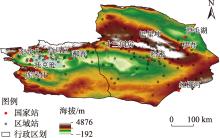
图1
研究区地形及气象站点分布"

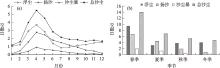
图2
吐哈地区沙尘日数月(a)、季节(b)分布特征"

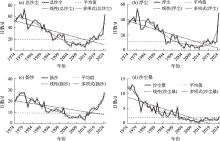
图3
1974—2024年吐哈地区不同强度沙尘日数年际变化"
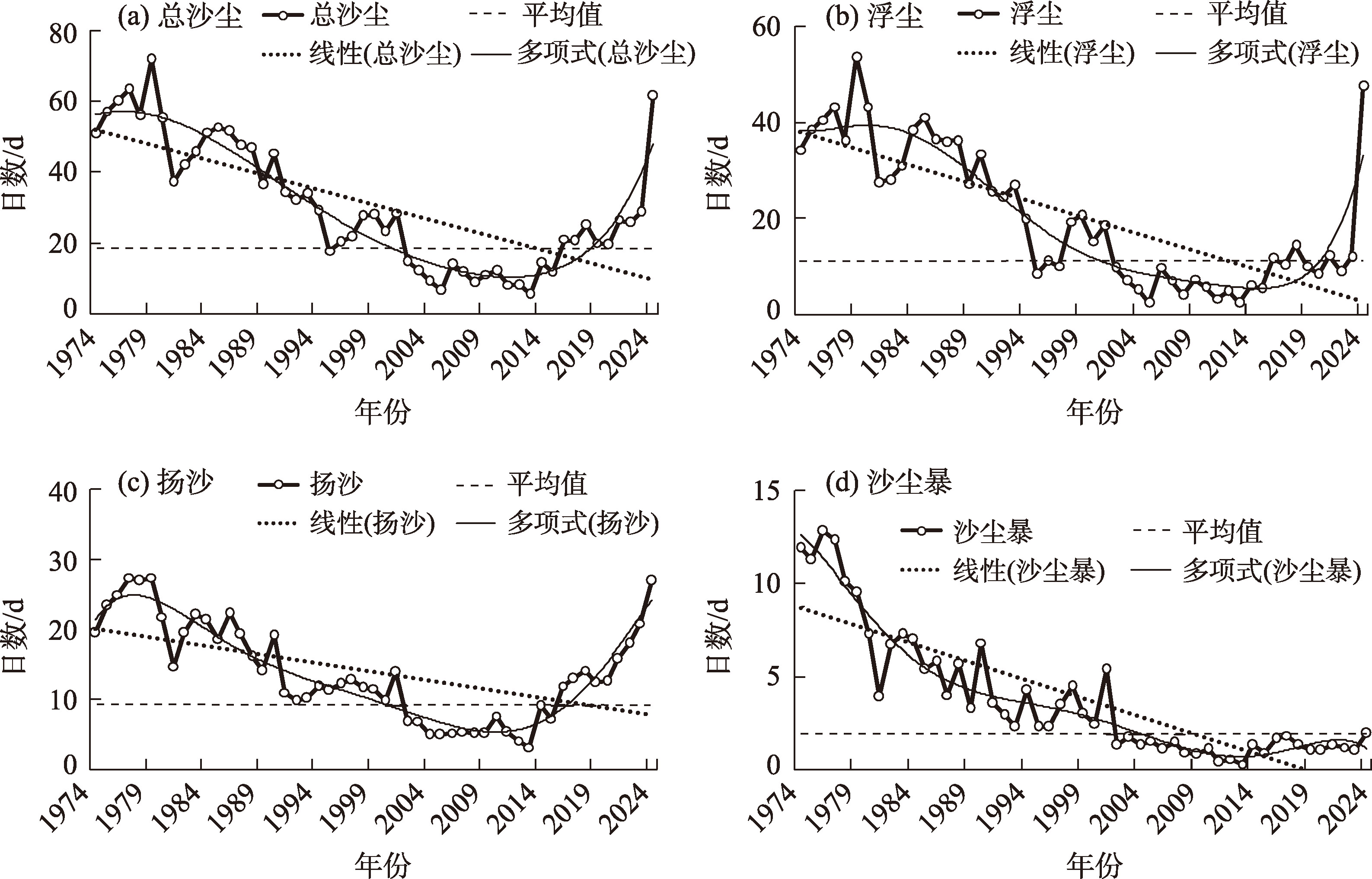
表1
1974—2024年吐哈地区不同沙尘强度日数年、季线性趋势"
| 日数 | 年 | 春季 | 夏季 | 秋季 | 冬季 |
|---|---|---|---|---|---|
| 总沙尘 | -8.5** | -3.5** | -1.6 | -1.2 | -2.5** |
| 浮尘 | -7.1** | -3.0** | -0.8 | -1.0 | -2.5** |
| 扬沙 | -2.5 | -1.2 | -1.0 | -0.3 | -0.1 |
| 沙尘暴 | -2.0** | -1.0** | -0.6** | -0.2** | -0.1 |
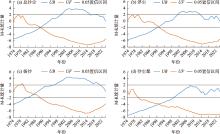
图4
1974—2024年吐哈地区总沙尘(a)、浮尘(b)、扬沙(c)、沙尘暴(d)日数M-K变化"
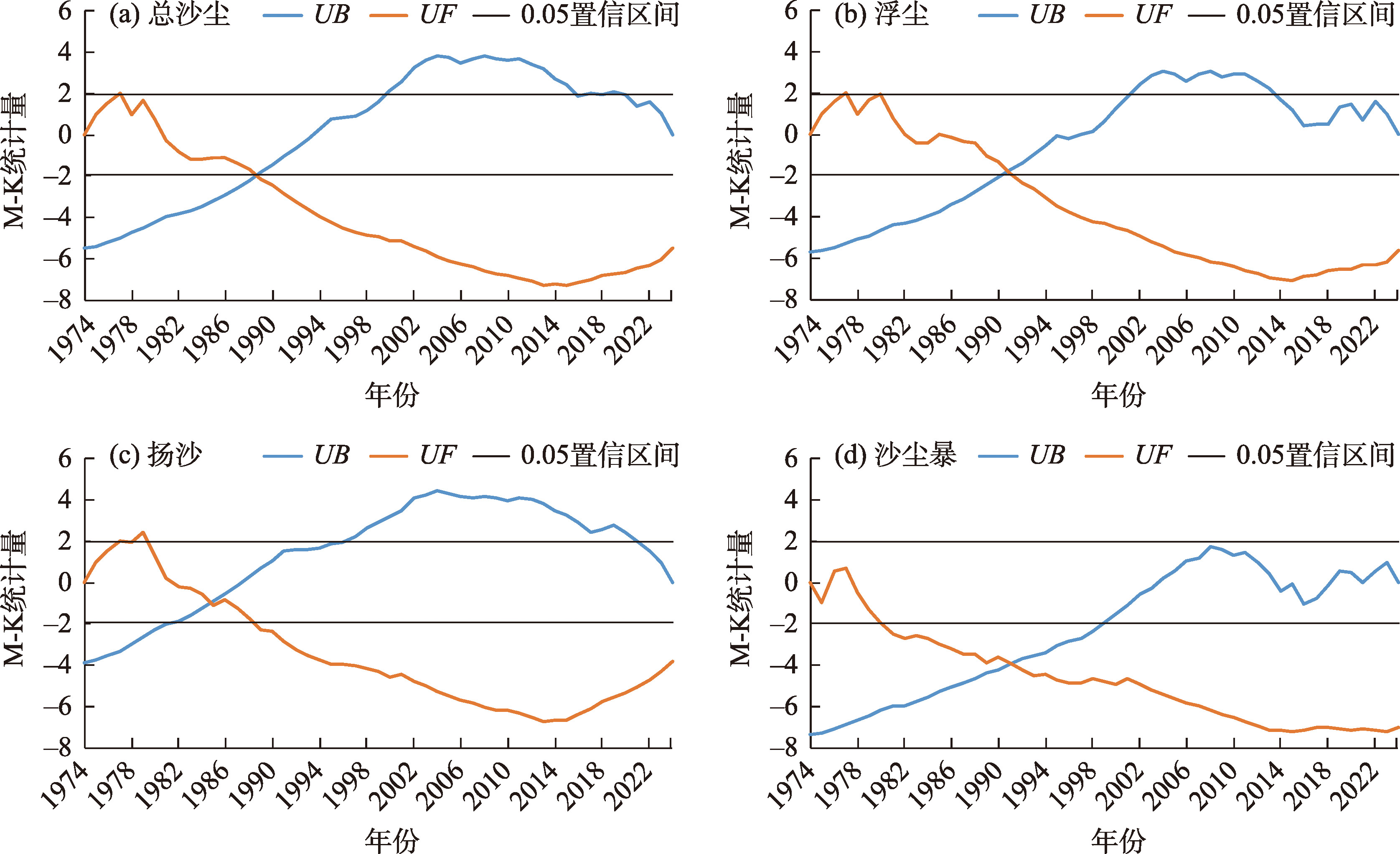
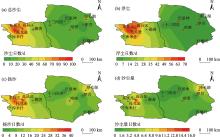
图5
1974—2024年吐哈地区不同沙尘强度年均日数分布"

表2
吐哈地区沙尘日数与各气象要素相关系数"
| 平均气温 | 最高气温 | 最低气温 | 降水量 | 平均相对湿度 | 大风日数 | 平均风速 | |
|---|---|---|---|---|---|---|---|
| 沙尘日数 | -0.58** | -0.55** | -0.63** | -0.16 | 0.19 | 0.77** | 0.74** |
| 浮尘日数 | -0.60** | -0.59** | -0.65** | -0.09 | 0.28 | 0.75** | 0.67** |
| 扬沙日数 | -0.41* | -0.39* | -0.48* | -0.24 | -0.02 | 0.72** | 0.77** |
| 沙尘暴日数 | -0.73** | -0.65** | -0.79** | -0.17 | 0.26 | 0.79** | 0.67** |
| 气候倾向率 | 0.54 ℃·(10a)-1** | 0.43 ℃·(10a)-1** | 0.72 ℃·(10a)-1** | 0.66 mm·(10a)-1 | -1.00%·(10a)-1* | -3.52 d·(10a)-1* | -0.07 m·s-1·(10a)-1* |
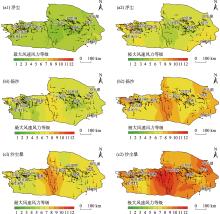
图6
2017—2024年不同沙尘强度最大风速、极大风速及盛行风向分布 注:图中箭头表示风向。"

| [1] | 中央气象局. 地面气象观测规范[M]. 北京: 气象出版社, 1979: 21-27. |
| [China Meteorological Administration. Ground Meteorological Observation Specifications[M]. Beijing: China Meteorological Press, 1979: 21-27. ] | |
| [2] | Ralena Ilieva, Krasimir Stoev, Guergana Guerova. Climatology and circulation classification of Saharan dust over Bulgaria[J]. Journal of Atmospheric and Solar-Terrestrial Physics, 2024, 267: 106403. |
| [3] | Liu Qiantao, Huang Zhongwei, Hu Zhiyuan, et al. Long-range transport and evolution of Saharan dust over East Asia from 2007 to 2020[J]. Journal of Geophysical Research: Atmospheres, 2022, 127(18): 2022JD036974. |
| [4] | Varga György, Meinander Outi, Rostási Ágnes, et al. Desert dust and photovoltaic energy forecasts: Lessons from 46 Saharan dust events in Hungary (Central Europe)[J]. Environment International, 2023, 180: 108243. |
| [5] | Kurosaki Y, Mikami M. Recent frequent dust events and their relation to surface wind in East Asia[J]. Geophysical Research Letters, 2003, 30(14): 1736-1739. |
| [6] | Wang Yang, Yu Haojie, Li Lan, et al. Long-term trend of dust event duration over Northwest China[J]. The Science of the Total Environment, 2024, 951: 175819. |
| [7] | Ma Yihao, Mao Rui, Shi Cuicui, et al. Increasing cross-border dust storm from Mongolia to China during 1987-2022[J]. Global and Planetary Change, 2024, 242: 104578. |
| [8] | Fan Lei, Wang Yi, He Bin, et al. Spatio-temporal distribution and transport pathways analysis of sand and dust weather in North China[J]. Natural Hazards, 2025, 121: 7425-7445. |
| [9] | Zhou Wencun, Wang Huanjiong, Ge Quansheng. Contributions of climatic factors and vegetation cover to the temporal shift in Asian dust events[J]. Climate and Atmospheric Science, 2024, 8: 51. |
| [10] | Wu Xiaoling, Wu Chenglai, Lin Zhaohui, et al. Intra-seasonal variations of dust activity over East Asia in spring 2023 and their mechanisms[J]. Global and Planetary Change, 2025, 244: 104638. |
| [11] | Mohammad Reza Mansouri Daneshvar, Seyed Javad Rasouli, Aliasghar Dehqanpour Aliaqa. An overview of the transboundary dust events in southeastern Turkmenistan near the border of Iran (Sarakhs-Badkhyz region)[J]. Environmental Systems Research, 2025, 14(1): 1. |
| [12] | Li Yanying, Ma Xingwei, Wang Fucun, et al. Climatic drivers and temporal dynamics of sandstorms in the Hexi Corridor, China[J]. Climate Services, 2025, 37: 100532. |
| [13] | 李玲萍, 李岩瑛, 孙占峰, 等. 河西走廊东部沙尘暴特征及地面气象因素影响机制[J]. 干旱区研究, 2019, 36(6): 1457-1465. |
| [Li Lingping, Li Yanying, Sun Zhanfeng, et al. Sandstorm and its affecting meteorological factors in East Hexi Corridor[J]. Arid Zone Research, 2019, 36(6): 1457-1465. ] | |
| [14] |
徐路扬, 翟亮, 王媛媛, 等. 多源遥感数据在北京春季沙尘天气监测中的应用评估[J]. 干旱气象, 2023, 41(2): 318-327.
doi: 10.11755/j.issn.1006-7639(2023)-02-0318 |
| [Xu Luyang, Zhai Liang, Wang Yuanyuan, et al. Application ecaluation of multi-source remote sensing data in spring dust weather monitoring in Beijing[J]. Journal of Arid Meteorology, 2023, 41(2): 318-327. ] | |
| [15] |
田文君, 薛一波, 张小啸, 等. 2021年春季塔里木盆地典型沙尘天气过程气溶胶垂直分布及传输[J]. 干旱区研究, 2025, 42(1): 14-26.
doi: 10.13866/j.azr.2025.01.02 |
|
[Tian Wenjun, Xue Yibo, Zhang Xiaoxiao, et al. Study on the vertical distribution and transport of dust aerosols duting typical dust weather events in the Tarim Basin, Northwest China in spring, 2021[J]. Arid Zone Research, 2025, 42(1): 14-26. ]
doi: 10.13866/j.azr.2025.01.02 |
|
| [16] | 高泽田, 胡秀清, 张小曳, 等. 基于FY-4A卫星遥感数据分析2021年3次沙尘暴特征[J]. 气象科技, 2022, 50(4): 536-543. |
| [Gao Zetian, Hu Xiuqing, Zhang Xiaoye, et al. Characteristic analysis of three sand-dust storm process in 2021 based on FY-4A satellite remote sensing data[J]. Meterological Science and Technology, 2022, 50(4): 536-543. ] | |
| [17] | 曹译丹, 马敏劲, 康国强, 等. 西北一次强沙尘天气的数值模拟及其诊断[J]. 干旱区研究, 2024, 41(2): 318-327. |
| [Cao Yidan, Ma Minjin, Kang Guoqiang, et al. Numerical simulation and diagnosis of a severe dust storm event in Northwest China[J]. Arid Zone Research, 2024, 41(2): 318-327. ] | |
| [18] | Elham Mobarak Hassan, Mahnaz Karimkhani, Jeff Sepehri. Evaluating and comparison of WRF-chem model configurations for wind field impact on the April 2022 dust episode in western Iran[J]. Atmospheric Environment, 2025, 340: 120892. |
| [19] | 李丹华, 张强, 卢国阳, 等. 我国北方一次典型强沙尘暴过程的延伸期数值预报能力分析[J]. 干旱气象, 2023, 41(6): 944-951. |
| [Li Danhua, Zhang Qiang, Lu Guoyang, et al. Numerical prediction ability analysis of extended period for a typical severe sandstorm process in northern China[J]. Journal of Arid Meteorology, 2023, 41(6): 944-951. ] | |
| [20] | Abbas Mofidi, Azar Zarrin, Samira Hassani, et al. Dynamics of a severe summer Shamal wind and its induced dust storm in the middle East: A diagnostic study based on numerical simulation[J]. Atmospheric Research, 2025, 314: 107800. |
| [21] | 买买提艾力·买买提依明, 霍文, 杨兴华, 等. 新疆沙尘暴研究进展[J]. 沙漠与绿洲气象, 2022, 16(2): 1-7. |
| [Ali Mamtimin, Huo Wen, Yang Xinhua, et al. Research advance of sandstorm in Xinjiang[J]. Desert and Oasis Meterology, 2022, 16(2): 1-7. ] | |
| [22] | 魏文寿, 张璞, 高卫东, 等. 新疆沙尘暴源区的气候与荒漠环境变化[J]. 中国沙漠, 2003, 23(5): 483-487. |
| [Wei Wenshou, Zhang Pu, Gao Weidong, et al. Climate and desert environment evolution in sandstorm source area of Xinjiang, China[J]. Journal of Desert Research, 2003, 23(5): 483-487. ] | |
| [23] | 姜萍, 徐洁, 陈鹏翔, 等. 南疆近57年沙尘暴变化特征分析[J]. 干旱区资源与环境, 2019, 33(2): 105-111. |
| [Jiang Ping, Xu Jie, Chen Pengxiang, et al. The variation characteristics of sandstorms in South Xinjiang during recent 57 years[J]. Journal of Arid Land Resources and Environment, 2019, 33(2): 105-111. ] | |
| [24] | 李红军, 汤浩. 北疆春季沙尘暴极多与极少年环流场特征[J]. 沙漠与绿洲气象, 2017, 11(1): 35-40. |
| [Li Hongjun, Tang Hao. The circulation fields characteristics of spring sandstorm of the North of Xinjiang in the extremely many years and the few years[J]. Desert and Oasis Meterology, 2017, 11(1): 35-40. ] | |
| [25] | 何清, 杨青, 李红军. 新疆40年来气温、降水和沙尘天气变化[J]. 冰川冻土, 2003, 25(4): 423-427. |
| [He Qing, Yang Qing, Li Hongjun. Variations of air temperature, precipitation and sand-dust weather in Xinjiang in past 40 years[J]. Journal of Glaciology and Geocryology, 2003, 25(4): 423-427. ] | |
| [26] |
王瑾杰, 丁建丽, 张子鹏. 基于遥感生态指数的吐哈地区生态环境变化研究[J]. 干旱区地理, 2022, 45(5): 1591-1603.
doi: 10.12118/j.issn.1000-6060.2022.346 |
|
[Wang Jinjie, Ding Jianli, Zhang Zipeng. Change of ecological environment in Turpan and Hami cities based on remote sensing ecology index[J]. Arid Land Geography, 2022, 45(5): 1591-1603. ]
doi: 10.12118/j.issn.1000-6060.2022.346 |
|
| [27] | 李锋, 易实, 卢英. 库车石油气象预报服务指标分析和气象灾害防御对策[J]. 现代商贸工业, 2008, 20(1): 288-290. |
| [Li Feng, Yi Shi, Lu Ying. Analysis of meteorological forecast service indicators and defense strategies for meteorological disasters in Kuqa oilfield[J]. Modern Business and Industrial Trade, 2008, 20(1): 288-290. ] | |
| [28] | 唐礼俊, 朱红波. 浅析新疆石油钻井安全影响因素与防范措施[J]. 科技与创新, 2024(19): 132-134. |
| [Tang Lijun, Zhu Hongbo. A preliminary analysis of safety influencing factors and prevention measures in Xinjiang oil drilling[J]. Science and Innovation, 2024(19): 132-134. ] | |
| [29] | 朱翠玲. 沙漠石油钻机系统风险分析与安全评价研究[D]. 荆州: 长江大学, 2017. |
| [Zhu Cuiling. Risk Analysis and Safety Evaluation of Desert Oil Drilling Rig Systems[D]. Jingzhou: Changjiang University, 2017. ] | |
| [30] |
赵亚洲, 李生宇, 王世杰, 等. 2001—2020年新疆风沙环境致灾潜力特征[J]. 中国沙漠, 2023, 43(3): 274-283.
doi: 10.7522/j.issn.1000-694X.2022.00133 |
|
[Zhao Yazhou, Li Shengyu, Wang Shijie, et al. Analysis of temporal and spatial characteristics of hazard potential of wind blown sand environment in Xinjiang from 2001 to 2020[J]. Journal of Desert Research, 2023, 43(3): 274-283. ]
doi: 10.7522/j.issn.1000-694X.2022.00133 |
|
| [31] | 郑乐娟, 张志军, 张慧琴, 等. 吐鲁番盆地近30年沙尘天气分布特征[J]. 新疆气象, 2003, 26(2): 12-14. |
| [Zheng Lejuan, Zhang Zhijun, Zhang Huiqin, et al. The distribution characteristics of sand-dust weather in Turpan Basin over the past three decades[J]. Xinjiang Meteorology, 2003, 26(2): 12-14. ] | |
| [32] | 白松竹, 王磊, 李如琦, 等. 基于新型垂直观测资料的一次强沙尘暴过程特征分析[J]. 沙漠与绿洲气象, 2025, 19(4): 19-27. |
| [Bai Songzhu, Wang Lei, Li Ruqi, et al. Characteristic analysis of a strong dust storm in Hami: Based on new vertical observation data[J]. Desert and Oasis Meteorology, 2025, 19(4): 19-27. ] | |
| [33] | 李成刚, 高泽吉, 陈智. “双碳”背景下吐哈油田绿色转型发展的探索与思考[J]. 油气田地面工程, 2022, 41(12): 1-5. |
| [Li Chenggang, Gao Zeji, Chen Zhi. Exploration and thinking of green transformation development of Tuha oilfield under the background of “double carbon”[J]. Oil-gas Field Surface Engineering, 2022, 41(12): 1-5. ] | |
| [34] | 王俊. 哈密盆地水资源优化配置研究[J]. 中国水能及电气化, 2025(4): 33-39. |
| [Wang Jun. Research on the optimal allocation of water resources in the Hami Basin[J]. China Water Power and Electrification, 2025(4): 33-39. ] | |
| [35] | 丁裕国, 江志红. 气象数据时间序列信号处理[M]. 北京: 气象出版社, 1998: 194-201. |
| [Ding Yuguo, Jiang Zhihong. Meteorological Data Time Series Signal Process[M]. Beijing: China Meteorological Press, 1998: 194-201. ] | |
| [36] | 魏凤英. 现代气候统计诊断与预测技术[M]. 北京: 气象出版社, 2007: 64-69. |
| [Wei Fengying. Modern Climate Statistical Diagnostics and Prediction Techniques[M]. Beijing: China Meteorological Press, 2007: 64-69. ] | |
| [37] | 梅雪英, 杨扬, 方建德. 上海地区酸雨类型格局转变研究[J]. 长江流域资源与环境, 2010, 19(9): 1075-1079. |
| [Mei Xueying, Yang Yang, Fang Jiande. Regime shift of acid rain type in area of Shanghai[J]. Resources and Environment in the Yangtze Basin, 2010, 19(9): 1075-1079. ] | |
| [38] |
孙宽, 孙雪岩, 唐艳, 等. 青海省多年地表感热通量的时空变化特征[J]. 干旱区研究, 2024, 41(1): 36-49.
doi: 10.13866/j.azr.2024.01.04 |
|
[Sun Kuan, Sun Xueyan, Tang Yan, et al. Temporal and spatial cariations in multi-year surface sensible heat flux in Qinghai Procince[J]. Arid Zone Research, 2024, 41(1): 36-49. ]
doi: 10.13866/j.azr.2024.01.04 |
|
| [39] | 玛依热·艾海提, 周元逸, 赵海军, 等. 南疆西部沙尘天气长期变化及突变特征分析[J]. 沙漠与绿洲气象, 2023, 17(3): 107-115. |
| [Mayra Ahat, Zhou Yuanyi, Zhao Haijun, et al. Analysis of long-term variation and abrupt change of dust weather in western southern Xinjiang[J]. Desert and Oasis Meterology, 2023, 17(3): 107-115. ] | |
| [40] | Wang Ninglian, Yao Tandong, Thompson L G, et al. Strong negatice correlation between dust event frequency and air temperature over the northern Tibetan Plateau reflected by the Malan ice-core record[J]. Annals of Glaciology, 2006, 43: 29-33. |
| [41] |
Chen Siyu, Guan Yawen, Zhao Dan, et al. Infuence of dust aerosol on land surface diurnal temperature range over East Asia simulated with the WRF-Chem model[J]. Journal of Desert Research, 2022, 42(3): 127.
doi: 10.7522/j.issn.1000-694X.2022.00026 |
| [42] | 杨雪艳, 张丽, 袭祝香, 等. 东北地区春季沙尘天气变化特征及其与大气环流变化的关系[J]. 气象与环境学报, 2018, 34(4): 75-83. |
| [Yang Xueyan, Zhang Li, Xi Zhuxiang, et al. Characteristics of sand-dust events and their relationships with atmospheric circulation in spring in Northeast China[J]. Journal of Meteorology and Environment, 2018, 34(4): 75-83. ] | |
| [43] | 陶健红. 西北地区沙尘天气的时空特征及影响因素分析[J]. 中国沙漠, 2009, 29(2): 327-334. |
| [Tao Jianhong. Spatial-temporal characteristics of sand-dust events and influencing factors in Northwest China[J]. Journal of Desert Research, 2009, 29(2): 327-334. ] | |
| [44] | 杨婕, 赵天良, 程叙耕, 等. 2000—2019年中国北方地区沙尘暴时空变化及其相关影响因素[J]. 环境科学学报, 2021, 41(8): 2966-2975. |
| [Yang Jie, Zhao Tianliang, Cheng Xugen, et al. Temporal and spatial variations of sandstorm and the related meteorological influences over northern China from 2000 to 2019[J]. Acta Scientiae Circumstantiae, 2021, 41(8): 2966-2975. ] | |
| [45] |
薛一波, 张小啸, 雷加强, 等. 北非埃及地区风蚀沙尘时空变化研究[J]. 干旱区研究, 2023, 40(6): 896-904.
doi: 10.13866/j.azr.2023.06.05 |
|
[Xue Yibo, Zhang Xiaoxiao, Lei Jiaqiang, et al. Spatial-temporal variability of eolian dust in Egypt North Africa[J]. Arid Zone Research, 2023, 40(6): 896-904. ]
doi: 10.13866/j.azr.2023.06.05 |
|
| [46] | 孙玉华, 杜峰. 莎车县沙尘天气与大风事件的关联性研究[J]. 沙漠与绿洲气象, 2024, 18(6): 25-31. |
| [Sun Yuhua, Du Feng. Analysis of the correlation between sand-dust events and gale occurrences in Shache County[J]. Desert and Oasis Meterology, 2024, 18(6): 25-31. ] |
| [1] | 刘凤莲, 罗芹芹, 杨博文, 陈洪敏, 高梓燚. 基于地理探测器的泾河流域景观生态风险及驱动因素[J]. 干旱区研究, 2025, 42(8): 1488-1500. |
| [2] | 张擂, 周煜明, 董杰谋, 李祥, 刘时栋, 徐丽萍. 中国耕地非农化与非粮化时空分异及其治理策略[J]. 干旱区研究, 2025, 42(2): 372-383. |
| [3] | 曹译丹, 马敏劲, 康国强, 陈然. 西北一次强沙尘天气的数值模拟及其诊断[J]. 干旱区研究, 2025, 42(1): 1-13. |
| [4] | 田文君, 薛一波, 张小啸, 雷加强, 李生宇, 范敬龙, 张恒. 2021年春季塔里木盆地典型沙尘天气过程气溶胶垂直分布及传输[J]. 干旱区研究, 2025, 42(1): 14-26. |
| [5] | 吕宁, 国语, 彭琴, 尹飞虎, 张嘉淇, 刘杏认, 曾梅, 许子函. 新疆耕地利用碳源/汇效应时空演变特征及其贡献因子[J]. 干旱区研究, 2025, 42(1): 179-190. |
| [6] | 张文睿, 孙栋元, 王亦可, 杨俊, 兰立军, 靳虎甲, 徐裕. 河西走廊水资源-生态环境-社会经济系统耦合关系及时空分异[J]. 干旱区研究, 2024, 41(9): 1527-1537. |
| [7] | 李可璇, 张蕾, 李豪, 张恩月, 李育桢, 宋彩云, 刘庚. 基于MSPA模型和电路理论的晋西北国土空间生态修复关键区域识别[J]. 干旱区研究, 2024, 41(9): 1593-1604. |
| [8] | 吕彦勋, 赵洪民, 王小军, 王彬, 马仲武, 刘民兰, 张龄慧. 中国西北城市沙尘天气变化特征——以兰州为例[J]. 干旱区研究, 2024, 41(7): 1112-1119. |
| [9] | 高鹏程, 岳艳妮, 鄢继选, 王世杰, 别强. 甘南藏族自治州土地利用与生态风险时空演变及驱动因素[J]. 干旱区研究, 2024, 41(7): 1140-1152. |
| [10] | 菅政博, 罗浩, 单娜娜. “双碳”目标下新疆“三生”空间时空演变特征及碳效应[J]. 干旱区研究, 2024, 41(7): 1238-1248. |
| [11] | 蔡玉琴, 祁栋林, 王烈福, 李海凤, 张德琴. 青海省不同等级寒冷日数时空演变特征[J]. 干旱区研究, 2024, 41(5): 742-752. |
| [12] | 高雅玉, 宋玉, 赵廷红, 高金芳, 何文博, 李泽霞. 马莲河下游产水量时空演变特征[J]. 干旱区研究, 2024, 41(5): 776-787. |
| [13] | 李文秀, 燕振刚. 基于地理探测器的甘肃农牧交错带土地利用时空演化及其驱动机制[J]. 干旱区研究, 2024, 41(4): 590-602. |
| [14] | 陶际峰, 包玉龙, 郭恩亮, 金额尔德木吐, 呼斯乐, 包玉海. 近40 a内蒙古冬旱时空演变特征[J]. 干旱区研究, 2024, 41(3): 387-398. |
| [15] | 其美拉姆, 郑诚, 袁浏欢, 吴沛桐, 谭凯, 申乔天, 史海静. 青藏高原植被光能利用效率时空变化[J]. 干旱区研究, 2024, 41(10): 1731-1739. |
|
||
