
Arid Zone Research ›› 2025, Vol. 42 ›› Issue (6): 1043-1054.doi: 10.13866/j.azr.2025.06.08
• Land and Water Resources • Previous Articles Next Articles
DU Jun1( ), LI Guang1,2,3(), DU Mengyin1, YAO Yao1, MA Weiwei1, YUAN Jianyu1,2,3
Received:2024-12-03
Revised:2025-03-06
Online:2025-06-15
Published:2025-06-11
Contact:
LI Guang
E-mail:15393655806@163.com;lig93272883@163.com
DU Jun, LI Guang, DU Mengyin, YAO Yao, MA Weiwei, YUAN Jianyu. Effects of different land use types on soil N2O fluxes on the Loess Plateau[J].Arid Zone Research, 2025, 42(6): 1043-1054.
Add to citation manager EndNote|Reference Manager|ProCite|BibTeX|RefWorks
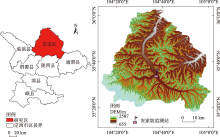
Fig. 1
Map of the study area"

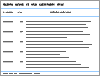
Tab. 1
Basic information and description of each plot"
| 处理 | 纬度 | 经度 | 优势植物 | 扰动历史 |
|---|---|---|---|---|
| 云杉林地(PA) | 35°35′10″N | 104°37′7″E | 粗枝云杉(Picea asperata)、北柴胡(Bupleurum chinense)、秦艽(Gentiana macrophylla)、火绒草 (Leontopodium leontopodioides) | 2002年通过实施“退耕还林还草工程”恢复为云杉林地,没有采取任何进一步管理措施 |
| 苜蓿草地(MS) | 35°34′48″N | 104°39′2″E | 紫花苜蓿(Medicago sativa)、赖草(Leymus secalinus)、野艾蒿(Artemisia lavandulaefolia) | 2015年在耕地的基础上弃耕,种植苜蓿并围封,成活后未采取进一步管理措施 |
| 撂荒地(AL) | 35°34′54″N | 104°37′57″E | 长芒草(Stipa bungeana)、车前(Plantago asiatica)、狗尾草(Setaria viridis) | 1999年被弃耕,自然恢复为撂荒地,有少量杂草分布,没有采取任何进一步的管理措施 |
| 小麦地(WF) | 35°34′45″N | 104°39′1″E | 春小麦(spring wheat) | 2015年在荒地的基础上开垦为农田,种植了春小麦,直到现在 |
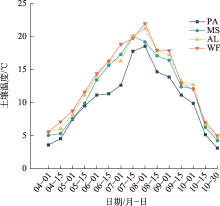
Fig. 2
Effects of different land use methods on soil temperature in 2022"
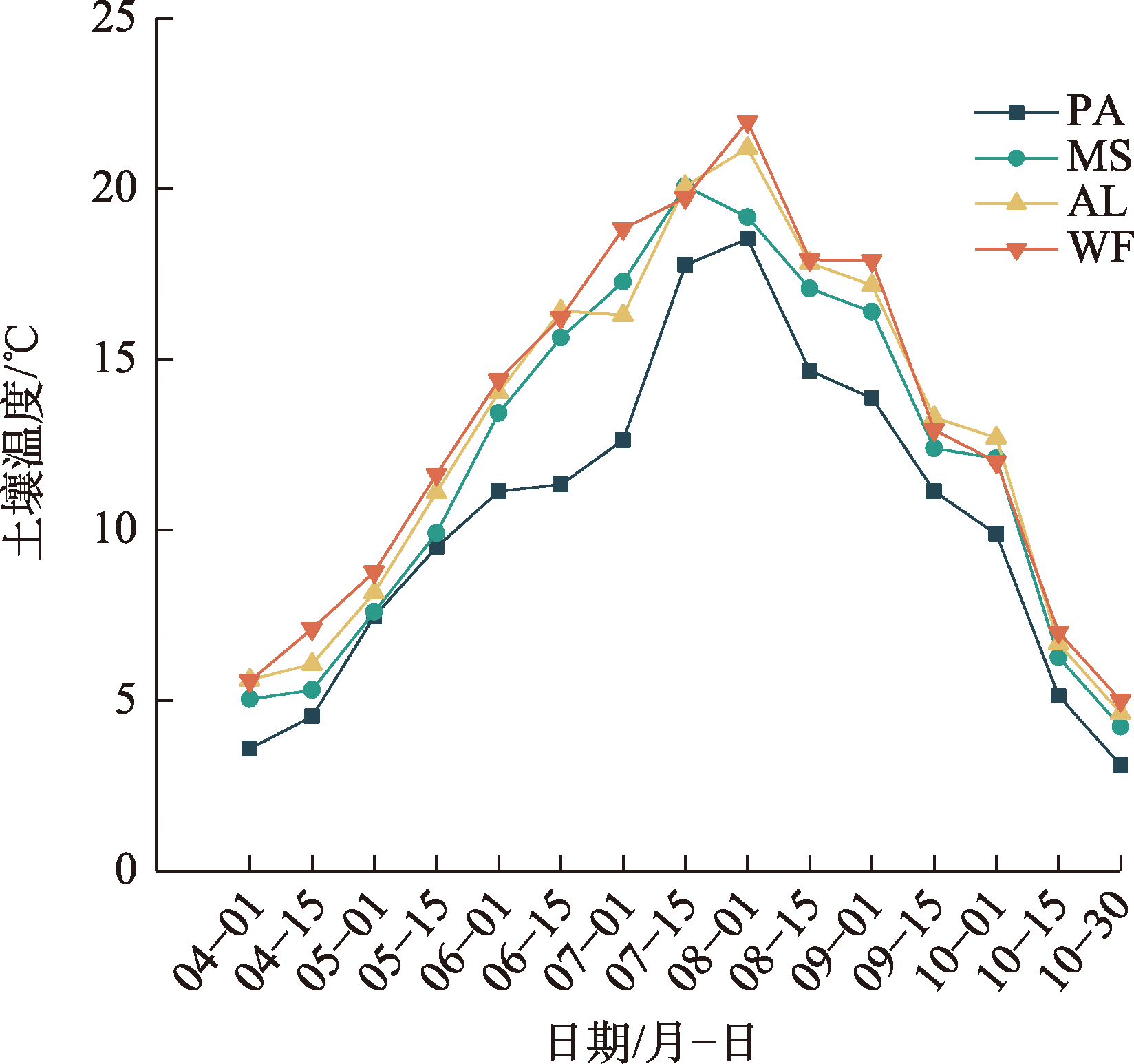

Fig. 3
Effect of different land use methods on soil water content"


Fig. 4
Effects of different land use patterns on soil nitrate nitrogen"

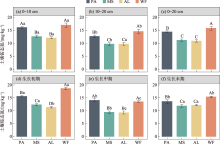
Fig. 5
Effects of different land use patterns on soil ammonium nitrogen"


Fig. 6
Effects of different land use patterns on soil nitrate reductase activity"

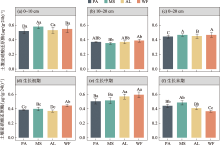
Fig. 7
Effects of different land use patterns on soil nitrite reductase activity"

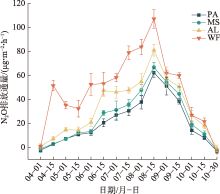
Fig. 8
Soil N2O emission flux under different land use methods in 2022"
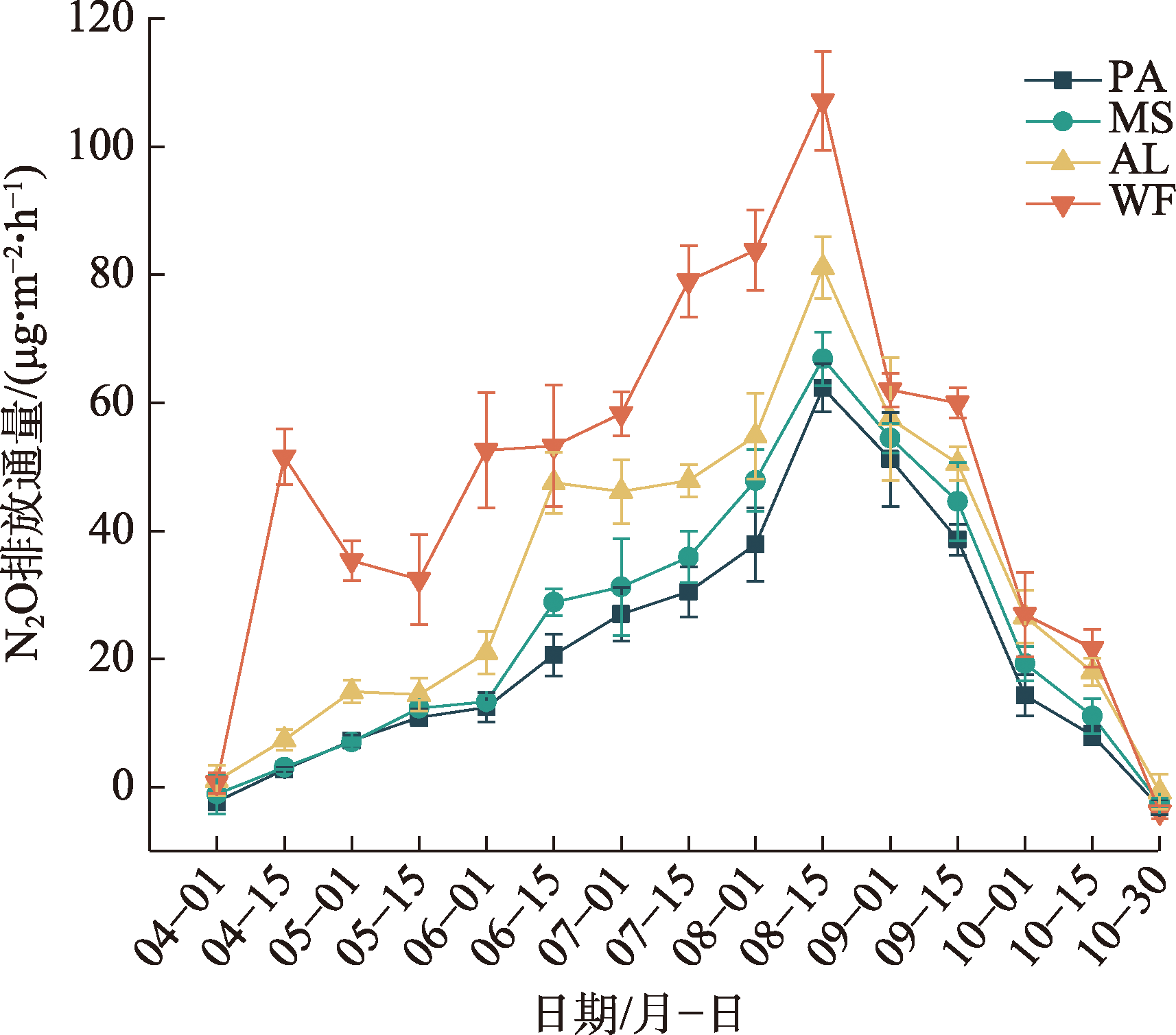

Fig. 9
Accumulated emission of soil N2O under different land use methods in 2020"


Fig. 10
The correlation between soil environmental factors, soil enzyme activity and N2O emission flux, and the ranking of the importance of influencing factors"

| [1] |
Ravishankara R A, Daniel S J, Portmann W R. Nitrous Oxide(N2O): The dominant ozone-depleting substance emitted in the 21st century[J]. Science, 2009, 326(5949): 123-125.
doi: 10.1126/science.1176985 pmid: 19713491 |
| [2] | 邓米林, 叶桂萍, 胥超. 林分类型和氮添加对亚热带森林土壤氧化亚氮排放的影响[J]. 水土保持学报, 2023, 37(6): 262-267. |
| [Deng Milin, Ye Guiping, Xu Chao. Effects of forest types and nitrogen addition on soil nitrous oxide emissions in a subtropical forest[J]. Journal of Soil and Water Conservation, 2023, 37(6): 262-267.] | |
| [3] | 张若玉. 长寿命温室气体CH4、N2O的辐射强迫和全球增温潜能的研究[D]. 南京: 南京信息工程大学, 2011. |
| [Zhang Ruoyu. A Study Radiative Forcing and Global Warming Potential of Long-life Greenhouse Gases CH4 and N2O[D]. Nanjing: Nanjing University of Information Science, 2011.] | |
| [4] | 孙志强, 郝庆菊, 江长胜, 等. 农田土壤N2O的产生机制及其影响因素研究进展[J]. 土壤通报, 2010, 41(6): 1524-1530. |
| [Sun Zhiqiang, Hao Qingju, Jiang Changsheng, et al. Advances in the study of nitrous oxide production mechanism and its influencing factors in agricultural soils[J]. Chinese Journal of Soil Science, 2010, 41(6): 1524-1530.] | |
| [5] | 杜子银, 蔡延江, 张斌, 等. 牲畜排泄物返还对草地土壤氮转化和氧化亚氮(N2O)排放的影响研究进展[J]. 生态学报, 2022, 42(1): 45-57. |
| [Du Ziyin, Cai Yanjiang, Zhang Bin, et al. Research progress on livestock excreta returning on soil nitrogen transformation and nitrous oxide emission in grasslands[J]. Acta Ecologica Sinica, 2022, 42(1): 45-57.] | |
| [6] | Snyder C, Bruulsema T, Jensen T, et al. Review of greenhouse gas emissions from crop production systems and fertilizer management effects[J]. Agriculture, Ecosystems and Environment, 2009, 133(3-4): 247-266. |
| [7] | 郭疆, 袁建钰, 卓玛草, 等. 陇中黄土高原不同土地利用方式对土壤氮组分及酶活性的影响[J]. 甘肃农业大学学报, 2024, 59(6): 186-194. |
| [Guo Jiang, Yuan Jianyu, Zhuo Macao, et al. Effects of different land use practices on soil N fractions and enzyme activities in the Loess Plateau of Longzhong[J]. Journal of Gansu Agricultural University, 2024, 59(6): 186-194.] | |
| [8] | 王苏平, 辉建春, 林立金, 等. 施肥制度对川中丘陵区玉米不同生育期土壤反硝化酶活性的影响[J]. 水土保持研究, 2012, 19(3): 274-277, 283. |
| [Wang Suping, Hui Jianchun, Lin Lijin, et al. Effects of fertilizer system on soil denitrification enzyme activity at different growth stages of maize in hilly regions of middle Sichuan[J]. Research of Soil and Water Conservation, 2012, 19(3): 274-277, 283.] | |
| [9] | 孟轶, 廖萍, 魏海燕, 等. 施石膏对水稻产量和甲烷排放影响的荟萃分析[J]. 中国生态农业学报, 2023, 31(2): 280-289. |
| [Meng Yi, Liao Ping, Wei Haiyan, et al. Effects of gypsum application on grain yield and methane emissions in rice paddies: A global meta-analysis[J]. Chinese Journal of Eco-Agriculture, 2023, 31(2): 280-289.] | |
| [10] |
祁小平, 李广, 袁建钰, 等. 保护性耕作对陇中旱作麦田蓄水保墒效果和产量的影响[J]. 干旱区研究, 2022, 39(1): 312-321.
doi: 10.13866/j.azr.2022.01.30 |
|
[Qi Xiaoping, Li Guang, Yuan Jianyu, et al. Effects of conservation tillage on the water storage, moisture conservation, and yield of dry-land wheat fields of central Gansu Province[J]. Arid Zone Research, 2022, 39(1): 312-321.]
doi: 10.13866/j.azr.2022.01.30 |
|
| [11] | Yuan J, Yao Y, Guan Y, et al. Effects of land use patterns on soil properties and nitrous oxide flux on a semi-arid environmental conditions of Loess Plateau China[J]. Global Ecology and Conservation, 2024, 51: e02899. |
| [12] | 肖未, 吴庆峰, 李伏生. 滴灌水氮管理对玉米种植土壤无机氮含量和氧化亚氮排放的影响[J]. 华南农业大学学报, 2023, 44(3): 410-419. |
| [Xiao Wei, Wu Qingfeng, Li Fusheng. Effect of drip irrigation and nitrogen management on inorganic nitrogen content and nitrous oxide emission in maize-planting soil[J]. Journal of South China Agricultural University, 2023, 44(3): 410-419.] | |
| [13] | Yang Chuanjie, Li Guang, Yan Lijuan, et al. Effects of different vegetation types on ecosystem respiration in semiarid Loess Hilly Region, Central Gansu Province, China[J]. Ecological Indicators, 2022, 145: 109683. |
| [14] | 曹心德, 陈莹, 王晓蓉. 环境条件变化对土壤中稀土元素溶解释放的影响[J]. 中国环境科学, 2000, 20(6): 486-490. |
| [Cao Xinde, Chen Ying, Wang Xiaorong. The effects of environmental conditions on the release and species transformation of rare earth elements (REEs) in soil[J]. China Environmental Science, 2000, 20(6): 486-490.] | |
| [15] | 吴健利, 刘梦云, 赵国庆, 等. 黄土台塬土地利用方式对土壤有机碳矿化及温室气体排放的影响[J]. 农业环境科学学报, 2016, 35(5): 1006-1015. |
| [Wu Jianli, Liu Mengyun, Zhao Guoqing, et al. Effects of land-use types on soil organic carbon mineralization and greenhouse gas emissions in Loess tableland[J]. Journal of Agro-Environment Science, 2016, 35(5): 1006-1015.] | |
| [16] |
徐玉秀, 郭李萍, 谢立勇, 等. 中国主要旱地农田N2O背景排放量及排放系数特点[J]. 中国农业科学, 2016, 49(9): 1729-1743.
doi: 10.3864/j.issn.0578-1752.2016.09.009 |
|
[Xu Yuxiu, Guo Liping, Xie Liyong, et al. Characteristics of background emissions and emission factors of N2O from major upland fields in China[J]. Scientia Agricultura Sinica, 2016, 49(9): 1729-1743.]
doi: 10.3864/j.issn.0578-1752.2016.09.009 |
|
| [17] | Žurovec Ognjen, Sitaula Bishal Kumar, Čustovié Hamid, et al. Effects of tillage practice on soil structure, N2O emissions and economics in cereal production under current socio-economic conditions in central Bosnia and Herzegovina[J]. PloS One, 2017, 12(11): e0187681. |
| [18] | 郎漫, 聂浩, 朱恺文, 等. 草海自然保护区内不同利用方式土壤氮素转化和氧化亚氮排放特征[J]. 农业环境科学学报, 2025, 44(1): 227-234. |
| [Lang Man, Nie Hao, Zhu Kaiwen, et al. Nitrogen transformation characteristics and nitrous oxide emissions from soils under different land use types in Caohai nature reserve[J]. Journal of Agro-Environment Science, 2025, 44(1): 227-234.] | |
| [19] |
辛春明, 何明珠, 李承义, 等. 荒漠土壤氧化亚氮排放及其驱动因素研究进展[J]. 中国沙漠, 2023, 43(2): 184-194.
doi: 10.7522/j.issn.1000-694X.2022.00082 |
|
[Xin Chunming, He Mingzhu, Li Chengyi, et al. A review of research progress on nitrous oxide emissions from desert soil and its driving factors[J]. Journal of Desert Research, 2023, 43(2): 184-194.
doi: 10.7522/j.issn.1000-694X.2022.00082 |
|
| [20] |
李渊, 王涛, 周莹, 等. 3种栽培草地N2O释放通量季节动态的研究[J]. 草地学报, 2015, 23(4): 703-709.
doi: 10.11733/j.issn.1007-0435.2015.04.006 |
|
[Li Yuan, Wang Tao, Zhou Ying, et al. Study on the seasonal dynamics of N2O release flux in three cultivated grasslands[J]. Acta Agrestia Sinica, 2015, 23(4): 703-709.]
doi: 10.11733/j.issn.1007-0435.2015.04.006 |
|
| [21] | 孙文浩, 杨世伟, 高晓东, 等. 黄土丘陵区不同土地利用类型土壤CO2, N2O通量特征[J]. 水土保持研究, 2017, 24(1): 68-74. |
| [Song Wenhao, Yang Shiwei, Gao Xiaodong et al. Characteristics of CO2 and N2O emissions under different land-use types in Loess Hilly Region of China[J]. Research of Soil and Water Conservation, 2017, 24(1): 68-74.] | |
| [22] | 唐瑞杰, 胡煜杰, 赵彩悦, 等. 不同水分条件下土地利用方式对我国热带地区土壤硝化过程及NO和N2O排放的影响[J]. 环境科学, 2022, 43(11): 5159-5168. |
| [Tang Ruijie, Hu Yujie, Zhao Caiyue, et al. Effects of land-use conversion on soil nitrification and NO & N2O emissions in tropical China under different moisture conditions[J]. Environmental Science, 2022, 43(11): 5159-5168.] | |
| [23] | 甘春娟, 郑爽, 陈垚, 等. 氮素在雨水生物滞留系统多介质中的归趋与迁移特性[J]. 山东农业科学, 2019, 51(10): 71-77. |
| [Gan Chunjuan, Zheng Shuang, Chen Yao, et al. Fates and migration characteristics of nitrogen in multimedia of stormwater bioretention system[J]. Shandong Agricultural Science, 2019, 51(10): 71-77.] | |
| [24] | 石洪艾, 李禄军, 尤孟阳, 等. 不同土地利用方式下土壤温度与土壤水分对黑土N2O排放的影响[J]. 农业环境科学学报, 2013, 32(11): 2286-2292. |
| [Shi Hongai, Li Lujun, You Mengyang, et al. Impact of soil temperature and moisture on soil N2O emission from mollisols under different land-use types[J]. Journal of Agro-Environment Science, 2013, 32(11): 2286-2292.] | |
| [25] | 曹文超, 宋贺, 王娅静, 等. 农田土壤N2O排放的关键过程及影响因素[J]. 植物营养与肥料学报, 2019, 25(10): 1781-1798. |
| [Cao Wenchao, Song He, Wang Yajing, et al. Key production processes and influencing factors of nitrous oxide emissions from agricultural soils[J]. Journal of Plant Nutrition and Fertilizers, 2019, 25(10): 1781-1798.] | |
| [26] |
于辉, 陈燕, 张欢, 等. 添加无机氮对山西太岳山油松林土壤氮素及温室气体通量的影响[J]. 南京林业大学学报(自然科学版), 2019, 43(3): 85-91.
doi: 10.3969/j.issn.1000-2006.201805047 |
| [Yu Hui, Chen Yan, Zhang Huan, et al. The effect of inorganic nitrogen addition on soil nitrogen and greenhouse gas flux for the Pinus tabulaeformis forest in Taiyue Mountain, Shanxi Province[J]. Journal of Nanjing Forestry University (Natural Sciences Edition), 2019, 43(3): 85-91.] | |
| [27] | 陈卫洪, 漆雁斌. 农业生产中氧化亚氮排放源的影响因素分析[J]. 四川农业大学学报, 2011, 29(2): 280-285. |
| [Chen Weihong, Qi Yanbin. Analysis of the influencing factors related to nitrous oxide emission in agricultural production[J]. Journal of Sichuan Agricultural University, 2011, 29(2): 280-285.] | |
| [28] | 赵海蓉, 帅伟, 李静, 等. 华西雨屏区典型人工林对降雨过程中NH4+-N和NO3--N的过滤作用[J]. 环境科学学报, 2015, 35(11): 3710-3718. |
| [Zhao Hairong, Shuai Wei, Li Jing, et al. Interception of NH4+-N and NO3--N during rainfall processes in several typical plantations in the rainy area of western China[J]. Acta Scientiae Circumstantiae, 2015, 35(11): 3710-3718.] | |
| [29] | 陈浩, 李博, 熊正琴. 减氮及硝化抑制剂对菜地氧化亚氮排放的影响[J]. 土壤学报, 2017, 54(4): 938-947. |
| [Chen Hao, Li Bo, Xiong Zhengqin. Effects of N reduction and nitrification inhibitor on N2O emissions in intensive vegetable field[J]. Acta Pedologica Sinica, 2017, 54(4): 938-947.] | |
| [30] | 方华军, 程淑兰, 于贵瑞, 等. 森林土壤氧化亚氮排放对大气氮沉降增加的响应研究进展[J]. 土壤学报, 2015, 52(2): 262-271. |
| [Fang Huajun, Cheng Shulan, Yu Guirui, et al. Study on the responses of Nitrous Oxide emission to increased nitrogen deposition in forest soils: A review[J]. Acta Pedologica Sinica, 2015, 52(2): 262-271.] | |
| [31] |
李佳琛, 侯磊, 王艳霞, 等. 氮输入对罗时江湿地沉积物N2O生成过程及酶活性的影响[J]. 应用生态学报, 2023, 34(2): 405-414.
doi: 10.13287/j.1001-9332.202302.012 |
|
[Li Jiachen, Hou Lei, Wang Yanxia, et al. Effects of nitrogen input on N2O production and enzyme activity in Luoshijiang Wetland sediments, China[J]. Chinese Journal of Applied Ecology, 2023, 34(2): 405-414.]
doi: 10.13287/j.1001-9332.202302.012 |
|
| [32] | 张玉兰, 陈振华, 马星竹, 等. 潮棕壤稻田不同氮磷肥配施对土壤酶活性及生产力的影响[J]. 土壤通报, 2008, 39(3): 518-523. |
| [Zhang Yulan, Chen Zhenhua, Ma Xingzhu, et al. Response of soil enzymes to different amounts of N and P fertilizers in rice ecosystems of meadow brown soil[J]. Chinese Journal of Soil Science, 2008, 39(3): 518-523.] | |
| [33] | 张文静. 施肥和间作对桔梗产量和品质的调控效应[D]. 泰安: 山东农业大学, 2017. |
| [Zhang Wenjing. Effects of Fertilization and Intercropping on the Production and Quality of Platycodon grandiflorum[D]. Taian: Shandong Agricultural University, 2017.] | |
| [34] |
杨永凯, 马维伟, 陈好, 等. 尕海湿地区沼泽草甸土壤酶活性对短期增温施氮的响应[J]. 草地学报, 2022, 30(12): 3263-3271.
doi: 10.11733/j.issn.1007-0435.2022.12.011 |
|
[Yang Yongkai, Ma Weiwei, Chen Hao, et al. Response of soil enzyme activities in marsh meadow in Gahai wet area to short-term warming and nitrogen addition[J]. Acta Agrestia Sinica, 2022, 30(12): 3263-3271.]
doi: 10.11733/j.issn.1007-0435.2022.12.011 |
|
| [35] | 谭波, 吴福忠, 杨万勤, 等. 冻融末期川西亚高山/高山森林土壤水解酶活性特征[J]. 应用生态学报, 2011, 22(5): 1162-1168. |
|
[Tan Bo, Wu Fuzhong, Yang Wanqin, et al. Soil hydrolase characteristics in late soil-thawing period in subalpine/alpine forests of west Sichuan[J]. Chinese Journal of Applied Ecology, 2011, 22(5): 1162-1168.]
pmid: 21812289 |
|
||
