
干旱区研究 ›› 2025, Vol. 42 ›› Issue (8): 1437-1450.doi: 10.13866/j.azr.2025.08.08 cstr: 32277.14.AZR.20250808
谢燕琴1( ), 王丹丹1,2,3(), 黄跃飞1,2,3, 贾海超1, 殷恒芝1, 李伯荣1, 高印轩1
收稿日期:2025-03-18
修回日期:2025-06-18
出版日期:2025-08-15
发布日期:2025-11-24
通讯作者:
王丹丹. E-mail: 2023990002@qhu.edu.cn作者简介:谢燕琴(2000-),女,硕士研究生,主要从事高原湖泊微生物等方面的研究. E-mail: xieyanqin2024@163.com
基金资助:
XIE Yanqin1(), WANG Dandan1,2,3(), HUANG Yuefei1,2,3, JIA Haichao1, YIN Hengzhi1, LI Borong1, GAO Yinxuan1
Received:2025-03-18
Revised:2025-06-18
Published:2025-08-15
Online:2025-11-24
摘要: 研究湖泊沉积物微生物群落结构和功能是理解湖泊生态系统稳定性和生物地球化学循环的关键。本文基于高通量测序技术对柴达木盆地的尕海、托素湖、可鲁克湖和小柴旦湖4个典型湖泊沉积物细菌和真菌群落结构特征、驱动因素、相互作用、构建过程和潜在功能进行分析。结果表明:(1) 可鲁克湖沉积物细菌和真菌群落的多样性和丰度最高,Kruskal-Wallis检验表明采样湖泊沉积物细菌和真菌群落alpha多样性指数差异均不显著(P> 0.05)。(2) 采样湖泊沉积物细菌的优势菌门为厚壁菌门(Firmicutes),占比3.06%~57.58%。采样湖泊沉积物真菌的优势菌门为子囊菌门(Ascomycota),占比10.12%~97.51%。总磷(Total Phosphorus,TP)是细菌群落结构变化的最显著驱动因子,经度(Longitude,Lon)是真菌群落结构变化的最显著驱动因子。细菌和真菌菌群之间的相互作用以正相关为主,占比96.05%。(3) 细菌群落构建过程由扩散限制主导,占比59.09%。真菌群落构建由漂变和其他过程主导,占比80.10%。功能预测结果显示细菌群落主要参与氨基酸转运和代谢,真菌群落主要参与降解有机质和分解死亡的宿主细胞。本研究不仅为柴达木盆地湖泊微生物资源的挖掘提供基础数据支撑,也为该区域湖泊生态环境保护和修复提供了科学依据。
谢燕琴, 王丹丹, 黄跃飞, 贾海超, 殷恒芝, 李伯荣, 高印轩. 柴达木盆地湖泊微生物群落特征与功能解析[J]. 干旱区研究, 2025, 42(8): 1437-1450.
XIE Yanqin, WANG Dandan, HUANG Yuefei, JIA Haichao, YIN Hengzhi, LI Borong, GAO Yinxuan. Characterizations and functions of microbial communities in lakes in the Qaidam Basin[J]. Arid Zone Research, 2025, 42(8): 1437-1450.

图1
湖泊生态系统表层沉积物微生物研究框架图 注:TP为总磷;TN为总氮。下同。"
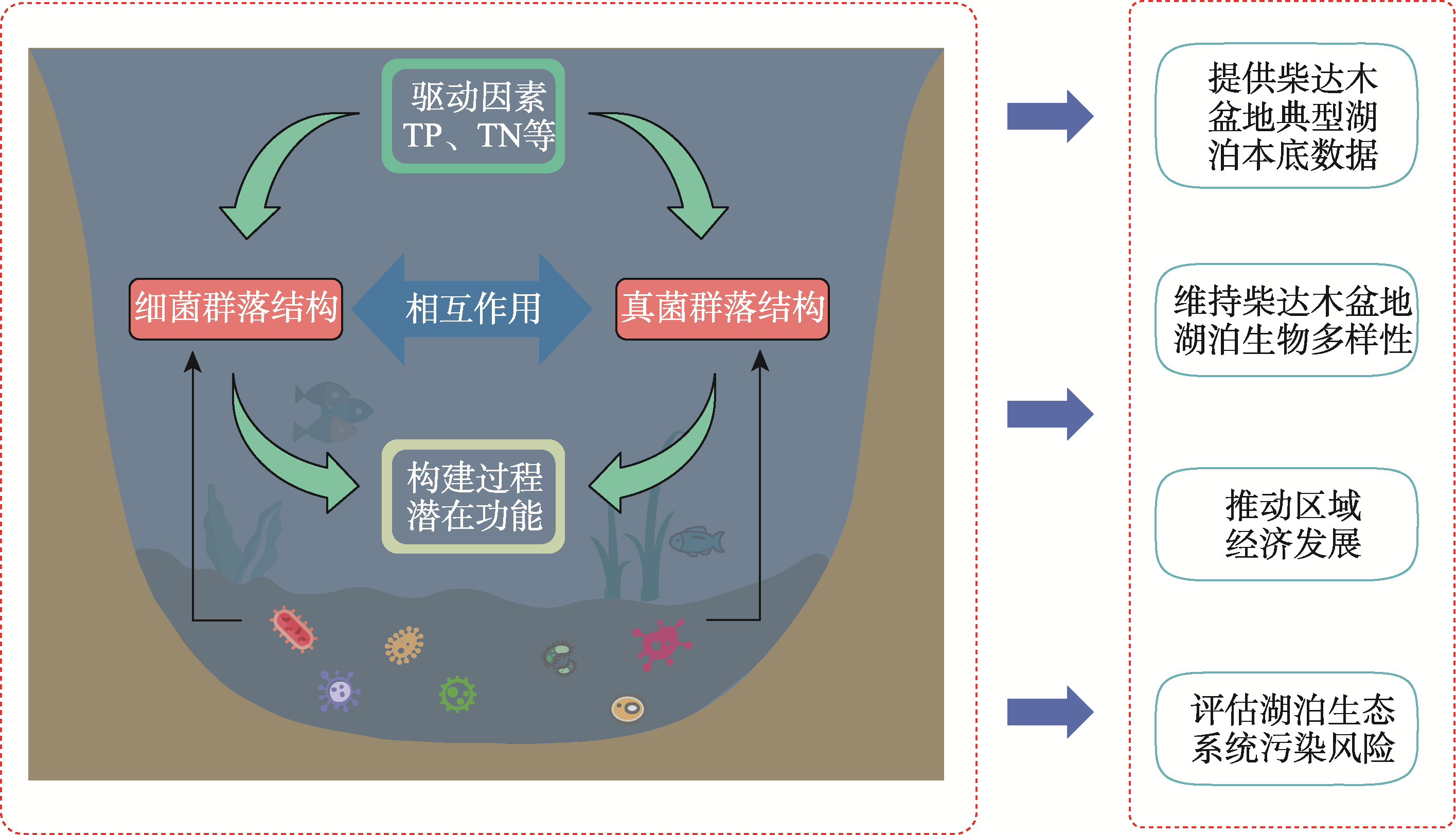
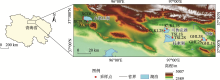
图2
采样点分布 注:XCDL为小柴旦湖,KLKL为可鲁克湖,TSL为托素湖,GHL为尕海;采样点GHL2S和GHL3S位置相近,分别为97°31′07″E,37°07′29″N和97°31′07″E,37°07′39″N,在图中重合显示。"

表1
不同采样点沉积物物理化学因子"
| 样点名称 | Lon | Lat | Alt/m | pH | TDS/(mg·L-1) | TN/(mg·kg-1) | TP/(mg·kg-1) | TOC/(mg·kg-1) |
|---|---|---|---|---|---|---|---|---|
| GHL1S | 97°36′E | 37°07′N | 2854 | 9.06 | 61998.15 | 0.44 | 0.67 | 3.17 |
| GHL2S | 97°31′E | 37°07′N | 2853 | 9.11 | 62707.97 | 0.45 | 1.29 | 3.20 |
| GHL3S | 97°31′E | 37°07′N | 2853 | 9.14 | 62670.68 | 0.85 | 1.26 | 8.91 |
| TSL1S | 97°00′E | 37°10′N | 2811 | 8.99 | 18489.29 | 0.55 | 1.32 | 2.22 |
| TSL2S | 96°59′E | 37°09′N | 2814 | 8.93 | 18517.22 | 0.55 | 1.41 | 2.58 |
| KLKL1S | 96°54′E | 37°18′N | 2816 | 8.59 | 736.22 | 0.91 | 1.33 | 10.81 |
| KLKL2S | 96°51′E | 37°17′N | 2817 | 8.32 | 774.76 | 1.43 | 1.33 | 13.77 |
| XCDL1S | 95°25′E | 37°29′N | 3178 | 9.45 | 36487.46 | 0.19 | 0.87 | 1.59 |
| XCDL2S | 95°30′E | 37°27′N | 3179 | 9.49 | 36346.12 | 0.17 | 0.92 | 0.96 |
| XCDL3S | 95°25′E | 37°31′N | 3178 | 8.21 | 36132.84 | 0.39 | 0.80 | 3.19 |
表2
不同湖泊沉积物细菌和真菌alpha多样性指数"
| alpha多样性指数 | 尕海 | 托素湖 | 可鲁克湖 | 小柴旦湖 | P | |
|---|---|---|---|---|---|---|
| 细菌 | Shannon指数 | 5.68 | 4.71 | 5.71 | 5.25 | 0.30 |
| Chao1指数 | 2749.04 | 1599.89 | 3107.62 | 2219.14 | 0.12 | |
| PD指数 | 160.10 | 103.64 | 157.42 | 152.61 | 0.21 | |
| Pielou均匀度指数 | 0.74 | 0.65 | 0.74 | 0.71 | 0.59 | |
| 真菌 | Shannon指数 | 2.66 | 2.08 | 2.83 | 1.75 | 0.29 |
| Chao1指数 | 184.37 | 64.63 | 411.86 | 53.55 | 0.82 | |
| PD指数 | 66.07 | 26.36 | 126.08 | 23.01 | 0.08 | |
| Pielou均匀度指数 | 0.52 | 0.50 | 0.51 | 0.44 | 0.61 |
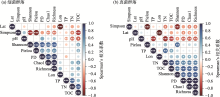
图3
微生物群落alpha多样性指数与环境因子之间的Spearman相关系数 注:Lon为经度;Lat为纬度;TN为总氮;TP为总磷;TOC为总有机碳;*、**、***分别表示在P≤0.05、P≤0.01和P≤0.001水平显著相关。"

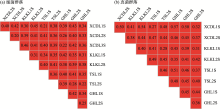
图4
基于weighted-unifrac距离微生物群落beta多样性指数分析 注:采样点XCDL3S由于真菌较少,未能注释出。下同。"

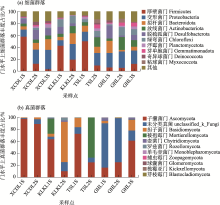
图5
在门水平上相对丰度前10的物种"
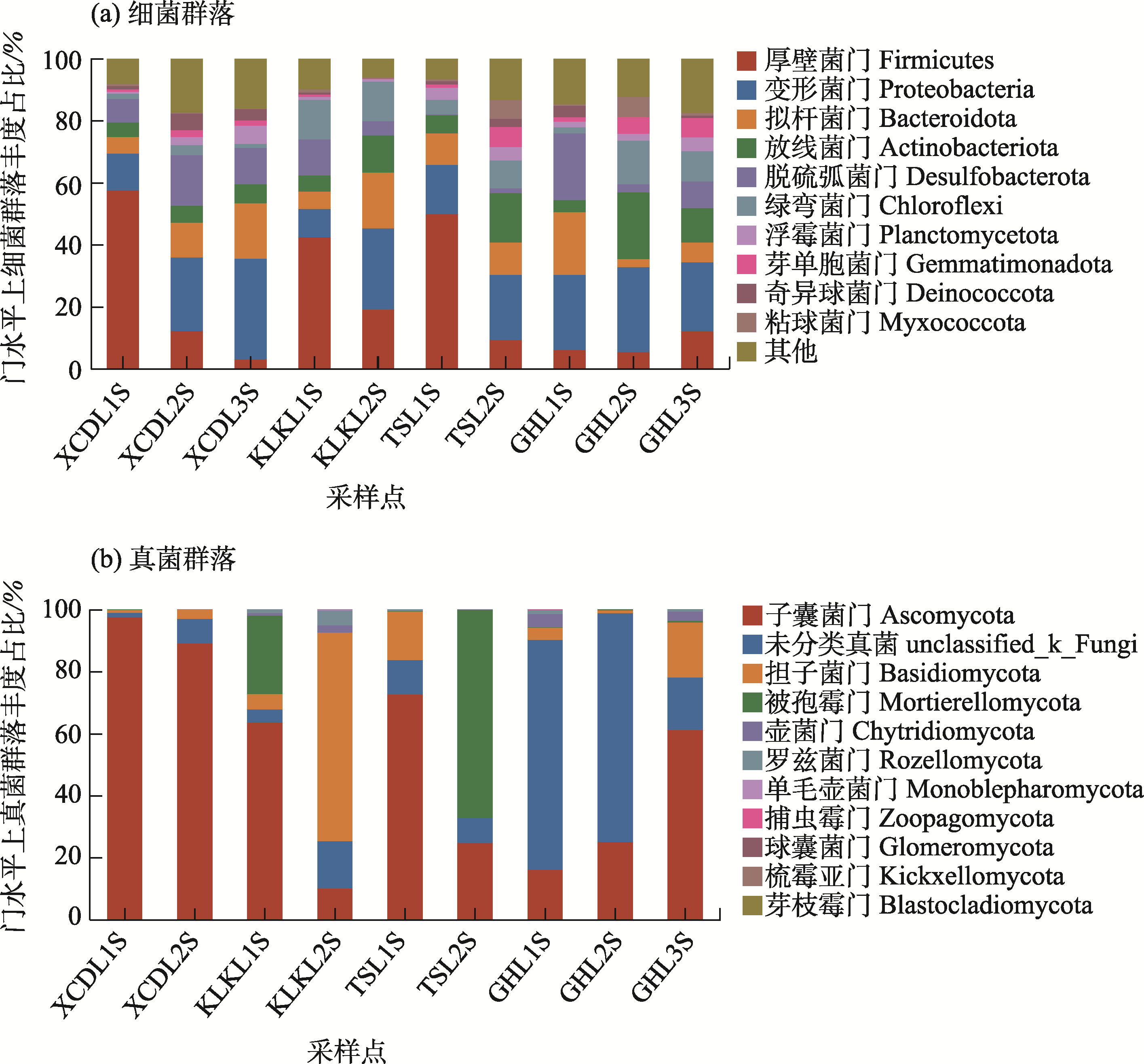

图6
基于Bray-Curtis距离的湖泊沉积物微生物群落NMDS分析"

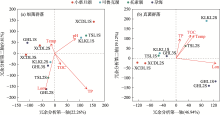
图7
微生物群落驱动因素分析 注:Temp为水温。"

表3
环境因子对湖泊沉积物细菌和真菌群落结构的影响"
| 环境因子 | RDA1 | RDA2 | R2 | P | |
|---|---|---|---|---|---|
| 细菌 | Lon | 0.3327 | -0.9430 | 0.2577 | 0.41 |
| pH | 0.8912 | 0.4536 | 0.0596 | 0.81 | |
| TP | 0.6697 | -0.7527 | 0.7580 | 0.01 | |
| TOC | 0.6141 | -0.7892 | 0.0482 | 0.82 | |
| Temp | -0.5876 | 0.8091 | 0.0286 | 0.93 | |
| 真菌 | Lon | 0.9954 | -0.0963 | 0.5587 | 0.04 |
| TP | 0.2288 | 0.9735 | 0.3049 | 0.30 | |
| TOC | 0.4640 | 0.8858 | 0.5292 | 0.10 | |
| Temp | 0.5261 | 0.8505 | 0.5642 | 0.15 |
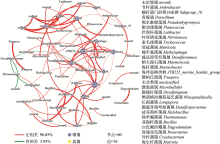
图8
细菌和真菌群落的共现网络 注:节点之间,边的粗细表示关联权重,线条越粗表示两个节点之间的相关性越强,线条越细表示两个节点之间的相关性越弱。"

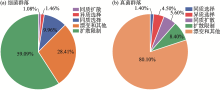
图9
微生物群落构建过程"

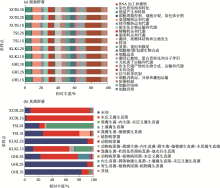
图10
微生物群落功能"

| [1] |
Li L, Ni W K, Cheng Y X, et al. Evaluation of the eco-geo-environment in the Qaidam Basin, China[J]. Environmental Earth Sciences, 2021, 80: 27.
doi: 10.1007/s12665-020-09312-9 |
| [2] |
许木启, 曹宏, 贾沁贤, 等. 青藏高原柴达木盆地尕海盐湖浮游生物群落多样性特征的初步研究[J]. 生物多样性, 2002, 10(1): 38-43.
doi: 10.17520/biods.2002006 |
|
[Xu Muqi, Cao Hong, Jia Qinxian, et al. Preliminary study of plankton community diversity of the Gahai Salt Lake in the Qaidam Basin of the Qinghai-Tibet Plateau[J]. Biodiversity Science, 2002, 10(1): 38-43.]
doi: 10.17520/biods.2002006 |
|
| [3] | 王丹丹, 黄跃飞, 杨海娇. 青藏高原东北部湖泊细菌群落结构特征季节性差异及驱动机制[J]. 湖泊科学, 2023, 35(1): 267-282. |
| [Wang Dandan, Huang Yuefei, Yang Haijiao. Seasonal differences of lake bacterial community structures and their driving mechanisms in the northeastern of the Qinghai-Xizang Plateau[J]. Journal of Lake Sciences, 2023, 35(1): 267-282.] | |
| [4] | 王丹丹, 黄跃飞, 杨海娇. 青藏高原湖泊沉积物与水体细菌群落共发生网络和群落构建过程差异解析[J]. 湖泊科学, 2023, 35(3): 959-979. |
|
[Wang Dandan, Huang Yuefei, Yang Haijiao. Differences of bacterial community co-occurrence network and assembly processes between sediment and water in lakes on the Qinghai-Xizang Plateau[J]. Journal of Lake Sciences, 2023, 35(3): 959-979.]
doi: 10.18307/2023.0316 |
|
| [5] | 陈幸婷, 杜晨亮, 王建军, 等. 青藏高原湖泊沉积物细菌群落的盐度梯度分布格局及驱动因素[J]. 湖泊科学, 2025, 37(1): 238-254. |
|
[Chen Xingting, Du Chenliang, Wang Jianjun, et al. Salinity gradient distribution pattern and driving factors of bacterial communities in sediment of lakes on the Qinghai-Xizang Plateau[J]. Journal of Lake Sciences, 2025, 37(1): 238-254.]
doi: 10.18307/2025.0137 |
|
| [6] | Xing P, Tao Y, Jeppesen E, et al. Comparing microbial composition and diversity in freshwater lakes between Greenland and the Tibetan Plateau[J]. Limnology and Oceanography, 2021, 66(1): 142-156. |
| [7] | Yang J, Jiang H C, Sun X X, et al. Distinct co-occurrence patterns of prokaryotic community between the waters and sediments in lakes with different salinity[J]. FEMS Microbiology Ecology, 2021, 97(1): fiaa234. |
| [8] |
Mo Y Y, Peng F, Gao X F, et al. Low shifts in salinity determined assembly processes and network stability of microeukaryotic plankton communities in a subtropical urban reservoir[J]. Microbiome, 2021, 9: 128.
doi: 10.1186/s40168-021-01079-w pmid: 34082826 |
| [9] | 张红光, 李琳, 赵燕, 等. 青藏高原不同海拔湖水中可培养微生物的季节性变化[J]. 中兽医医药杂志, 2013, 32(3): 49-55. |
| [Zhang Hongguang, Li lin, Zhao Yan, et al. Seasonal changes of culturable microbes in different altitude lakes in Qinghai-Tibet Plateau[J]. Journal of Traditional Chinese Veterinary Medicine, 2013, 32(3): 49-55.] | |
| [10] |
Wang J J, Shen J, Wu Y C, et al. Phylogenetic beta diversity in bacterial assemblages across ecosystems: Deterministic versus stochastic processes[J]. The ISME Journal, 2013, 7(7): 1310-1321.
doi: 10.1038/ismej.2013.30 |
| [11] |
Ning D L, Yuan M T, Wu L W, et al. A quantitative framework reveals ecological drivers of grassland microbial community assembly in response to warming[J]. Nature Communications, 2020, 11: 4717.
doi: 10.1038/s41467-020-18560-z pmid: 32948774 |
| [12] |
Vass M, Székely A J, Lindström E S, et al. Using null models to compare bacterial and microeukaryotic metacommunity assembly under shifting environmental conditions[J]. Scientific Reports, 2020, 10: 2455.
doi: 10.1038/s41598-020-59182-1 pmid: 32051469 |
| [13] |
Li Y, Gao Y, Zhang W L, et al. Homogeneous selection dominates the microbial community assembly in the sediment of the Three Gorges Reservoir[J]. Science of the Total Environment, 2019, 690: 50-60.
doi: 10.1016/j.scitotenv.2019.07.014 |
| [14] | Liu K S, Liu Y Q, Hu A Y, et al. Different community assembly mechanisms underlie similar biogeography of bacteria and microeukaryotes in Tibetan lakes[J]. FEMS Microbiology Ecology, 2020, 96(6): fiaa071. |
| [15] | Liu K S, Hou J Z, Liu Y Q, et al. Biogeography of the free-living and particle-attached bacteria in Tibetan lakes[J]. FEMS Microbiology Ecology, 2019, 95(7): fiz088. |
| [16] |
Wurzbacher C M, Bärlocher F, Grossart H P. Fungi in lake ecosystems[J]. Aquatic Microbial Ecology, 2010, 59: 125-149.
doi: 10.3354/ame01385 |
| [17] | 王鹏, 肖汉玉, 袁瑞强, 等. 鄱阳湖入湖河口沉积物真菌群落结构[J]. 环境科学学报, 2018, 38(5): 1949-1956. |
| [Wang Peng, Xiao Hanyu, Yuan Ruiqiang, et al. Fungal community in the estuarine sediment of Poyang Lake[J]. Acta Scientiae Circumstantiae, 2018, 38(5): 1949-1956.] | |
| [18] |
Liu S F, Chen Q, Li J R, et al. Different spatiotemporal dynamics, ecological drivers and assembly processes of bacterial, archaeal and fungal communities in brackish-saline groundwater[J]. Water Research, 2022, 214: 118193.
doi: 10.1016/j.watres.2022.118193 |
| [19] |
Cai Z Z, Zeng J, Yang M F, et al. Vertical distribution and pollution assessment of TN, TP, and TOC in the sediment cores of cage farming areas in Dongshan Bay of southeast China[J]. Frontiers in Environmental Science, 2023, 11: 1216868.
doi: 10.3389/fenvs.2023.1216868 |
| [20] | 孙胜浩, 陈娟, 王沛芳, 等. 澜沧江硅藻的地理分布模式与关键驱动因素[J]. 环境科学, 2020, 41(12): 5458-5469. |
| [Sun Shenghao, Chen Juan, Wang Peifang, et al. Biogeographic distribution patterns of diatoms in Lancang River and their key drivers[J]. Environmental Science, 2020, 41(12): 5458-5469.] | |
| [21] | 张燕, 强薇, 罗如熠, 等. 氮磷添加对土壤微生物生长、周转及碳利用效率的影响研究进展[J]. 应用与环境生物学报, 2022, 28(2): 526-534. |
| [Zhang Yan, Qiang Wei, Luo Ruyi, et al. Effects of nitrogen and phosphorus addition on soil microbial growth, turnover, and carbon use efficiency: A review[J]. Chinese Journal of Applied and Environmental Biology, 2022, 28(2): 526-534.] | |
| [22] |
金媛媛, 陈振江, 王添, 等. 内生真菌和田间管理措施对土壤真菌群落丰度和多样性的影响[J]. 草业学报, 2023, 32(4): 142-152.
doi: 10.11686/cyxb2022154 |
|
[Jin Yuanyuan, Chen Zhenjiang, Wang Tian, et al. Effects of Epichloë endophyte and field management practices on the abundance and diversity of the soil fungal community[J]. Acta Prataculturae Sinica, 2023, 32(4): 142-152.]
doi: 10.11686/cyxb2022154 |
|
| [23] | 杨长明, 吴亚琼, 王育来, 等. 南淝河表层沉积物细菌群落结构特征及驱动因素[J]. 中国环境科学, 2018, 38(9): 3552-3561. |
| [Yang Changming, Wu Yaqiong, Wang Yulai, et al. Microbial community structure characteristics and its key driving factors in surface sediments along Nanfei River[J]. China Environmental Science, 2018, 38(9): 3552-3561.] | |
| [24] |
Han X G, Schubert C J, Fiskal A, et al. Eutrophication as a driver of microbial community structure in lake sediments[J]. Environmental Microbiology, 2020, 22(8): 3446-3462.
doi: 10.1111/1462-2920.15115 pmid: 32510812 |
| [25] | Tian M Q, Chen G J, Kong L Y, et al. Spatio-temporal variation and environmental drivers of chlorophyll a concentration and diatom community in four small urban lakes of Kunming, China[J]. The Journal of Applied Ecology, 2023, 34(9): 2545-2554. |
| [26] |
Rath K M, Fierer N, Murphy D V, et al. Linking bacterial community composition to soil salinity along environmental gradients[J]. The ISME Journal, 2019, 13(3): 836-846.
doi: 10.1038/s41396-018-0313-8 |
| [27] |
Zhang L, Fang W K, Li X C, et al. Linking bacterial community shifts with changes in the dissolved organic matter pool in a eutrophic lake[J]. Science of The Total Environment, 2020, 719: 137387.
doi: 10.1016/j.scitotenv.2020.137387 |
| [28] |
Zhang L, Zhong M M, Li X C, et al. River bacterial community structure and co-occurrence patterns under the influence of different domestic sewage types[J]. Journal of Environmental Management, 2020, 266: 110590.
doi: 10.1016/j.jenvman.2020.110590 |
| [29] | 李冬丽, 贺海波, 张雪程, 等. 柴达木盆地东北部巴音河小流域水化学特征及来源[J]. 地球科学与环境学报, 2023, 45(3): 749-759. |
| [Li Dongli, He Haibo, Zhang Xuecheng, et al. Hydrochemical characteristics and sources of small Bayin River Watershed in the northeast of Qaidam Basin, China[J]. Journal of Earth Sciences and Environment, 2023, 45(3): 749-759.] | |
| [30] | 刘晋仙, 李毳, 罗正明, 等. 亚高山湖群中真菌群落的分布格局和多样性维持机制[J]. 环境科学, 2019, 40(5): 2382-2393. |
| [Liu Jinxian, Li Cui, Luo Zhengming, et al. Distribution pattern and diversity maintenance mechanisms of fungal community in subalpine lakes[J]. Environmental Science, 2019, 40(5): 2382-2393.] | |
| [31] |
Georgieva M L, Bilanenko E N, Ponizovskaya V B, et al. Haloalkalitolerant fungi from sediments of the Big Tambukan Saline Lake (Northern Caucasus): Diversity and antimicrobial potential[J]. Microorganisms, 2023, 11(10): 2587.
doi: 10.3390/microorganisms11102587 |
| [32] |
Khomich M, Davey M L, Kauserud H, et al. Fungal communities in Scandinavian lakes along a longitudinal gradient[J]. Fungal Ecology, 2017, 27: 36-46.
doi: 10.1016/j.funeco.2017.01.008 |
| [33] |
Jia T, Guo T Y, Yao Y S, et al. Seasonal microbial community characteristic and its driving factors in a copper tailings dam in the Chinese Loess Plateau[J]. Frontiers in Microbiology, 2020, 11: 1574.
doi: 10.3389/fmicb.2020.01574 pmid: 32754138 |
| [34] |
Guo Q X, Yan L J, Korpelainen H, et al. Plant-plant interactions and N fertilization shape soil bacterial and fungal communities[J]. Soil Biology and Biochemistry, 2019, 128: 127-138.
doi: 10.1016/j.soilbio.2018.10.018 |
| [35] |
李丹丹, 李佳文, 高广磊, 等. 科尔沁沙地樟子松(Pinus sylvestris var. mongolia)人工林土壤真菌群落结构和功能特征[J]. 中国沙漠, 2023, 43(4): 241-251.
doi: 10.7522/j.issn.1000-694X.2023.00035 |
|
[Li Dandan, Li Jiawen, Gao Guanglei, et al. Soil fungal community structure and functional characteristics associated with Pinus sylvestris var. mongolica plantations in the Horqin Sandy Land[J]. Journal of Desert Research, 2023, 43(4): 241-251.]
doi: 10.7522/j.issn.1000-694X.2023.00035 |
|
| [36] |
Yang J, Ma L A, Jiang H C, et al. Salinity shapes microbial diversity and community structure in surface sediments of the Qinghai-Tibetan Lakes[J]. Scientific Reports, 2016, 6: 25078.
doi: 10.1038/srep25078 pmid: 27113678 |
| [37] |
Yang J, Jiang H C, Dong H L, et al. A comprehensive census of lake microbial diversity on a global scale[J]. Science China Life Sciences, 2019, 62(10): 1320-1331.
doi: 10.1007/s11427-018-9525-9 |
| [38] |
Lew S, Glińska-Lewczuk K, Burandt P, et al. Salinity as a determinant structuring microbial communities in coastal lakes[J]. International Journal of Environmental Research and Public Health, 2022, 19(8): 4592.
doi: 10.3390/ijerph19084592 |
| [39] | 王月环, 王九妹, 葛继稳, 等. 神农架大九湖泥炭地甲烷代谢菌的垂直分布与生态网络[J]. 地球科学, 2024, 49(10): 3685-3696. |
| [Wang Yuehuan, Wang Jiumei, Ge Jiwen, et al. Vertical distribution of methane-metabolizing microorganisms and molecular ecological networks in Dajiuhu peatland, Shennongjia[J]. Earth Science, 2024, 49(10): 3685-3696.] | |
| [40] | Xiong J, Ma L, Huang S, et al. Molecular ecological network reveals the response of metallurgical microorganisms to energy substrates[J]. Chinese Journal of Biotechnology, 2020, 36(12): 2674-2684. |
| [41] |
Zhang Q T, Wang M M, Ma X Y, et al. High variations of methanogenic microorganisms drive full-scale anaerobic digestion process[J]. Environment International, 2019, 126: 543-551.
doi: S0160-4120(18)32394-8 pmid: 30852441 |
| [42] |
Wagg C, Schlaeppi K, Banerjee S, et al. Fungal-bacterial diversity and microbiome complexity predict ecosystem functioning[J]. Nature Communications, 2019, 10: 4841.
doi: 10.1038/s41467-019-12798-y pmid: 31649246 |
| [43] |
Kasana R C, Pandey C B. Exiguobacterium: An overview of a versatile genus with potential in industry and agriculture[J]. Critical Reviews in Biotechnology, 2018, 38(1): 141-156.
doi: 10.1080/07388551.2017.1312273 pmid: 28395514 |
| [44] |
Lindh M V, Lefébure R, Degerman R, et al. Consequences of increased terrestrial dissolved organic matter and temperature on bacterioplankton community composition during a Baltic Sea mesocosm experiment[J]. Ambio, 2015, 44(3): 402-412.
doi: 10.1007/s13280-015-0659-3 |
| [45] | Jiao S, Chu H Y, Zhang B G, et al. Linking soil fungi to bacterial community assembly in arid ecosystems[J]. iMeta, 2022, 1: e2. |
| [46] | 余诗航, 刘珈佑, 李占杰, 等. 高通量测序揭示某石化固废填埋场污染对土壤微生物群落结构和功能的影响[J]. 北京师范大学学报(自然科学版), 2022, 58(2): 277-285. |
| [Yu Shihang, Liu Jiayou, Li Zhanjie, et al. Influence of pollutants on soil microbial community structure and function at a petrochemical landfill site: A high-throughput sequencing study[J]. Journal of Beijing Normal University (Natural Science), 2022, 58(2): 277-285.] | |
| [47] |
Xu J, Zhang L, Hou J L, et al. iTRAQ-based quantitative proteomic analysis of the global response to 17 β-estradiol in estrogen-degradation strain Pseudomonas putida SJTE-1[J]. Scientific Reports, 2017, 7: 41682.
doi: 10.1038/srep41682 |
| [48] |
Wang H Q, Yang Y, Xu J, et al. iTRAQ-based comparative proteomic analysis of differentially expressed proteins in Rhodococcus sp. BAP-1 induced by fluoranthene[J]. Ecotoxicology and Environmental Safety, 2019, 169: 282-291.
doi: 10.1016/j.ecoenv.2018.11.022 |
| [49] |
Raya-Díaz S, Quesada-Moraga E, Barrón V, et al. Redefining the dose of the entomopathogenic fungus Metarhizium brunneum (Ascomycota, Hypocreales) to increase Fe bioavailability and promote plant growth in calcareous and sandy soils[J]. Plant and Soil, 2017, 418: 387-404.
doi: 10.1007/s11104-017-3303-0 |
| [1] | 赵丽娜, 李昱达, 缑倩倩, 王国华, 屈建军. 荒漠绿洲扩张区土壤微生物群落和多功能性的时效累积效应——以张掖绿洲为例[J]. 干旱区研究, 2025, 42(9): 1612-1627. |
| [2] | 郭强, 王玉琴, 宋梅玲. 气象因子对高寒草地紫花针茅内生真菌共生体凋落物分解的影响[J]. 干旱区研究, 2025, 42(7): 1269-1278. |
| [3] | 成艳琳, 王家源, 高广磊, 丁国栋, 张英, 赵珮杉, 朱宾宾. 呼伦贝尔沙地樟子松林土壤和根内真菌泛化种和特化种结构与功能特征[J]. 干旱区研究, 2025, 42(6): 1055-1066. |
| [4] | 王广权, 木古丽·木哈西, 吾尔恩·阿合别尔迪, 玛依拉·吐尔地别克, 张雪梅, 庞克坚. 新疆伊犁野生阿魏菇根际土壤环境因子与细菌群落组成特征[J]. 干旱区研究, 2025, 42(5): 875-884. |
| [5] | 江康威, 王亚菲, 刘晨通, 李宏, 吕程, 吐尔逊娜依·热依木, 张青青. 土壤微生物群落对放牧的响应及其与环境因子的关系[J]. 干旱区研究, 2025, 42(3): 467-479. |
| [6] | 高海燕, 张胜男, 杨制国, 张雷, 黄海广, 闫德仁. 科尔沁沙地油松固沙林土壤真菌群落结构及功能[J]. 干旱区研究, 2025, 42(1): 118-126. |
| [7] | 杜华栋, 刘研, 毕银丽, 车旭曦, 拜梦童. 干旱砾漠区不同微地貌单元土壤性状及真菌群落变化特征[J]. 干旱区研究, 2024, 41(3): 421-431. |
| [8] | 李娟, 刘阳, 刘光琇, 程亮, 郭青云, 张威, 章高森. 鄯善库木塔格沙漠北缘细菌群落结构特征及影响因素[J]. 干旱区研究, 2023, 40(8): 1358-1368. |
| [9] | 吴蕊, 曹红雨, 高广磊, 于明含, 丁国栋, 张英, 赵珮杉. 科尔沁沙地水盐处理对油莎豆农田土壤细菌群落及植株生理特性的影响[J]. 干旱区研究, 2023, 40(12): 1938-1948. |
| [10] | 王紫瑄, 解甜甜, 王雅茹, 杨杰艳, 杨秀清. 丛枝菌根真菌(AMF)对蒙古沙冬青幼苗的促生特性及作用机制[J]. 干旱区研究, 2023, 40(1): 78-89. |
| [11] | 蒋星驰,李俊瑶,陈峰,李盛林,温苏雅勒图,王国林,王少昆. 阴山北麓荒漠区6种植物群落的土壤细菌特征[J]. 干旱区研究, 2022, 39(4): 1122-1132. |
| [12] | 李嘉珞,郭米山,高广磊,阿拉萨,杜凤梅,殷小琳,丁国栋. 沙地樟子松菌根化幼苗对干旱胁迫的生理响应[J]. 干旱区研究, 2021, 38(6): 1704-1712. |
| [13] | 桑钰,高文礼,再努尔·吐尔逊,范雪,马晓东. 干旱胁迫下AMF对多枝柽柳幼苗和疏叶骆驼刺根系生长和氮素吸收分配的影响[J]. 干旱区研究, 2021, 38(1): 247-256. |
| [14] | 王巍琦, 李变变, 张军, 杨磊, 张凤华. 干旱区不同类型盐碱土壤细菌群落多样性[J]. 干旱区研究, 2019, 36(5): 1202-1211. |
| [15] | 杜海燕, 常顺利, 宋成程, 张毓涛. 天山雪岭云杉森林菌根真菌多样性及其影响因子[J]. 干旱区研究, 2019, 36(5): 1194-1201. |
|
||
