
干旱区研究 ›› 2025, Vol. 42 ›› Issue (6): 1151-1158.doi: 10.13866/j.azr.2025.06.17 cstr: 32277.14.AZR.20250617
• 农业生态 • 上一篇
王一琪1,2( ), 买文选2, 张文太1(), 王艳艳2, 田长彦2
收稿日期:2024-10-24
修回日期:2024-11-29
出版日期:2025-06-15
发布日期:2025-06-11
通讯作者:
张文太. E-mail: zwt@xjau.edu.cn作者简介:王一琪(1996-),女,硕士研究生,主要从事作物根际过程与养分高效利用. E-mail: wangyiqi8989@163.com
基金资助:
WANG Yiqi1,2(), MAI Wenxuan2, ZHANG Wentai1(), WANG Yanyan2, TIAN Changyan2
Received:2024-10-24
Revised:2024-11-29
Published:2025-06-15
Online:2025-06-11
摘要:
研究磷肥滴施条件下棉花生长对土壤温度的响应,旨在探索土壤温度调控棉花根系生长对提高棉花磷肥利用率方面的作用及机理。采用盆栽试验,设置三个土壤温度梯度:低温(LT:11~18 ℃)、中温(MT:22~26 ℃)和高温(HT:30~34 ℃),单因素试验,水浴锅控温。分析不同土壤温度对棉花生长性状、生物量、根系分布、土壤有效磷分布和棉花磷素利用效率的影响。 结果表明:随着土壤温度的提高,棉花株高、茎粗、叶片数和生物量均表现出抛物线变化趋势,在中温(22~26 ℃)时最大;0~5 cm土层棉花根系长度随土壤温度的增加而增加,高温处理下较低温和中温处理分别高5.2%~126.9%、4.9%~62.3%,5 cm土层以下,棉花根长随温度增加而减少,其中,中温处理根长最长,比低温和高温处理分别高81.68%~98.43%、170.17%~218.35%;各处理土壤有效磷含量表现为温度越高土壤有效磷含量越低,中温和高温处理较低温处理分别降低了13.7%和20.5%;中温处理棉花磷素吸收量和磷素利用率均最高,低温次之,高温最低,其中,中温棉花磷素吸收量比低温和高温处理分别高49.69%、89.36%,磷素利用率分别比高温和低温处理高了一倍和50%。综合考虑土壤温度对棉花生长、根长和土壤有效磷分布、棉花磷素吸收量和磷素利用率的影响,适宜棉花生长并提高磷素利用效率的土壤温度范围为22~26 ℃。
王一琪, 买文选, 张文太, 王艳艳, 田长彦. 磷肥滴施条件下土壤温度对棉花生长的影响[J]. 干旱区研究, 2025, 42(6): 1151-1158.
WANG Yiqi, MAI Wenxuan, ZHANG Wentai, WANG Yanyan, TIAN Changyan. Effect of soil temperature on cotton growth under phosphate fertilizer drip application conditions[J]. Arid Zone Research, 2025, 42(6): 1151-1158.
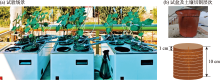
图1
试验装置"


图2
土壤温度对棉花生长性状的影响 注:不同小写字母表示处理间差异显著(P<0.05)。下同。"


图3
温度对棉花生物量及生物量分配的影响"


图4
土壤温度对棉花根长分布的影响"


图5
土壤温度对土壤有效磷分布的影响"

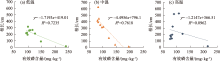
图6
不同温度下土壤有效磷含量与棉花根长的相关性分析"

表1
不同温度对棉花磷素吸收量及磷肥利用率的影响"
| 根/g | 茎/g | 叶/g | 合计/g | 磷素利用率 /(kg·kg-1) | |
|---|---|---|---|---|---|
| 低温 | 2.27±0.52ab | 1.73±0.71b | 2.54±0.61b | 6.54±0.89b | 0.08±0.01b |
| 中温 | 3.08±0.84a | 3.30±0.35a | 3.42±0.48a | 9.79±1.17a | 0.12±0.01a |
| 高温 | 1.98±0.54b | 1.34±0.34b | 1.85±0.64b | 5.17±1.01c | 0.06±0.01c |
| [8] | 张国桥, 王静, 刘涛, 等. 水肥一体化施磷对滴灌玉米产量、磷素营养及磷肥利用效率的影响[J]. 植物营养与肥料学报, 2014, 20(5): 1103-1109. |
| [Zhang Guoqiao, Wang Jing, Liu Tao, et al. Effect of water and P fertilizer coupling on corn yield, P uptake, and P utilization efficiency with drip irrigation in a calcareous soil[J]. Journal of Plant Nutrition and Fertilizers, 2014, 20(5): 1103-1109.] | |
| [9] | 杨国江, 彭懿, 尹飞虎, 等. 滴灌磷肥在灰漠土中运移的研究[J]. 中国土壤与肥料, 2020(6): 138-146. |
| [Yang Guojiang, Peng Yi, Yin Feihu, et al. Phosphorus migration of monoammonium phosphate via drip-irrigation in gray desert soil[J]. Soil and Fertilizer Sciences in China, 2020(6): 138-146.] | |
| [10] |
白灯莎·买买提艾力, 孙良斌, 张少民, 等. 双膜覆盖对盐碱地棉花出苗及产量的影响[J]. 中国棉花, 2013, 40(1): 26-29.
doi: 10.11963/issn.1000-632X.20130110 |
| [Baidengsha Maimaitiaili, Sun Liangbin, Zhang Shaomin, et al. Effects of double plastic mulching on the cotton germination and yield in saline-alkali soil[J]. China Cotton, 2013, 40(1): 26-29.] | |
| [11] | 胡明芳, 田长彦. 新疆棉田地膜覆盖耕层土壤温度效应研究[J]. 中国生态农业学报, 2003, 11(3): 128-130. |
| [Hu Mingfang, Tian Changyan. The temperature effects of membrane coverage on cultivated soil of cotton field in Xinjiang[J]. Chinese Journal of Eco-Agriculture, 2003, 11(3): 128-130.] | |
| [12] | Gavito M E, Curtis P S, Mikkelsen T N, et al. Interactive effects of soil temperature, atmospheric carbon dioxide and soil N on root development, biomass and nutrient uptake of winter wheat during vegetative growth[J]. Journal of Experimental Botany, 2001, 52(362): 1913-1923. |
| [13] | Mai W X, Xue X R, Feng G, et al. Can optimization of phosphorus input lead to high productivity and high phosphorus use efficiency of cotton through maximization of root/mycorrhizal efficiency in phosphorus acquisition?[J]. Field Crops Research, 2018a, 216: 100-108. |
| [14] | Mai W X, Xue X R, Feng G, et al. Simultaneously maximizing root/mycorrhizal growth and phosphorus uptake by cotton plants by optimizing water and phosphorus management[J]. BMC Plant Biology, 2018b, 18: 334. |
| [1] | 新疆棉花总产量连续29年居全国首位[N]. 新疆日报, 2023-12-26. |
| [Xinjiang’s Total Cotton Output has Ranked First in China for 29 Consecutive Years[N]. Xinjiang Daily, 2023-12-26.] | |
| [2] | 王进, 白洁, 罗格平, 等. 近34年玛纳斯河流域棉花生长和耗水特征研究[J]. 农业机械学报, 2015, 46(8): 88-94. |
| [Wang Jin, Bai Jie, Luo Geping, et al. Growth and water consumption characteristics of cotton in manas basin during recent 34 years[J]. Journal of Agricultural Machinery, 2015, 46(8): 88-94.] | |
| [3] | 王肖娟, 危常州, 张君, 等. 灌溉方式和施氮量对棉田氮肥利用率及损失的影响[J]. 应用生态学报, 2012, 23(10): 2751-2758. |
| [Wang Xiaojuan, Wei Changzhou, Zhang Jun, et al. Effects of irrigation mode and N application rate on cotton field fertilizer N use efficiency and N losses[J]. Journal of Applied Ecology, 2012, 23(10): 2751-2758. | |
| [4] | Simpson J R, Pinkerton A. Fluctuations in soil moisture, and plant uptake of surface applied phosphate[J]. Fertilizer Research, 1989, 20(2): 101-108. |
| [5] | Simpson R, Oberson A, Culvenor R, et al. Strategies and agronomic interventions to improve the phosphorus-use efficiency of farming systems[J]. Plant and Soil, 2011, 349(1-2): 89-120. |
| [6] | 李青军, 张炎, 哈丽哈什·依巴提, 等. 漫灌和滴灌棉花土壤有效磷丰缺指标与临界值研究[J]. 植物营养与肥料学报, 2018, 24(4): 927-934. |
| [Li Qingjun, Zhang Yan, Halihash Ibati, et al. Abundance index and critical level of phosphorus in cotton soils under flooding and drip irrigation[J]. Journal of Plant Nutrition and Fertilizer, 2018, 24(4): 927-934.] | |
| [7] | 尹飞虎, 康金花, 黄子蔚, 等. 棉花滴灌随水施滴灌专用肥中磷素的移动和利用率的32P研究[J]. 西北农业学报, 2005, 14(6): 199-206. |
| [Yin Feihu, Kang Jinhua, Huang Ziwei, et al. Distribution and use efficiency of phosphorus from trickle irrigation fertilizer specific fertigated of trickle irrigated cotton via 32P tracing technique[J]. Acta Agriculture Boreali-Occidentalis Sinica, 2005, 14(6): 199-206.] | |
| [15] |
何静, 王振华, 刘健, 等. 灌溉水温与施氮量对滴灌棉田土壤水热及棉花生长和产量的影响[J]. 中国农业科学, 2024, 57(2): 319-335.
doi: 10.3864/j.issn.0578-1752.2024.02.008 |
|
[He Jing, Wang Zhenhua, Liu Jian, et al. Effects of irrigation water temperature and nitrogen application rate on soil hydrothermal environment and cotton growth and yield under mulched drip irrigation[J]. Scientia Agricultura Sinica, 2024, 57(2): 319-335.]
doi: 10.3864/j.issn.0578-1752.2024.02.008 |
|
| [16] | 黄明泉. 典型地段思茅松天然林生物量分配的比较分析及环境解释[D]. 昆明: 西南林业大学, 2018. |
| [Huang Mingquan. Comparative Analysis and Environmental Interpretation of the Biomass Distribution of Simao pine Natural Forest in Typical Section[D]. Kunming: Southwest Forestry University, 2018.] | |
| [17] | Mokany K, Raison R J, Prokushkin A S. Critical analysis of root: Shoot ratios in terrestrial biomes[J]. Global Change Biology, 2005, 12(1): 84-96. |
| [18] | Schmid I. The influence of soil type and interspecific competition on the fine root system of Norway spruce and European beech[J]. Basic and Applied Ecology, 2002, 3(4): 339-346. |
| [19] | 王振华, 武小荻, 王天宇, 等. 灌溉时段及水温对膜下滴灌棉花生长及产量的影响[J]. 排灌机械工程学报, 2022, 40(10): 1040-1047. |
| [Wang Zhenhua, Wu Xiaodi, Wang Tianyu, et al. Effects of irrigation timing and water temperature on cotton growth and yield under mulched drip irrigation[J]. Journal of Drainage and Irrigation Machinery Engineering, 2022, 40(10): 1040-1047.] | |
| [20] |
史普想, 刘盈茹, 张晓军, 等. 低温水灌溉对花生根际土壤酶活性和养分含量的影响[J]. 中国油料作物学报, 2016, 38(6): 811-816.
doi: 10.7505/j.issn.1007-9084.2016.06.015 |
|
[Shi Puxiang, Liu Yingru, Zhang Xiaojun, et al. Effects of irrigation with low temperature water on soil enzyme activity and soil nutrient of peanut rhizosphere[J]. Chinese Journal of Oil Crop Sciences, 2016, 38(6): 811-816.]
doi: 10.7505/j.issn.1007-9084.2016.06.015 |
|
| [21] | 杨威, 朱建强, 吴启侠, 等. 涝害和高温下棉花苗期的生长生理代谢特征[J]. 农业工程学报, 2015, 31(22): 98-104. |
| [Yang Wei, Zhu Jianqiang, Wu Qixia, et al. Growth and physiological metabolism characteristic of cotton seedlings under combination of waterlogging and heat stress[J]. Transactions of the Chinese Society of Agricultural Engineering, 2015, 31(22): 98-104.] | |
| [22] |
马晓昕, 李成林, 张超, 等. 高温胁迫影响棉花生长及产量品质的生理与分子机理[J]. 中国棉花, 2021, 48(12): 1-6, 12.
doi: 10.11963/cc20210105 |
|
[Ma Xiaoxin, Li Chenglin, Zhang Chao, et al. Physiological and molecular mechanisms of high temperature stress on cotton growth, yield and quality[J]. China Cotton, 2021, 48(12): 1-6, 12.]
doi: 10.11963/cc20210105 |
|
| [23] | 丁宇. 干播湿出水分调控对土壤根域环境及棉株生长特征影响研究[D]. 乌鲁木齐: 新疆农业大学, 2023. |
| [Ding Yu. Effects of Dry Sowing and Wet Extraction on Soil Root Domain Environment and Cotton Plant Growth Characteristics[D]. Urumqi: Xinjiang Agricultural University, 2023.] | |
| [24] |
Sun S M, Han B, Chen L, et al. Root system architecture analysis and genome-wide association study of root system architecture related traits in cotton[J]. Acta Agronomica Sinica, 2022, 48(5): 1081-1090.
doi: 10.3724/SP.J.1006.2022.14067 |
| [25] | Fan J L, Mcconkey B, Wang H, et al. Root distribution by depth for temperate agricultural crops[J]. Field Crops Research, 2016, 189: 68-74. |
| [26] |
Koevoets I T, Venema J H, Elzenga J T, et al. Roots withstanding their environment: Exploiting root system architecture responses to abiotic stress to improve crop tolerance[J]. Frontiers in Plant Science, 2016, 7: 1335.
doi: 10.3389/fpls.2016.01335 pmid: 27630659 |
| [27] |
Ribeiro Lígia N M, Alcantara A C S, Darder M, et al. Bionanocomposites containing magnetic graphite as potential systems for drug delivery[J]. International Journal of Pharmaceutics, 2014, 477(1-2): 553-563.
doi: 10.1016/j.ijpharm.2014.10.033 pmid: 25455784 |
| [28] | Huang D, Swanson E A, Lin C P, et al. Optical coherence tomography[J]. Science, 1991, 254(5035): 78-81. |
| [29] | Andreas Hund, Nathinee Ruta, Markus Liedgens. Rooting depth and water use efficiency of tropical maize inbred lines, differing in drought tolerance[J]. Plant and Soil, 2008, 318(2): 311-325. |
| [30] | Pardales J R Jr, Kono Y, Yamauchi A, et al. Seminal root growth in sorghum (Sorghum bicolor) under allelopathic influences from m residue of taro (Colocasia esculenta)[J]. Annals of Botany, 1992, 69: 493-496. |
| [31] | Pardales J R Jr, Yamauchi A, Kono Y. Growth and development of sorghum roots after exposure to different periods of a hot root-zone temperature[J]. Environmental and Experimental Botany, 1991, 31: 397-403. |
| [32] |
Joshi S, Hussain M T, Roces C B, et al. Microfluidics based manufacture of liposomes simultaneously entrapping hydrophilic and lipophilic drugs[J]. International Journal of Pharmaceutics, 2016, 514(1): 160-168.
doi: S0378-5173(16)30848-1 pmid: 27863660 |
| [33] | Sattelmacher B, Klotz F, Marschner H. Influence of the nitrogen level on root growth and morphology of two potato varieties differing in nitrogen acquisition[J]. Plant and Soil, 1990, 132: 131-137. |
| [34] | Borges R G, Chaney W R. Root temperature affects mycorrhizal efficacy in Fraxinus pennsylvanica Marsh[J]. New Phytologist, 1989, 112(3): 411-417. |
| [35] |
Gavito M E, Olsson P A, Rouhier H, et al. Temperature constraints on the growth and functioning of root organ cultures with arbuscular mycorrhizal fungi[J]. New Phytologist, 2005, 168: 179-188.
pmid: 16159332 |
| [36] | 文卿琳, 王兴鹏. 温度对棉花种子萌发的影响[J]. 安徽农业科学, 2008(9): 3513-3515. |
| [Wen Qinglin, Wang Xingpeng. Effects of temperature on the germination of cotton seeds[J]. Journal of Anhui Agricultural Sciences, 2008(9): 3513-3515.] | |
| [37] | 赵红华. 滴灌条件下土壤酸化对石灰性土壤磷锌有效性影响及其生物效应[D]. 石河子: 石河子大学, 2015. |
| [Zhao Honghua. Effects of Soil Acidification under Drip Irrigation on Soil P and Zn availability at Calcareous Soil and its Biological Effects[D]. Shihezi: Shihezi University, 2015.] | |
| [38] | 陈波浪, 盛建东, 蒋平安, 等. 不同质地棉田土壤对磷吸附与解吸研究[J]. 土壤通报, 2010, 41(2): 303-307. |
| [Chen Bolang, Sheng Jiandong, Jiang Ping’an, et al. Study on characteristics of phosphorus adsorption and desorption of cotton field with different soil textures[J]. Soil Bulletin, 2010, 41(2): 303-307.] | |
| [39] |
White P J, George T S, Gregory P J, et al. Matching roots to their environment[J]. Annals of Botany, 2013, 112(2): 207-222.
doi: 10.1093/aob/mct123 pmid: 23821619 |
| [40] | 廖红, 严小龙. 菜豆根构型对低磷胁迫的适应性变化及基因型差异[J]. 植物学报, 2000, 42(2): 158-163. |
| [Liao Hong, Yan Xiaolong. Adaptive changes and genotypic variation for root architecture of common bean in response to phosphorus deficiency[J]. Journal of Integrative Plant Biology, 2000, 42(2): 158-163.] | |
| [41] | 李俊义, 刘荣荣, 王润珍. 新疆棉区棉花氮肥适宜用量和施用时期研究[J]. 中国棉花, 1999, 26(4): 24-26. |
| [Li Junyi, Liu Rongrong, Wang Runzhen. Study on the appropriate dosage and application period of cotton nitrogen fertilizer in Xinjiang cotton area[J]. China cotton, 1999, 26(4): 24-26.] | |
| [42] | 简红忠, 杨小敏, 王琳, 等. 磷肥施用对汉中盆地水稻生长、肥料利用率及土壤磷素平衡的影响[J]. 陕西农业科学, 2019, 65(10): 62-65. |
| [Jian Hongzhong, Yang Xiaomin, Wang Lin, et al. Effect of P fertilizer application on rice Growth, fertilizer utilization rate and soil phosphorus balance in Hanzhong Basin[J]. Shaanxi Journal of Agricultural Sciences, 2019, 65(10): 62-65.] | |
| [43] |
段刚强, 杨恒山, 张玉芹, 等. 提高玉米磷肥利用率的研究进展[J]. 中国农学通报, 2015, 31(21): 24-29.
doi: 10.11924/j.issn.1000-6850.casb15010067 |
|
[Duan Gangqiang, Yang Hengshan, Zhang Yuqin, et al. Research progress on improving phosphate fertilizer utilization in corn[J]. Chinese Agricultural Science Bulletin, 2015, 31(21): 24-29.]
doi: 10.11924/j.issn.1000-6850.casb15010067 |
|
| [44] | 夏镇卿, 路海东. 土壤温度对作物根区环境及玉米根冠生长的调控研究进展[J]. 玉米科学, 2020, 28(3): 99-104. |
| [Xia Zhenqing, Lu Haidong. Research progress in regulation of soil temperature on crop root zone environment and maize root cap growth[J]. Journal of Maize Sciences, 2020, 28(3): 99-104.] |
| [1] | 杜俊, 李广, 杜梦寅, 姚瑶, 马维伟, 袁建钰. 黄土高原不同土地利用方式对土壤N2O通量的影响[J]. 干旱区研究, 2025, 42(6): 1043-1054. |
| [2] | 张紫淇, 杨丽莉, 何新林, 李小龙. 滴灌水盐氮调控对棉田水肥盐运移及棉花产量的影响[J]. 干旱区研究, 2024, 41(5): 876-893. |
| [3] | 赖虹雨, 吕德生, 朱艳, 王振华, 温越, 宋利兵, 齐浩. 生物炭施加对微咸水滴灌棉田土壤水热盐及棉花生长的影响[J]. 干旱区研究, 2024, 41(2): 326-338. |
| [4] | 解玉彩, 刘浩, 赵丰年, 张磊, 赵鑫, 师卓, 王兴鹏. 灌溉水矿化度和钠吸附比互作对膜下滴灌棉花生长及产量的影响[J]. 干旱区研究, 2024, 41(12): 2071-2082. |
| [5] | 阿热孜古力·肉孜, 买买提·沙吾提, 何旭刚, 冶晓文. 基于多植被指数组合的棉花叶片叶绿素含量估算[J]. 干旱区研究, 2023, 40(11): 1865-1874. |
| [6] | 张慧,张凯,陈冰,杨川,柳萍. 不同灌溉量对新疆棉花生长发育及产量形成的影响[J]. 干旱区研究, 2022, 39(6): 1976-1985. |
| [7] | 代健敏,何庆雨,谢玲,窦巧巧,张巨松. 氮肥后移对花铃期水分亏缺棉花产量的补偿效应研究[J]. 干旱区研究, 2022, 39(3): 986-995. |
| [8] | 王旭阳,李典鹏,孙涛,孙霞,贾宏涛,李君,李新虎. 新疆干旱区作物体系土壤温室气体排放对覆膜的响应[J]. 干旱区研究, 2022, 39(1): 176-184. |
| [9] | 王东旺,王振华,陈林,李文昊. 应用膜下灌排联动技术对提高土壤淋洗效果的影响[J]. 干旱区研究, 2021, 38(4): 1010-1019. |
| [10] | 朱金儒,李文昊,王振华,宗睿,王天宇. 覆膜滴灌棉田地膜残留量对棉花生长的影响[J]. 干旱区研究, 2021, 38(2): 570-579. |
| [11] | 吴芹芹, 莫淑红, 程圣东, 李鹏, 李占斌. 黄土区冻融期不同土地利用土壤水分与温度的关系[J]. 干旱区研究, 2020, 37(3): 627-. |
| [12] | 缑倩倩, 李乔乔, 屈建军, 王国华. 荒漠-绿洲过渡带土壤温度变化分析[J]. 干旱区研究, 2019, 36(4): 809-815. |
| [13] | 李莉,田长彦,陈冠文,李中军. 棉花打顶后倒四叶内激素变化对棉花产量和品质的影响[J]. 干旱区研究, 2014, 31(1): 111-117. |
| [14] | 杨淑萍, 危常州, 梁永超. 新疆主要棉花品种耐盐性筛选与鉴定[J]. 干旱区研究, 2013, 30(6): 1129-1135. |
| [15] | 靳志锋, 虎胆·吐马尔白, 牟洪臣, 马合木江, 李文娟. 土壤冻融温度影响下棉田水盐运移规律[J]. 干旱区研究, 2013, 30(4): 623-627. |
|
||
