
干旱区研究 ›› 2025, Vol. 42 ›› Issue (10): 1753-1765.doi: 10.13866/j.azr.2025.10.01 cstr: 32277.14.AZR.20251001
郭娜1,2( ), 陈伏龙1,2(), 王统霞1,2, 吕廷波1,2, 龙爱华1,3
收稿日期:2025-01-17
修回日期:2025-06-14
出版日期:2025-10-15
发布日期:2025-10-22
通讯作者:
陈伏龙. E-mail: cfl103@shzu.edu.cn作者简介:郭娜(1998-),女,硕士研究生,主要研究方向为水文学及水资源. E-mail: guona1947@163.com
基金资助:
GUO Na1,2(), CHEN Fulong1,2(), WANG Tongxia1,2, LYU Tingbo1,2, LONG Aihua1,3
Received:2025-01-17
Revised:2025-06-14
Published:2025-10-15
Online:2025-10-22
摘要:
新疆作为中国西北干旱区的重要组成部分,其水汽变化直接影响区域降水形成和云水资源开发潜力,对水资源可持续利用与生态安全具有关键作用。利用1979—2022年ERA5再分析数据,结合多种统计分析方法,系统分析了新疆水汽含量的长期变化趋势及其与降水的时空耦合关系,探究了水汽输送的演变规律,并预测了四种排放情景下新疆水汽的未来变化趋势。结果表明:(1) 1979—2022年新疆水汽含量总体呈上升趋势,季节变化显著,夏季最高,冬季最低,主要集中在对流层中下层;(2) 降水转化率空间分布差异明显,北部的降水转化率相对较高,而南部普遍较低,表明新疆的云水资源开发潜力较大,且该潜力自西向东、由南向北递减;(3) 水汽主要受西风输送影响,西部和南部为输入区,东部和北部为输出区,多年平均水汽净收支为正值;(4) 在不同排放情景下,水汽含量、水汽输送和水汽净收支均呈增加趋势,且增幅随排放水平升高而加大。水汽增加的主要原因可能与新疆及其周边地区纬向输送的增强有关。研究结果为新疆水资源管理、人工增雨优化及气候变化影响评估提供了科学依据,对深入理解区域水循环过程、合理开发利用云水资源以及应对气候变化具有重要意义。
郭娜, 陈伏龙, 王统霞, 吕廷波, 龙爱华. 1979—2022年新疆地区空中水汽变化特征及未来多情景预估[J]. 干旱区研究, 2025, 42(10): 1753-1765.
GUO Na, CHEN Fulong, WANG Tongxia, LYU Tingbo, LONG Aihua. Characteristics of airborne water vapor changes and future multi-scenario projections in Xinjiang, 1979-2022[J]. Arid Zone Research, 2025, 42(10): 1753-1765.

图1
研究区示意图 注:底图采用自然资源部标准地图制作,审图号为GS(2023)2767号,对底图边界无修改。下同。"

表1
5种CMIP6全球气候模式及其基本信息"
| 模式名称 | 所属国家 | 所属机构简称 | 分辨率 |
|---|---|---|---|
| BCC-CSM2-MR | 中国 | 国家(北京)气候中心(BCC) | 1.125°×1.125° |
| CanESM5 | 加拿大 | 加拿大气候建模和分析中心(CCCma) | 2.8°×2.8° |
| MPI-ESM1-2-LR | 德国 | 马克斯普朗克气象研究所(MPI-M) | 1.875°×1.875° |
| FGOALS-g3 | 中国 | 中国科学院大气物理研究所(CAS) | 2.0°×2.0° |
| MRI-ESM2-0 | 日本 | 日本气象厅气象研究所(JMA) | 1.125°×1.125° |
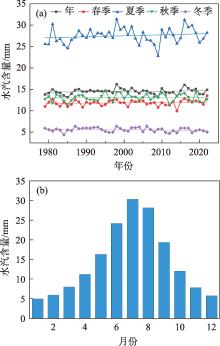
图2
1979—2022年新疆多年平均水汽含量季节(a)和月度(b)时间序列"
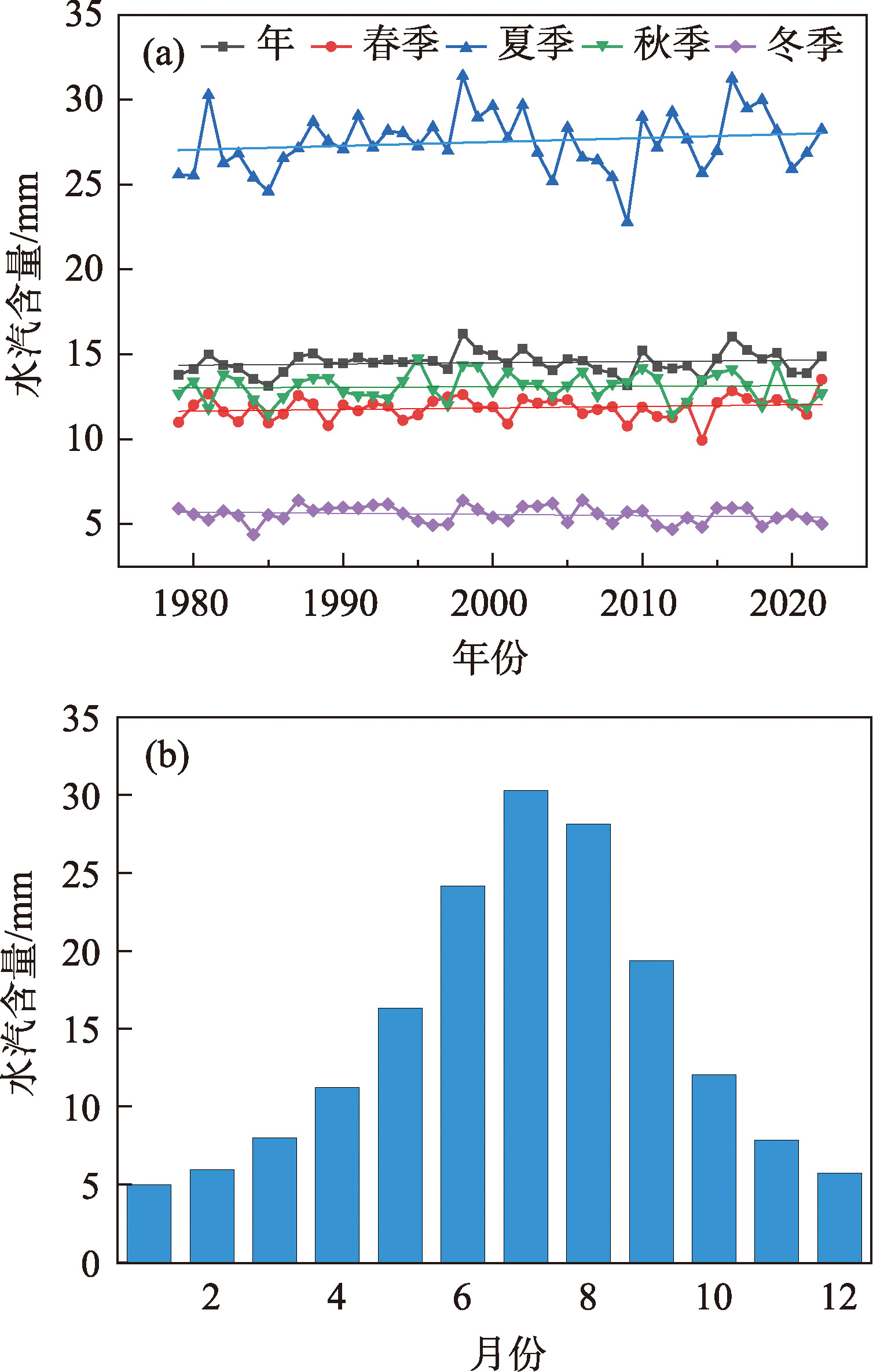

图3
1979—2022年新疆各气压层平均水汽含量及其对应高度"
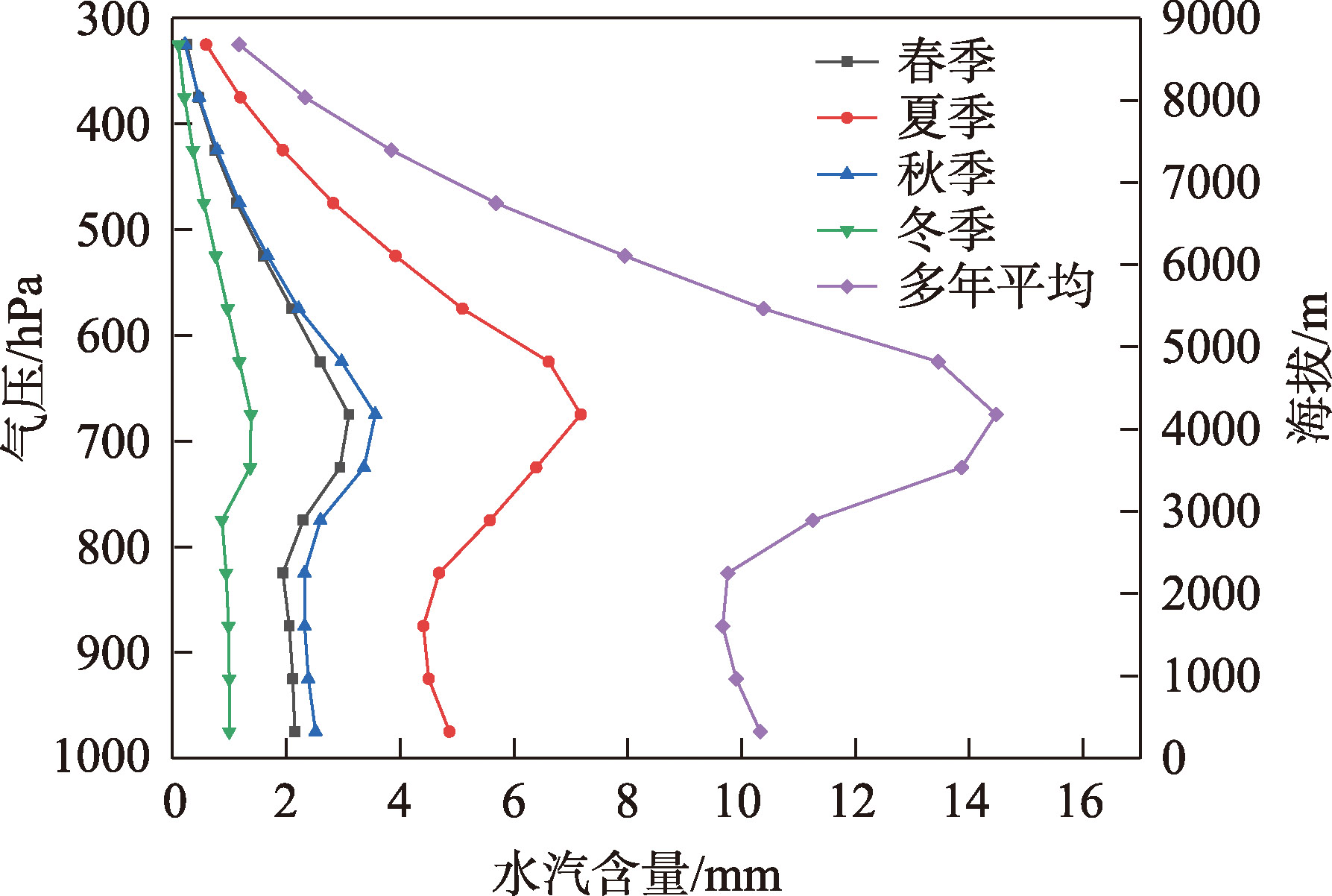
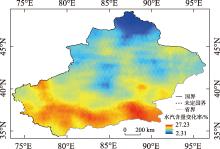
图4
1979—2022年新疆多年平均水汽含量变化率空间分布"

表2
新疆水汽含量EOF分解后前8个特征向量方差贡献率"
| 特征向量 | 一 | 二 | 三 | 四 | 五 | 六 | 七 | 八 |
|---|---|---|---|---|---|---|---|---|
| 方差贡献率/% | 51.65 | 16.07 | 10.36 | 5.51 | 3.05 | 2.31 | 1.60 | 1.36 |
| 累计贡献率/% | 51.65 | 67.72 | 78.08 | 83.59 | 86.64 | 88.95 | 90.55 | 91.91 |
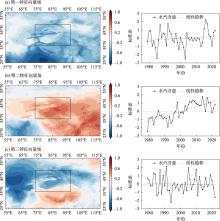
图5
新疆水汽含量前3个特征向量空间分布及对应时间系数 注:黑色矩形代表新疆地区。下同。"


图6
1979—2022年新疆降水转化率时间序列(a)和空间分布(b)"

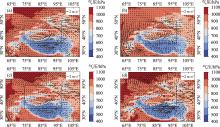
图7
1979—2022年新疆多年平均季节风场"

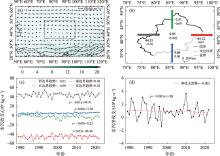
图8
1979—2022年新疆多年平均整层积分比湿(阴影,kg∙m-2)和水汽通量(矢量,kg∙m-1∙s-1)(a)、各边界水汽收支(粗体数字106 kg∙s-1)和长期变化趋势(细体数字106 kg∙s-1∙a-1)(b)、各边界水汽收支时间序列(c)和水汽净收支时间序列(d)"


图9
2015—2100年新疆四种排放情景下的整层积分比湿(阴影,kg∙m-2)和水汽通量(kg∙m-1∙s-1)"
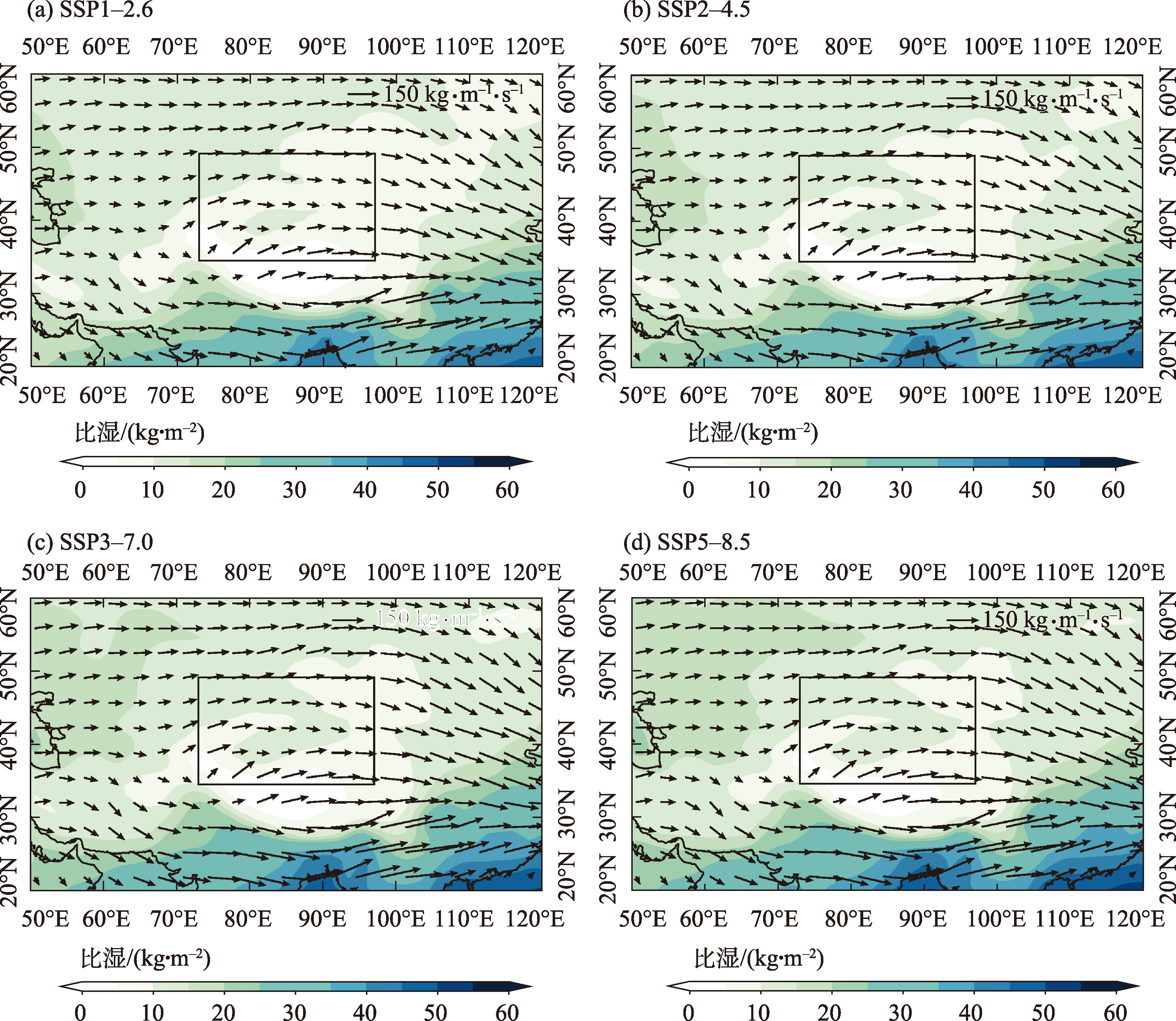

图10
1979—2100年新疆水汽含量和水汽净收支时间序列"

表3
新疆水汽含量和水汽净收支变化趋势"
| SSP1-2.6 | SSP2-4.5 | SSP3-7.0 | SSP5-8.5 | |
|---|---|---|---|---|
| 水汽含量/(10-1 mm·a-1) | 0.16 | 0.38 | 0.63 | 0.74 |
| 水汽净收支/(104 kg·s-1·a-1) | 0.57 | 0.61 | 0.65 | 1.1 |
| [1] | 刘国纬. 水文循环的大气过程[M]. 北京: 科学出版社, 1997. |
| [Liu Guowei. Atmospheric Processes in the Hydrological Cycle[M]. Beijing: Science Press, 1997. ] | |
| [2] | 陈亚宁, 李忠勤, 徐建华, 等. 中国西北干旱区水资源与生态环境变化及保护建议[J]. 中国科学院院刊, 2023, 38(3): 385-393. |
| [Chen Yaning, Li Zhongqin, Xu Jianhua, et al. Changes and protection suggestions in water resources and ecological environment in arid region of Northwest China[J]. Bulletin of Chinese Academy of Sciences, 2023, 38(3): 385-393. ] | |
| [3] | 周天军, 邹立维, 陈晓龙. 第六次国际耦合模式比较计划(CMIP6)评述[J]. 气候变化研究进展, 2019, 15(5): 445-456. |
| [Zhou Tianjun, Zou Liwei, Chen Xiaolong. Commentary on the ccoupled model intercomparison project phase 6(CMIP6)[J]. Progress in Climate Change Research, 2019, 15(5): 445-456. ] | |
| [4] |
菅政博, 罗浩, 单娜娜. “双碳”目标下新疆“三生”空间时空演变特征及碳效应[J]. 干旱区研究, 2024, 41(7): 1238-1248.
doi: 10.13866/j.azr.2024.07.15 |
|
[Jian Zhengbo, Luo Hao, Shan Nana. A study on the spatial and temporal evolution and carbon effects of production-living-ecological in Xinjiang under carbon peak and carbon neutrality goals[J]. Arid Zone Research, 2024, 41(7): 1238-1248. ]
doi: 10.13866/j.azr.2024.07.15 |
|
| [5] | 刘春蓁, 巢清尘, 王守荣, 等. 水文气象学领域的水文循环研究进展[J]. 气候变化研究进展, 2023, 19(1): 1-10. |
| [Liu Chunzhen, Chao Qinchen, Wang Shourong, et al. The research progress of hydrologic cycle in hydrometeorology[J]. Climate Change Research, 2023, 19(1): 1-10. ] | |
| [6] | 朱飙, 张强, 李春华, 等. 我国干旱半干旱区气候变化特征及其对干湿波动的影响[J]. 大气科学学报, 2023, 46(1): 42-54. |
| [Zhu Biao, Zhang Qiang, Li Chunhua, et al. Characteristics of climate change in arid and semi-arid areas of China and its influence on climatic dry-wet fluctuation[J]. Transactions of Atmospheric Sciences, 2023, 46(1): 42-54. ] | |
| [7] |
邓铭江, 龙爱华, 李江, 等. 西北内陆河流域“自然-社会-贸易”三元水循环模式解析[J]. 地理学报, 2020, 75(7): 1333-1345.
doi: 10.11821/dlxb202007001 |
|
[Deng Mingjiang, Long Aihua, Li Jiang, et al. Theoretical analysis of “natural-social-trading” ternary water cycle mode in the inland river basin of Northwest China[J]. Acta Geographica Sinica, 2020, 75(7): 1333-1345. ]
doi: 10.11821/dlxb202007001 |
|
| [8] | Yao Junqiang, Chen Yaning, Guan Xuefeng, et al. Recent climate and hydrological changes in a mountain basin system in Xinjiang, China[J]. Earth-Sciench Reviews, 2022, 226: 103957. |
| [9] | 施雅风, 沈永平, 胡汝骥. 西北气候由暖干向暖湿转型的信号、影响和前景初步探讨[J]. 冰川冻土, 2002, 24(3): 219-226. |
| [Shi Yafeng, Shen Yongping, Hu Ruji. Preliminary study on signal impact and foreground of climatic shift from warm-dry to warm-humid in Northwest China[J]. Journal of Glaciology and Geocryology, 2002, 24(3): 219-226. ] | |
| [10] | Tarek M, Brissette F P, Arsenault R. Evaluation of the ERA5 reanalysis as a potential reference dataset for hydrological modelling over North America[J]. Hydrology and Earth System Sciences, 2020, 24(5): 2527-2544. |
| [11] | 刘喆栋, 黄良珂, 刘立龙, 等. 新疆地区ERA5和MERRA-2大气可降水量精度分析[J]. 桂林理工大学学报, 2024, 44(1): 96-102. |
| [Liu Zhedong, Huang Liangke, Liu Lilong, et al. Accuracy analysis of precipitable water vapor products of ERA5 and MERRA-2 in Xinjiang[J]. Journal of Guilin University of Technology, 2024, 44(1): 96-102. ] | |
| [12] | Shen Yanjun, Shen Yanjun, Guo Ying, et al. Review of historical and projected future climatic and hydrological changes in mountainous semiarid Xinjiang (northwestern China), Central Asia[J]. Catena, 2020, 187: 104343. |
| [13] | 王凯, 孙美平, 巩宁刚. 西北地区大气水汽含量时空分布及其输送研究[J]. 干旱区地理, 2018, 41(2): 290-297. |
| [Wang Kai, Sun Meiping, Gong Ninggang. Spatial and temporal distribution and transportation of the water vapor in the northwestern China[J]. Arid Land Geography, 2018, 41(2): 290-297. ] | |
| [14] | 周成龙, 钟昕洁, 杨兴华, 等. 新疆巴州地区降水量、可降水量及降水转化率计算解析[J]. 干旱区地理, 2016, 39(6): 1204-1211. |
| [Zhou Chenglong, Zhong Xinjie, Yang Xinghua, et al. Calculation of precipitation precipitable water and precipitation conversion efficiency of Bayingolin Prefecture in Xinjiang[J]. Arid Land Geography, 2016, 39(6): 1204-1211. ] | |
| [15] | 张强, 张杰, 孙国武, 等. 祁连山山区空中水汽分布特征研究[J]. 气象学报, 2007, 65(4): 633-643. |
| [Zhang Qiang, Zhang Jie, Sun Guowu, et al. Research on atmospheric water-vapor distribution over Qilianshan Mountains[J]. Acta Meteorologica Sinica, 2007, 65(4): 633-643. ] | |
| [16] |
姚俊强. 新疆空中水资源和地表水资源变化特征研究[J]. 干旱区研究, 2024, 41(2): 181-190.
doi: 10.13866/j.azr.2024.02.01 |
|
[Yao JunQiang. Change in atmospheric and surface water resource in Xinjiang[J]. Arid Zone Research, 2024, 41(2): 181-190. ]
doi: 10.13866/j.azr.2024.02.01 |
|
| [17] | 王宝鉴, 黄玉霞, 陶健红, 等. 西北地区大气水汽的区域分布特征及其变化[J]. 冰川冻土, 2006, 28(1): 15-21. |
| [Wang Baojian, Huang Yuxia, Tao Jianhong, et al. Regional features and variations of water vapor in Northwest China[J]. Journal of Glaciology and Geocryology, 2006, 28(1): 15-21. ] | |
| [18] | 张强, 何昌原, 申泽西, 等. 基于CiteSpace知识图谱的新疆水汽循环及其影响研究进展[J]. 北京师范大学学报, 2022, 58(3): 491-500. |
| [Zhang Qiang, He Changyuan, Shen Jersey, et al. Hydrological cycle and impacting factors in Xinjiang as analyzed with CiteSpace[J]. Journal of Beijing Normal University, 2022, 58(3): 491-500. ] | |
| [19] | 徐影, 韩振宇, 吴婕, 等. 低排放情景下全球极端气候事件变化在温升过冲前后达到1.5 ℃的差异[J]. 气候变化研究进展, 2024, 20(4): 389-402. |
| [Xu Ying, Han Zhenyu, Wu Jie, et al. The differences of global extreme climate events changes before and after 1.5 ℃ overshoot[J]. Climate Change Research, 2024, 20(4): 389-402. ] | |
| [20] | 刘蕊. 新疆大气水汽含量、水汽通量及其净收支的计算和分析[D]. 乌鲁木齐: 新疆师范大学, 2009. |
| [Liu Rui. The Calculation and Analysis of Atmospheric Precipitable Water and Water Vapor Transportation and Net Income in Xinjiang[D]. Urumqi: Xinjiang Normal University, 2009. ] | |
| [21] | 李兰海, 白磊, 姚亚楠, 等. IPCC SRES情景下新疆未来气候变化格局分析(英文)[J]. 资源科学, 2013, 4(1): 27-35. |
|
[Li Lanhai, Bai Lei, Yao Yanan, et al. Projection of climate change in Xinjiang under IPCC SRES[J]. Journal of Resources and Ecology, 2013, 4(1): 27-35. ]
doi: 10.5814/j.issn.1674-764x.2013.01.004 |
|
| [22] |
胡芩, 齐冬梅, 周长艳, 等. 若尔盖生态区CMIP6高分辨率模式气候模拟状况及未来多情景预估[J]. 高原气象, 2025, 44(2): 279-291.
doi: 10.7522/j.issn.1000-0534.2024.00055 |
|
[Hu Qin, Qi Dongmei, Zhou Changyan, et al. Climate simulation and future scenario projection for the Zoige ecological region by CMIP6 high-resolution models[J]. Plateau Meteorology, 2025, 44(2): 279-291. ]
doi: 10.7522/j.issn.1000-0534.2024.00055 |
|
| [23] |
马元植, 覃小林, 凌红波, 等. 1991—2020年新疆中小湖泊面积变化时空特征及趋势分析[J]. 干旱区研究, 2024, 41(6): 905-916.
doi: 10.13866/j.azr.2024.06.01 |
|
[Ma Yuanzhi, Qin Xiaolin, Ling Hongbo, et al. Spatio-temporal characteristics and trends of area changes in the small and medium-sized lakes in Xinjiang, China, from 1991 to 2020[J]. Arid Zone Research, 2024, 41(6): 905-916. ]
doi: 10.13866/j.azr.2024.06.01 |
|
| [24] |
刘维成, 张强, 傅朝. 近55年来中国西北地区降水变化特征及影响因素分析[J]. 高原气象, 2017, 36(6): 1533-1545.
doi: 10.7522/j.issn.1000-0534.2017.00081 |
|
[Liu Weicheng, Zhang Qiang, Fu Zhao. Variation characteristics of precipitation and its affecting factors in Northwest China over the past 55 years[J]. Plateau Meteorology, 2017, 36(6): 1533-1545. ]
doi: 10.7522/j.issn.1000-0534.2017.00081 |
|
| [25] | Yao Shibo, Jiang Dabang, Zhang Zhongshi. Lagrangian simulations of moisture sources for Chinese Xinjiang precipitation during 1979-2018[J]. International Journal of Climatology, 2021, 41: E216-E232. |
| [26] | 王可丽, 程国栋, 江灏, 等. 祁连山-黑河流域水循环中的大气过程[J]. 水科学进展, 2003, 14(1): 91-97. |
| [Wang Keli, Cheng Guodong, Jiang Hao, et al. Atmospheric hydrologic cycle over the Qilian-Heihe Valley[J]. Advances in Water Science, 2003, 14(1): 91-97. ] | |
| [27] |
李博渊, 胡芩. 基于CMIP6模式评估结果对未来青藏高原降水多情景预估[J]. 高原气象, 2024, 43(1): 59-72.
doi: 10.7522/j.issn.1000-0534.2023.00029 |
|
[Li Boyuan, Hu Qin. Multi-scenario prediction of future precipitation on the Xizang Plateau based on CMIP6 model assessment results[J]. Plateau Meteorology, 2024, 43(1): 59-72. ]
doi: 10.7522/j.issn.1000-0534.2023.00029 |
|
| [28] | 俞静雯, 李清泉, 丁一汇, 等. 气候变暖背景下青藏高原夏季水汽的长期变化趋势分析[J]. 中国科学: 地球科学, 2022, 52(5): 942-954. |
| [Yu Jingwen, Li Qingquan, Ding Yihui, et al. Long-term trend analysis of summer water vapor on the Tibetan Plateau in the context of climate warming[J]. Chinese Science: Earth Science, 2022, 52(5): 942-954. ] | |
| [29] | IPCC. Climate Change 2021-The Physical Science Basis. Contribution of Working Group I to the Sixth Assessment Report of the Intergovernmental Panel on Climate Change[M]. Cambridge: Cambridge University Press, 2021. |
| [30] |
张磊, 王春燕, 潘小多. 基于区域气候模式未来气候变化研究综述[J]. 高原气象, 2018, 37(5): 1440-1448.
doi: 10.7522/j.issn.1000-0534.2018.00018 |
| [Zhang Lei, Wang Chunyan, Pan Xiaoduo. Synthesis of studies on future climate change based on regional climate models[J]. Plateau Meteorology, 2018, 37(5): 1440-1448. ] | |
| [31] | 智协飞, 林春泽, 白永清, 等. 北半球中纬度地区地面气温的超级集合预报[J]. 气象科学, 2009, 29(5): 569-574. |
| [Zhi Xiefei, Lin Chunze, Bai Yongqing, et al. Super-ensemble forecasts of surface air temperatures in the mid-latitudes of the Northern Hemisphere[J]. Meteorological Sciences, 2009, 29(5): 569-574. ] | |
| [32] |
王宝鉴, 黄玉霞, 王劲松, 等. 祁连山云和空中水汽资源的季节分布与演变[J]. 地球科学进展, 2006, 21(9): 948-955.
doi: 10.11867/j.issn.1001-8166.2006.09.0948 |
|
[Wang Baojian, Huang Yuxia, Wang Jinsong, et al. The seasonal distribution and time-varying of the cloud and vapor flux in Qilian Mountain areas[J]. Advances in Earth Science, 2006, 21(9): 948-955. ]
doi: 10.11867/j.issn.1001-8166.2006.09.0948 |
|
| [33] | Qu Lianglu, Yao Junqiang, Zhao Yong. Mechanism analysis of the summer dry-wet interdecadal transition in the Tarim Basin, Northwest China[J]. Atmospheric Research, 2023, 291: 106840. |
| [34] | 李进, 李栋梁, 张杰. 黄河流域夏季有效降水转化率[J]. 水科学进展, 2012, 23(3): 346-354. |
| [Li Jin, Li Dongliang, Zhang Jie. Research on summer effective precipitation conversion rate over the Yellow River basin[J]. Advances in Water Science, 2012, 23(3): 346-354. ] | |
| [35] | 冯志刚, 陈星, 程兴无, 等. 显著经验正交函数分析及其在淮河流域暴雨研究中的应用[J]. 气象学报, 2014, 72(6): 1245-1256. |
| [Feng Zhigang, Chen Xing, Cheng Xingwu, et al. Significant empirical orthogonal function analysis and its application to the study of heavy rainfall in Huaihe River Basin[J]. Acta Meteorologica Sinica, 2014, 72(6): 1245-1256. ] | |
| [36] |
朱飙, 张强, 卢国阳, 等. 祁连山区空中水汽分布特征及变化趋势分析[J]. 高原气象, 2019, 38(5): 935-943.
doi: 10.7522/j.issn.1000-0534.2019.00047 |
|
[Zhu Biao, Zhang Qiang, Lu Guoyang, et al. Analysis of the distribution characteristics and trend of air vapor in Qilian Mountains[J]. Plateau Meteorology, 2019, 38(5): 935-943. ]
doi: 10.7522/j.issn.1000-0534.2019.00047 |
|
| [37] | 姚俊强. 天山山区水汽含量时空分布及强降水过程的水汽演变特征[D]. 乌鲁木齐: 新疆师范大学, 2012. |
| [Yao Junqiang. Temporal-spatial Distribution of the Water Vapor Content and Evolution Character of Water Vapor During Heavy Rain Tianshan Mountains[D]. Urumqi: Xinjiang: Xinjiang Normal University, 2012. ] | |
| [38] | Zhou Yushu, Xie Zeming, Liu Xin. An analysis of moisture sources of torrential rainfall events over Xinjiang, China[J]. Hydrometeor, 2019, 20: 2109-2122. |
| [39] | Wang Weiguo, Li Hongyi, Xie Zeming, et al. Continental water vapor dominantly impacts precipitation during the snow season on the northeastern Tibetan Plateau[J]. Journal of Climate, 2022, 35(12): 3819-3831. |
| [40] | 姚世博. 新疆降水水汽来源的模拟研究[D]. 武汉: 中国地质大学, 2021. |
| [Yao Shibo. A Simulation Study of Moisture Sources for Precipitation in Xinjiang, China[D]. Wuhan: China University of Geosciences, 2021. ] | |
| [41] | Wang Weiguo, Li Hongyi, Wang Jian, et al. Water vapor from western Eurasia promotes precipitation during the snow season in northern Xinjiang, a typical arid region in Central Asia[J]. Water, 2020, 12(1): 141-152. |
| [42] | 张诗妍, 胡永云, 李智博. 我国西北降水变化趋势和预估[J]. 气候变化研究进展, 2022, 18(6): 683-694. |
| [Zhang Shiyan, Hu Yong-yun, Li Zhibo. Recent changes and future projection of precipitation in Northwest China[J]. Climate Change Research, 2022, 18(6): 683-694. ] | |
| [43] | Yao Junqiang, Chen Yaning, Zhao Yong, et al. Climatic and associated atmospheric water cycle changes over the Xinjiang, China[J]. Journal of Hydrology, 2020, 585: 124823. |
| [44] | 张强, 杨金虎, 王朋岭, 等. 西北地区气候暖湿化的研究进展与展望[J]. 科学通报, 2023, 68(14): 1814-1828. |
| [Zhang Qiang, Yang Jinhu, Wang Pengling, et al. Progress and prospect on climate warming and humidificationin Northwest China[J]. Chinese Science Bulletin, 2023, 68(14): 1814-1828. ] | |
| [45] |
Chen Yaning, Li Baofu, Fan Yuting, et al. Hydrological and water cycle processes of inland river basins in the arid region of Northwest China[J]. Journal of Arid Land, 2019, 11(2): 161-179.
doi: 10.1007/s40333-019-0050-5 |
| [46] |
程倩, 齐月, 刘明春, 等. 气候变化及人类活动背景下石羊河流域生态与水资源变化特征[J]. 干旱区研究, 2024, 41(10): 1672-1684.
doi: 10.13866/j.azr.2024.10.06 |
|
[Cheng Qian, Qi Yue, Liu Mingchun, et al. Characteristics of ecology and water resource changes in the Shiyang River Basin under the background of climate change and human activities[J]. Arid Zone Research, 2024, 41(10): 1672-1684. ]
doi: 10.13866/j.azr.2024.10.06 |
|
| [47] | Guo Na, Chen Fulong, He Chaofei, et al. Multi-year average water vapor characteristics and potential sources and transport pathways of intense water vapor during extreme precipitation events in the Ili River Valley, China[J]. Journal of Hydrology: Regional Studies, 2025, 58: 102278. |
| [1] | 关毅珩, 孟梅, 杨松晓, 李大强. 新疆土地利用强度与碳排放协调发展及多情景模拟[J]. 干旱区研究, 2025, 42(8): 1501-1513. |
| [2] | 林芷叶, 王建成, 朱成林, 苏志豪. 贮藏方式对不同颜色新疆沙冬青种子萌发与活力的影响[J]. 干旱区研究, 2025, 42(7): 1291-1300. |
| [3] | 林琦, 张彦龙, 曹亮明, 王小艺, 肉孜·吐热普, 高桂珍. 新疆野果林新发害虫虹彩窄吉丁及其危害研究[J]. 干旱区研究, 2025, 42(7): 1348-1356. |
| [4] | 郭建茂, 吴登国, 韩金龙, 张茹水, 王勇. 基于雷达和遥感卫星的新疆区域降水反演[J]. 干旱区研究, 2025, 42(6): 957-969. |
| [5] | 陈颖, 刘精, 邵伟玲, 贾孜拉·拜山, 田书婷. 1981—2020年新疆冬季区域极端低温事件的多时间尺度环流特征[J]. 干旱区研究, 2025, 42(5): 775-787. |
| [6] | 陈珍, 蔡朝朝, 马楠, 戴硕, 王震鲁. 2001—2023年新疆NDVI时空格局与驱动力分析[J]. 干旱区研究, 2025, 42(5): 922-932. |
| [7] | 刘精, 郑育琳, 刘艳, 李晗薇. 新疆夏季降水主模态年代际变化及影响因子分析[J]. 干旱区研究, 2025, 42(4): 577-588. |
| [8] | 李晓鹏, 李康, 雷双, 贾富贵, 徐静. 基于TVDI的新疆地区干旱时空变化特征[J]. 干旱区研究, 2025, 42(4): 589-599. |
| [9] | 罗磊, 李曦光, 李萧婷, 王磊, 王蕾. 气候变化下沙棘在新疆潜在分布格局的变化[J]. 干旱区研究, 2025, 42(3): 511-522. |
| [10] | 赵世康, 穆振侠, 李刚, 杨荣钦, 黄娩婷. 新疆大气可降水量时空演变特征及其与降水转化关系[J]. 干旱区研究, 2025, 42(2): 191-201. |
| [11] | 马超, 刘艳, 刘晶, 杨莲梅. 塔里木盆地夏季云水资源时空特征[J]. 干旱区研究, 2025, 42(2): 223-235. |
| [12] | 邓超宏, 叶强, 孟岩, 崔大方, 张金波. 新疆小麦族植物资源考证及其分类学修订[J]. 干旱区研究, 2025, 42(10): 1939-1948. |
| [13] | 吕宁, 国语, 彭琴, 尹飞虎, 张嘉淇, 刘杏认, 曾梅, 许子函. 新疆耕地利用碳源/汇效应时空演变特征及其贡献因子[J]. 干旱区研究, 2025, 42(1): 179-190. |
| [14] | 邹彬, 邹珊, 杨余辉. 1990—2023年新疆地表水体面积动态变化及其驱动因素[J]. 干旱区研究, 2025, 42(1): 40-50. |
| [15] | 孙琳琳, 刘琼, 黄观, 陈勇航, 魏鑫, 郭玉琳, 张太西, 高天一, 许赟红. 新疆和周边“一带一路”地区不同云天条件下地表太阳辐射[J]. 干旱区研究, 2024, 41(9): 1480-1490. |
|
||
