
干旱区研究 ›› 2025, Vol. 42 ›› Issue (7): 1246-1256.doi: 10.13866/j.azr.2025.07.08 cstr: 32277.14.AZR.20250708
刘佳月1( ), 寇威1, 原建强2, 薛少琪1, 王旭东1()
收稿日期:2024-08-07
修回日期:2025-04-14
出版日期:2025-07-15
发布日期:2025-07-07
通讯作者:
王旭东. E-mail: wangxudong01@126.com作者简介:刘佳月(2000-),女,硕士研究生,主要从事土壤改良与土壤培肥研究. E-mail: jiayue728@nwafu.edu.cn
基金资助:
LIU Jiayue1(), KOU Wei1, YUAN Jianqiang2, XUE Shaoqi1, WANG Xudong1()
Received:2024-08-07
Revised:2025-04-14
Published:2025-07-15
Online:2025-07-07
摘要: 为探明有机肥配合中微量元素后在风沙土中的矿化特征及其对土壤有机碳组分的影响,采用室内培养试验和田间试验,研究了有机肥和添加中微量元素后的有机肥在风沙土的分解率及残留率及其不同施用水平对土壤有机碳、活性有机碳、颗粒有机碳、矿质结合态有机碳、微生物碳以及氨基葡萄糖、氨基半乳糖和胞壁酸含量的影响。结果表明:与施用有机肥相比,室内培养试验下添加中微量元素的有机肥降低了土壤有机碳的矿化量;田间试验下添加中微量元素的有机肥进一步提高了土壤中活性有机碳(1.79%~1.99%)、低活性有机碳(2.20%~4.91%)、矿质结合态有机碳(3.89%~7.95%)、微生物量碳含量(1.71%~8.10%),同时提高了土壤氨基葡萄糖(3.46%~6.32%)、氨基半乳糖(1.21%~13.32%)、胞壁酸(2.41%~6.14%)和微生物残体碳含量(2.70%~4.99%);降低了土壤高活性有机碳(0.71%~1.48%)和颗粒有机碳含量(4.91%~5.86%),但差异不显著;说明添加中微量元素后的有机肥在一定程度上可以减缓有机肥在风沙土中的矿化,提高土壤中活性有机碳、低活性有机碳、矿质结合态有机碳、微生物量碳含量,促进有机碳的周转和固存。
刘佳月, 寇威, 原建强, 薛少琪, 王旭东. 添加中微量元素对风沙土矿化特征和土壤有机碳组分的影响[J]. 干旱区研究, 2025, 42(7): 1246-1256.
LIU Jiayue, KOU Wei, YUAN Jianqiang, XUE Shaoqi, WANG Xudong. Effects of incorporating medium and trace elements on the mineralization characteristics and soil organic carbon components of aeolian sandy soil[J]. Arid Zone Research, 2025, 42(7): 1246-1256.
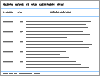
表1
供试有机肥的养分含量"
| 有机碳 /(g·kg-1) | 全氮 /(g·kg-1) | 全磷 /(g·kg-1) | 全钾 /(g·kg-1) | Fe /(g·kg-1) | Mn /(g·kg-1) | Cu /(mg·kg-1) | Zn /(mg·kg-1) | Ca /(mg·kg-1) | |
|---|---|---|---|---|---|---|---|---|---|
| 有机肥 | 18.3 | 10.51 | 8.98 | 35.44 | 18.83 | 0.30 | 32.08 | 164.80 | 398.35 |
| 有机肥+中微量元素 | 17.6 | 10.11 | 8.63 | 34.16 | 23.98 | 0.39 | 30.85 | 220.69 | 401.95 |
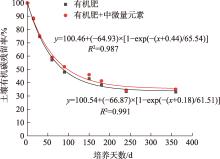
图1
不同有机肥处理对有机碳残留率的影响"
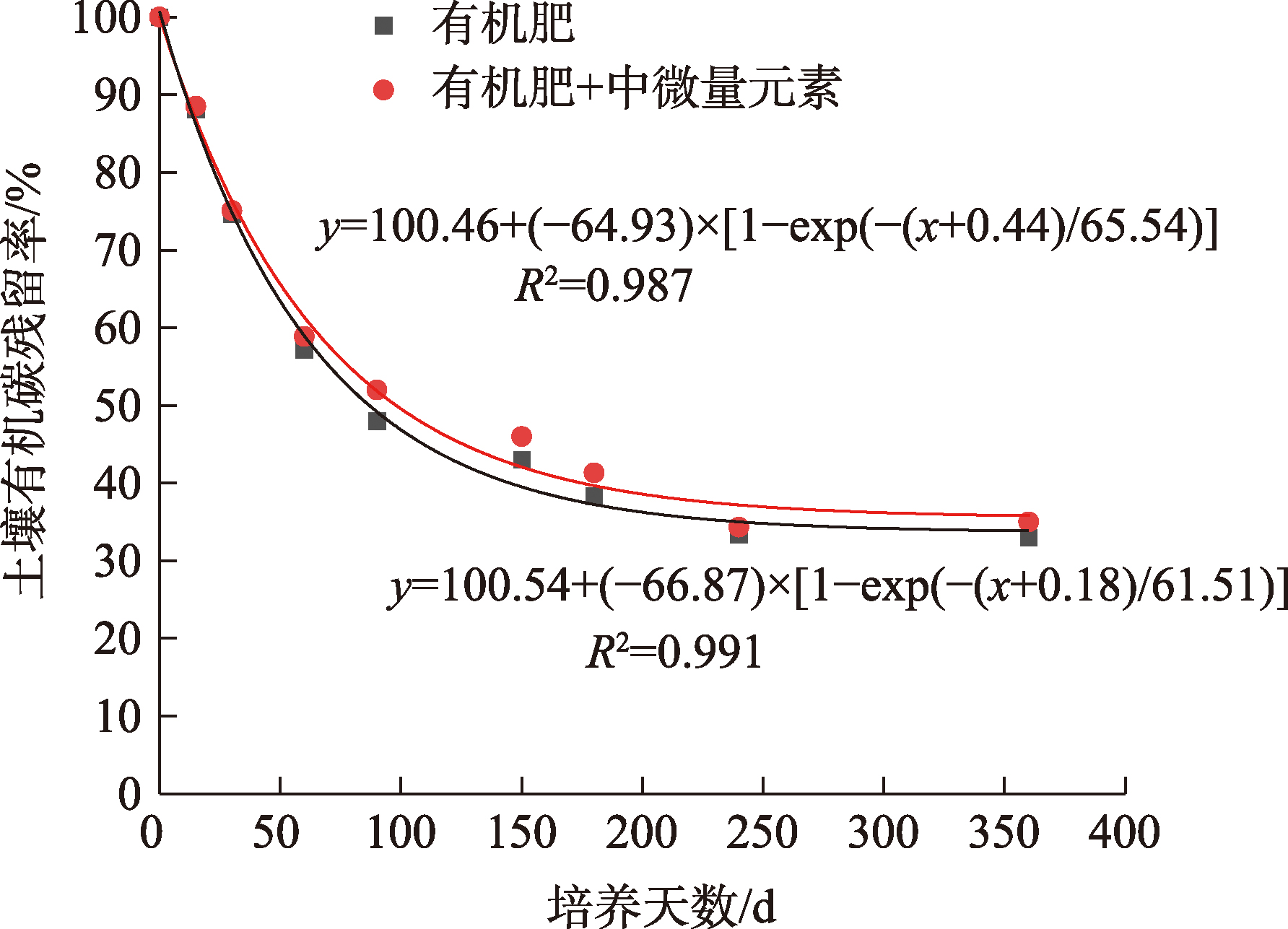

图2
不同有机肥处理对有机碳分解率的影响 注:不同小写字母表示处理间差异显著(P<0.05)。下同。"
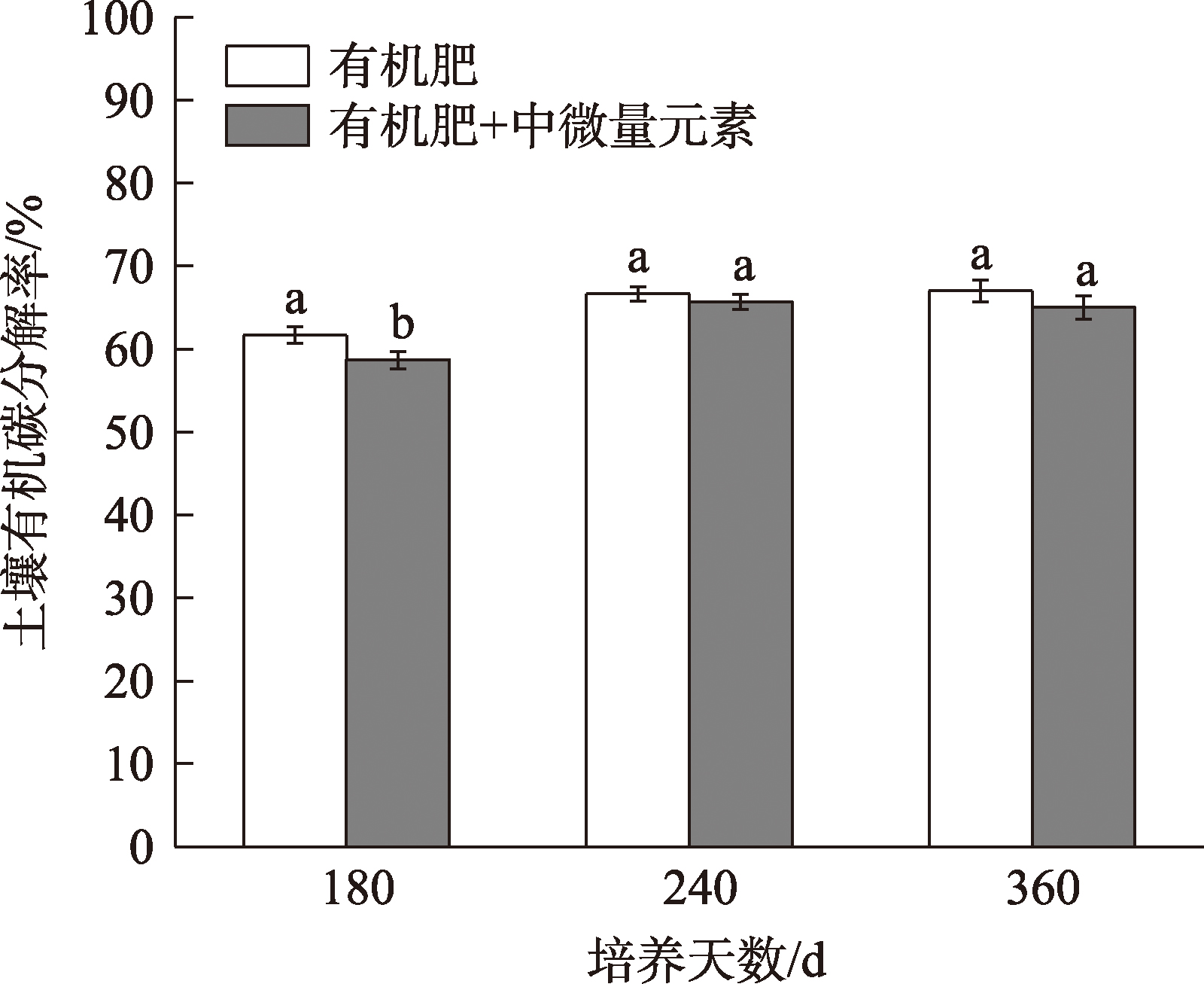
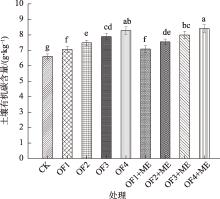
图3
不同处理不同施肥水平下有机碳含量"

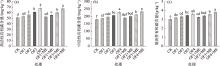
图4
不同处理不同施肥水平高活性、中活性和低活性有机碳含量"

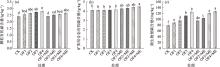
图5
不同有机肥处理不同施肥水平下对POC、MAOC和MBC含量的影响"

表2
不同处理有机碳组分占SOC的比例"
| 处理 | POC/SOC | MAOC/SOC | MBC/SOC |
|---|---|---|---|
| CK | 36.34±1.28a | 63.66±1.28e | 1.20±0.02e |
| OF1 | 36.16±0.36a | 63.84±0.36e | 1.25±0.01d |
| OF2 | 35.41±0.93ab | 64.59±0.93de | 1.28±0.04d |
| OF3 | 34.59±0.07bc | 65.41±0.07cd | 1.42±0.02b |
| OF4 | 33.80±0.68cd | 66.20±0.68bc | 1.51±0.03a |
| OF1+ME | 34.16±0.35cd | 65.84±0.35bc | 1.34±0.01c |
| OF2+ME | 33.39±0.21d | 66.61±0.21b | 1.37±0.01c |
| OF3+ME | 32.19±0.36e | 67.81±0.36a | 1.51±0.02a |
| OF4+ME | 31.65±0.02e | 68.35±0.02a | 1.51±0.02a |
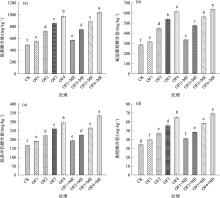
图6
不同有机肥处理不同施肥水平对氨基糖及氨基单糖含量的影响"

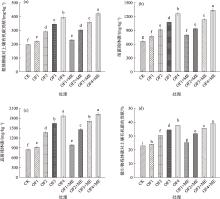
图7
不同有机肥处理不同施肥水平对微生物来源碳的影响"

| [1] | 余健, 房莉, 卞正富, 等. 土壤碳库构成研究进展[J]. 生态学报, 2014, 34(17): 4829-4838. |
| [Yu Jian, Fang Li, Bian Zhengfu, et al. A review of the composition of soil carbon pool[J]. Acta Ecologica Sinica, 2014, 34(17): 4829-4838.] | |
| [2] | Liu C, He C, Chang X S, et al. Fertilization and tillage influence on soil organic carbon fractions: A global meta-analysis[J]. Catena, 2024, 246: 108404. |
| [3] | 马玲玲, 杨世福, 林钊凯, 等. 土壤氨基糖及影响其积累的因素综述[J]. 生态科学, 2022, 41(5): 252-263. |
| [Ma Lingling, Yang Shifu, Lin Zhaokai, et al. Soil amino sugars and the factors affecting their accumulation[J]. Ecological Science, 2022, 41(5): 252-263.] | |
| [4] | Joergensen R G. Amino sugars as specific indices for fungal and bacterial residues in soil[J]. Biology and Fertility of Soils, 2018, 54(5): 559-568. |
| [5] | Six J, Frey S D, Thiet R K, et al. Bacterial and fungal contributions to carbon sequestration in agroecosystems[J]. Soil Science Society of American Journal, 2006, 70(2): 555-569. |
| [6] |
刘二燕, 赵媛媛, 周蝶, 等. 科尔沁-浑善达克沙地2000—2020年土地沙化时空变化格局[J]. 中国沙漠, 2024, 44(4): 46-56.
doi: 10.7522/j.issn.1000-694X.2024.00040 |
| [Liu Eryan, Zhao Yuanyuan, Zhou Die, et al. Spatiotemporal variation patterns of land desertification from2000 to 2020 in the Horqin-Otindag Sandy Land[J]. Journal of Desert Research, 2024, 44(4): 46-56.] | |
| [7] | 陈隆亨, 李福兴, 邸醒民, 等. 中国风砂土[M]. 北京: 科学出版社, 1998. |
| [Chen Longheng, Li Fuxing, Di Xingmin, et al. Loess in China[M]. Beijing: Science Press, 1998.] | |
| [8] | Dai Y J, Dong Z, Li H L, et al. Effects of checkerboard barriers on the distribution of aeolian sandy soil particles and soil organic carbon[J]. Geomorphology, 2019, 338: 79-87. |
| [9] | 刘明琪, 刘春媚, 曹洪宇, 等. 不同生物炭对风沙土土壤养分及氮素利用率的影响[J]. 中国土壤与肥料, 2023(5): 20-27. |
| [Liu Mingqi, Liu Chunmei, Cao Hongyu, et al. Effects of different biochar on soil nutrients and nitrogen use efficiency in sandy soil[J]. Soil and Fertilizer Sciences in China, 2023(5): 20-27.] | |
| [10] | 孙娇, 周涛, 郭鑫年, 等. 添加秸秆及生物质炭对风沙土有机碳及其活性组分的影响[J]. 土壤, 2021, 53(4): 802-808. |
| [Sun Jiao, Zhou Tao, Guo Xinnian, et al. Effects of biochar and straw on soil organic carbon and fractions of active carbon in aeolian sandy soil[J]. Soils, 2021, 53(4): 802-808.] | |
| [11] | 田超, 刘恒青, 李东利, 等. 粉煤灰与有机肥配施对风沙土理化性质及黑麦草生长的影响[J]. 中国土壤与肥料, 2022(7): 98-106. |
| [Tian Chao, Liu Hengqing, Li Dongli, et al. Effects of combined application of fly ash and organic fertilizer on the physical and chemical properties of aeolian sandy soil and the growth of ryegrass[J]. Soil and Fertilizer Sciences in China, 2022(7): 98-106.] | |
| [12] | 王伟伟, 张立欣, 梁止水, 等. 砒砂岩改良风沙土物理和养分特征的大田试验[J]. 中国水土保持科学(中英文), 2022, 20(1): 136-142. |
| [Wang Weiwei, Zhang Lixin, Liang Zhishui, et al. Physical and nutrient characteristics of sand soil improved by Pisha sandstone via field experiment[J]. Science of Soil and Water Conservation, 2022, 20(1): 136-142.] | |
| [13] |
马迪乃·阿布力米提, 张勇娟, 王莉, 等. 膨润土对风沙土理化性质及苏丹草生长的影响[J]. 干旱区地理, 2023, 46(5): 763-772.
doi: 10.12118/j.issn.1000-6060.2022.389 |
| [Madinai Abulimiti, Zhang Yongjuan, Wang Li, et al. Effect of bentonite on physical and chemical properties of aeolian sandy soil and growth of Sorghum sudanense[J]. Arid Land Geography, 2023, 46(5): 763-772.] | |
| [14] | 朱晓月, 马灿, 方燕, 等. 水分胁迫和粉煤灰添加对风沙土颗粒分形维数及肥力的影响[J]. 水土保持学报, 2023, 37(5): 103-110. |
| [Zhu Xiaoyue, Ma Can, Fang Yan, et al. Effects of drought stress and fly ash on fractal dimension and fertility of aeolian sandy soil[J]. Journal of Soil and Water Conservation, 2023, 37(5): 103-110.] | |
| [15] | 赵娜, 王小利, 何进, 等. 有机肥替代化学氮肥对黄壤活性有机碳组分、酶活性及作物产量的影响[J]. 环境科学, 2024, 45(7): 1-21. |
| [Zhao Na, Wang Xiaoli, He Jin, et al. Effects of replacing chemical nitrogen fertilizer with organic fertilizer on active organic carbon fractions, enzyme activities, and crop yield in yellow soil[J]. Environmental Science, 2024, 45(7): 1-21.] | |
| [16] | Luan H A, Gao W, Huang S W, et al. Partial substitution of chemical fertilizer with organic amendments affects soil organic carbon composition and stability in a greenhouse vegetable production system[J]. Soil Tillage Research, 2019, 191: 185-196. |
| [17] | Yan H, Fan W, Wu J G. Effects of continuous manure application on the microbial community and labile organic carbon fractions[J]. Agriculture, 2023, 13(11): 2096. |
| [18] | 李忠徽, 魏彬萌, 刘丹, 等. 黄绵土中碳酸钙含量和有机肥施用对土壤有机碳组分及CO2排放的影响[J]. 环境科学学报, 2018, 38(6): 2498-2505. |
| [Li Zhonghui, Wei Binmeng, Liu Dan, et al. Effect of calcium carbonate content and composted manure application on soil organic carbon fractions and CO2 emissions in loessal soil[J]. Acta Scientiae Circumstantiae, 2018, 38(6): 2498-2505.] | |
| [19] | Abdalla K, Sun Y, Zarebanadkouki M, et al. Long-term continuous farmyard manure application increases soil carbon when combined with mineral fertilizers due to lower priming effects[J]. Geoderma, 2022, 428: 116216. |
| [20] | Chen Z X, Du Z L, Wang G A, et al. Dynamic changes in soil organic carbon induced by long-term compost application under a wheat-maize double cropping system in North China[J]. Science of the Total Environment, 2024, 913: 169407. |
| [21] | Du L N, Cuss C W, Dyck M, et al. Size-resolved distribution of trace elements in lysimeter soil solutions und er contrasting long-term agricultural management to assess their bioavailability[J]. Science of the Total Environment, 2024, 924: 171590. |
| [22] | 孙丹阳. 微肥长期应用的土壤环境效应评价[D]. 杨凌: 西北农林科技大学, 2023. |
| [Sun Danyang. Evaluation of Soil Environmental Effects of Long-term Application of Trace Fertilize[D]. Yangling: Northwest A & F University, 2023.] | |
| [23] |
姜振辉, 师江澜, 贾舟, 等. 秸秆还田配施中微量元素对农田土壤有机碳固持的影响[J]. 应用生态学报, 2016, 27(4): 1196-1202.
doi: 10.13287/j.1001-9332.201604.022 |
|
[Jiang Zhenhui, Shi Jianglan, Jia Zhou, et al. Effects of straw returning combined with medium and microelements application on soil organic carbon sequestration in cropland[J]. Chinese Journal of Applied Ecology, 2016, 27(4): 1196-1202.]
doi: 10.13287/j.1001-9332.201604.022 |
|
| [24] | Lu R K. Method for Agro-Chemical Analyses of Soil[M]. Beijing: Agricultural, Science and Technology Press of China, 1999. |
| [25] | 沈宏, 曹志洪, 胡正义. 土壤活性有机碳的表征及其生态效应[J]. 生态学杂志, 1999, 18(3): 33-39. |
| [Shen Hong, Cao Zhihong, Hu Zhengyi. Characteristics and ecological effects of the active organic carbon in soil[J]. Chinese Journal of Ecology, 1999, 18(3): 33-39.] | |
| [26] | Loginow W, Wisniewski W, Gonet S S, et al. Fractionation of organic carbon based on susceptibility to oxidation[J]. Polish Journal of Soil Science (Poland), 1987, 20(1): 47-52. |
| [27] | Cambardella C A, Elliott E T. Particulate soil organic-matter changes across a grassland cultivation sequence[J]. Soil Science Society of America Journal, 1992, 56: 777-783. |
| [28] | Brookes P C, Landman A, Pruden G, et al. Chloroform fumigationand the release of soil nitrogen: A rapid direct extraction method tomeasure microbial biomass nitrogen in soil[J]. Soil Biology & Biochemistry, 1985, 17(6): 837-842. |
| [29] | Zhang X D, Amelung W. Gas chromatographic determination of muramic acid, glucosamine, mannosamine andgalactosamine in soils[J]. Soil Biology and Biochemistry, 1996, 28: 1201-1206. |
| [30] | 柳敏, 张璐, 宇万太, 等. 有机物料中有机碳和有机氮的分解进程及分解残留率[J]. 应用生态学报, 2007, 18(11): 2503-2506. |
|
[Liu Min, Zhang Lu, Yu Wantai, et al. Decomposition process and residual rate of organic materials C and N in soils[J]. Chinese Journal of Applied Ecology, 2007, 18(11): 2503-2506.]
pmid: 18260455 |
|
| [31] | Liang C, Amelung W, Lehmann J, et al. Quantitative assessment of microbial necromass contribution to soil organic matter[J]. Globe Change Biology, 2019, 25(11): 3578-3590. |
| [32] |
You M, Han X, Chen X, et al. Effect of reduction of aggregate size on the priming effect in a mollisol under different soil managements[J]. European Journal of Soil Science, 2019, 70(4): 765-775.
doi: 10.1111/ejss.12818 |
| [33] | 李娜, 滕培基, 雷琬莹, 等. 外源有机物添加种类对农田黑土有机碳激发效应的影响及作用机理[J]. 中国生态农业学报, 2023, 31(10): 1588-1601. |
| [Li Na, Teng Peiji, Lei Wanying, et al. Effects and mechanisms of addition of different types of exogenous organic materials on priming effect of organic carbon in arable black soil[J]. Chinese Journal of Eco-Agriculture, 2023, 31(10): 1588-1601.] | |
| [34] |
陈晓芬, 刘明, 江春玉, 等. 不同施肥处理红壤性水稻土团聚体有机碳矿化特征[J]. 中国农业科学, 2018, 51(17): 3325-3334.
doi: 10.3864/j.issn.0578-1752.2018.17.008 |
|
[Chen Xiaofen, Liu Ming, Jiang Chunyu, et al. Organic carbon mineralization in aggregate fractions of red paddy soil under different fertilization treatments[J]. Scientia Agricultura Sinica, 2018, 51(17): 3325-3334.]
doi: 10.3864/j.issn.0578-1752.2018.17.008 |
|
| [35] | Riffaldi R, Saviozzi A, Levi-Minzi R. Carbon mineralization kinetics as influenced by soil properties[J]. Biology and Fertility of Soils, 1996, 22(4): 293-298. |
| [36] | Wang Y Y, Wang H, He J S, et al. Iron-mediated soil carbon response to water-table decline in an alpine wetland[J]. Nature Communications, 2017, 8(1): 15972. |
| [37] |
赵彬, 姚鹏, 于志刚. 有机碳-氧化铁结合对海洋环境中沉积有机碳保存的影响[J]. 地球科学进展, 2016, 31(11): 1151-1158.
doi: 10.11867/j.issn.1001-8166.2016.11.1151 |
|
[Zhao Bin, Yao Peng, Yu Zhigang. The effect of organic carbon-iron oxide association on the preservation of sedimentary organic carbon in marine environments[J]. Advances in Earth Science, 2016, 31(11): 1151-1158.]
doi: 10.11867/j.issn.1001-8166.2016.11.1151 |
|
| [38] | Yu G H, Wu M J, Wei G R, et al. Binding of organic ligands with Al(III) in dissolved organic matter from soil: Implications for soil organic carbon storage[J]. Environmental Science & Technology, 2012, 46(11): 6102-6109. |
| [39] | Torn M S, Trumbore S E, Chadwich O A, et al. Mineral control of soil organic carbon storage and turnover[J]. Nature, 1997, 389: 170-173. |
| [40] | 董静超, 栗杰, 董越, 等. 外源氯化钙对土壤有机碳积累的影响[J]. 山西农业大学学报(自然科学版), 2020, 40(1): 122-128. |
| [Dong Jingchao, Li Jie, Dong Yue, et al. Effects of exogenous calcium chloride on soil organic carbon accumulation[J]. Journal of Shanxi Agricultural University (Natural Science Edition), 2020, 40(1): 122-128.] | |
| [41] | Xiong S J, Zhu J L, Yang J L, et al. Straw return plus zinc fertilization increased the accumulations and changed the chemical compositions of mineral-associated soil organic carbon[J]. Agriculture, Ecosystems and Environment, 2023, 357: 108699. |
| [42] | Brüggenwirth L, Behrens R, Schnee S L, et al. Interactions of manganese oxides with natural dissolved organic matter: Implications for soil organic carbon cycling[J]. Geochimica et Cosmochimica Acta, 2024, 366: 182-200. |
| [43] | 王伯仁, 徐明岗, 文石林. 长期不同施肥对旱地红壤性质和作物生长的影响[J]. 水土保持学报, 2005, 19(1): 97-100, 144. |
| [Wang Boren, Xu Minggang, Wen Shilin. Effect of long time fertilizers application on soil characteristics and crop growth in red soil upland[J]. Journal of Soil and Water Conservation, 2005, 19(1): 97-100, 144.] | |
| [44] | 梁栋, 周巧林, 张辉, 等. 生物质炭和有机肥配施对水稻土溶解性有机碳光谱学特征的影响[J]. 土壤学报, 2024, 61(4): 1-12. |
| [Liang Dong, Zhou Qiaolin, Zhang Hui, et al. Effects of biochar and organic fertilizers combined application on spectral characteristics of soil dissolved organic matter in paddy soil[J]. Acta Pedologica Sinica, 2024, 61(4): 1-12.] | |
| [45] | 林仕芳, 王小利, 段建军, 等. 有机肥替代化肥对旱地黄壤有机碳矿化及活性有机碳的影响[J]. 环境科学, 2022, 43(4): 2219-2225. |
| [Lin Shifang, Wang Xiaoli, Duan Jianjun, et al. Effects of organic fertilizer replacing chemical fertilizer on organic carbon mineralization and active organic carbon in dryland yellow soil[J]. Environmental Science, 2022, 43(4): 2219-2225.] | |
| [46] | 路文涛, 贾志宽, 张鹏, 等. 秸秆还田对宁南旱作农田土壤活性有机碳及酶活性的影响[J]. 农业环境科学学报, 2011, 30(3): 522-528. |
| [Lu Wentao, Jia Zhikuan, Zhang Peng, et al. Effects of straw returning on soil labile organic carbon and enzyme activity in semi-arid areas of Southern Ningxia, China[J]. Journal of Agro-environment Science, 2011, 30(3): 522-528.] | |
| [47] | 张迪, 韩晓增, 侯雪莹. 长期不同施肥管理对黑土活性有机碳及碳库管理指数的影响[J]. 土壤通报, 2011, 42(3): 654-658. |
| [Zhang Di, Han Xiaozeng, Hou Xueying. The effects of long-term fertilization on the labile organic carbon and carbon management index in black soil[J]. Chinese Journal of Soil Science, 2011, 42(3): 654-658.] | |
| [48] | 刘金光, 李孝刚, 王兴祥. 连续施用有机肥对连作花生根际微生物种群和酶活性的影响[J]. 土壤, 2018, 50(2): 305-311. |
| [Liu Jinguang, Li Xiaogang, Wang Xingxiang. Effects of successive application of organic fertilizers on rhizosphere microbial populations and enzyme activities of monoculture peanut[J]. Soils, 2018, 50(2): 305-311.] | |
| [49] | 宁赵, 陈香碧, 唐海明, 等. 不同施肥处理下水稻根际和非根际土壤中氨基糖积累特征[J]. 应用生态学报, 2019, 30(1): 189-197. |
| [Ning Zhao, Chen Xiangbi, Tang Haiming, et al. Characteristics of amino sugar accumulation in rhizosphere and non-rhizosphere soil of rice under different fertilization treatments[J]. Chinese Journal of Applied Ecology, 2019, 30(1): 189-197.] | |
| [50] | Cheng Z R, Guo J Y, Jin W, et al. Responses of SOC, labile SOC fractions, and amino sugars to different organic amendments in a coastal saline-alkali soil[J]. Soil & Tillage Research, 2024, 239: 106051. |
| [51] | von Luetzow M, Kogel-Knabner I, Ludwig B, et al. Stabilization mechanisms of organic matter in four temperate soils: Development and application of a conceptual model[J]. Journal of Plant Nutrition and Soil Science, 2008, 171(1): 111-124. |
| [52] | Wang C, Wang X, Pei G, et al. Stabilization of microbial residues in soil organic matter after two years of decomposition[J]. Soil Biology and Biochemistry, 2020, 141: 107687. |
| [53] | 李世风, 秦超, 闫刚, 等. 糠醛渣生态肥对风沙土理化性质和茄子效益的影响[J]. 土壤, 2016, 48(5): 893-900. |
| [Li Shifeng, Qin Chao, Yan Gang, et al. Effects of ecological fertilizer from furfural residue on physical and chemical properties of sand soil and eggplant benefits[J]. Soils, 2016, 48(5): 893-900.] | |
| [54] | 王子郡, 黄菁华, 麦建军, 等. 外源有机物料性质对黑土农田土壤微生物碳组分的影响[J]. 植物营养与肥料学报, 2024, 30(5): 980-995. |
| [Wang Zijun, Huang Jinghua, Mai Jianjun, et al. Effects of organic material properties on microbial carbon fractions in black soil farmland[J]. Journal of Plant Nutrition and Fertilizers, 2024, 30(5): 980-995.] | |
| [55] |
Zhou R R, Liu Y, Dungait J A J, et al. Microbial necromass in cropland soils: A global meta-analysis of management effects[J]. Global Change Biology, 2023, 29(7): 1998-2014.
doi: 10.1111/gcb.16613 pmid: 36751727 |
| [56] | 李春霞. 锰、铁和钼肥处理种子与叶面喷施对小麦生长与吸收的影响及其机制[D]. 杨凌: 西北农林科技大学, 2019. |
| [Li Chunxia. Effects and Mechanism of Seed Soaking and Foliar Spraying of Manganese, Iron and Molybdenum on Growth and Absorb of Wheat[D]. Yangling: Northwest A & F University, 2019.] | |
| [57] | 梁婷, 刘明, 李帅, 等. 均衡施肥对滩涂盐碱农田稻麦轮作系统土壤养分与作物生长和养分吸收的影响[J]. 土壤, 2021, 53(3): 483-490. |
| [Liang Ting, Liu Ming, Li Shuai, et al. Effects of balanced fertilization on soil nutrients and growth and nutrient absorption of rice-wheat rotation system in saline-alkali farmland of tidal flat[J]. Soils, 2021, 53(3): 483-490.] | |
| [58] | 常健玮, 吴文明, 朱一成, 等. 柑橘生长与土壤养分及微生物群落的关系研究[J]. 土壤通报, 2022, 53(6): 1386-1394. |
| [Chang Jianwei, Wu Wenming, Zhu Yicheng, et al. Relationship among citrus growth, soil nutrients and microbial communities[J]. Chinese Journal of Soil Science, 2022, 53(6): 1386-1394.] | |
| [59] |
杨阳, 王宝荣, 窦艳星, 等. 植物源和微生物源土壤有机碳转化与稳定研究进展[J]. 应用生态学报, 2024, 35(1): 111-123.
doi: 10.13287/j.1001-9332.202401.011 |
|
[Yang Yang, Wang Baorong, Dou Yanxing, et al. Advances in the research of transformation and stabilization of soil organic carbon from plant and microbe[J]. Chinese Journal of Applied Ecology, 2024, 35(1): 111-123.]
doi: 10.13287/j.1001-9332.202401.011 |
|
| [60] | 刘强, 梁鑫, 董佩丽, 等. 不同施肥措施对黄土丘陵区农田土壤有机碳组分和碳库管理指数的影响[J]. 土壤, 2023, 55(2): 446-452. |
| [Liu Qiang, Liang Xin, Dong Peili, et al. Effects of different fertilization methods on farmland soil active organic carbon and carbon pool management indicators in Loess Hilly Area[J]. Soils, 2023, 55(2): 446-452.] | |
| [61] | Kubar K A, Huang L, Lu J W, et al. Long-term tillage and straw returning effects on organic C fractions and chemical composition of SOC in rice-rape cropping system[J]. Archives of Agronomy and Soil Science, 2019, 65(1): 125-137. |
| [62] |
李娜, 信会男, 赖宁, 等. 不同土地利用方式对农田土壤有机碳组分及土壤微生物量碳的影响[J]. 干旱区研究, 2024, 41(10): 1789-1796.
doi: 10.13866/j.azr.2024.10.16 |
|
[Li Na, Xin Huinan, Lai Ning, et al. Effects of different land-use methods on the organic carbon composition and soil microbial biomass carbon of farmland soil[J]. Arid Zone Research, 2024, 41(10): 1789-1796.]
doi: 10.13866/j.azr.2024.10.16 |
|
| [63] |
马继龙, 史军辉, 王新英, 等. 洪水漫溢对塔里木河中游河岸胡杨林土壤有机碳及活性组分的影响[J]. 干旱区研究, 2023, 40(8): 1248-1257.
doi: 10.13866/j.azr.2023.08.05 |
|
[Ma Jilong, Shi Junhui, Wang Xinying, et al. Effects of flood overflow on soil organic carbon and active components of Populus euphratica forest in the middle reaches of the Tarim River[J]. Arid Zone Research, 2023, 40(8): 1248-1257.]
doi: 10.13866/j.azr.2023.08.05 |
|
| [64] | Bai X J, Dippold M A, An S S, et al. Extracellular enzyme activity and stoichiometry: The effect of soil microbial element limitation during leaf litter decomposition[J]. Ecological Indicators, 2021, 121: 107200. |
| [65] | Tang C N, Du S P, Ma Z M, et al. Effects of the replacement of chemical fertilizers with organic fertilizersin different proportions on microbial biomass and enzyme activities of soil aggregates in gravel-mulched field[J]. Sustainability, 2024, 16(6): 2483. |
| [66] | Ridgeway J R, Morrissey E M, Brzostek E R. Plant litter traits control microbial decomposition and drive soil carbon stabilization[J]. Soil Biology and Biochemistry, 2022, 175: 108857. |
| [67] | Mao X L, Sun T, Zhu L J, et al. Microbial adaption to stoichiometric imbalances regulated the size of soil mineral-associated organic carbon pool under continuous organic amendments[J]. Geoderma, 2024, 445: 116883. |
| [68] | 王朔林, 王改兰, 赵旭, 等. 长期施肥对栗褐土有机碳含量及其组分的影响[J]. 植物营养与肥料学报, 2015, 21(1): 104-111. |
| [Wang Shuolin, Wang Gailan, Zhao Xu, et al. Effect of long-term fertilization on organic carbon fractions and contents of cinnamon soil[J]. Journal of Plant Nutrition and Fertilizers, 2015, 21(1): 104-111.] | |
| [69] | 李欢, 王艳玲, 殷丹, 等. 水稻秸秆/根系添加对稻田红壤发生层颗粒态及矿物结合态有机碳的影响[J]. 土壤通报, 2022, 53(2): 384-391. |
| [Li Huan, Wang Yanling, Yin Dan, et al. Effect of rice straw or/and root additions on the particulate-and mineral- associated organic carbon in the pedogenic horizon of paddy red soil[J]. Chinese Journal of Soil Science, 2022, 53(2): 384-391.] | |
| [70] | 杨娥女, 王宝荣, 姚宏佳, 等. 黄土高原生物土壤结皮发育过程中颗粒态和矿物结合态有机碳变化特征[J]. 水土保持研究, 2023, 30(1): 25-33, 40. |
| [Yang Env, Wang Baorong, Yao Hongjia, et al. Dynamics of particulate and mineral-associated organic carbon during the development of biological soil crusts in the Loess Plateau[J]. Research of Soil and Water Conservation, 2023, 30(1): 25-33, 40.] |
| [1] | 魏疆, 宋丹丹, 赵丽莉, 赵彩欣, 王凌羲. 乌鲁木齐市PM2.5中碳组分污染特征及来源解析[J]. 干旱区研究, 2024, 41(8): 1323-1330. |
| [2] | 唐维春, 刘小娥, 苏世平, 田晓娟, 唐庆童, 张婧. 甘肃兴隆山不同演替阶段群落土壤氮素矿化对温度的响应[J]. 干旱区研究, 2024, 41(6): 984-997. |
| [3] | 赖虹雨, 吕德生, 朱艳, 王振华, 温越, 宋利兵, 齐浩. 生物炭施加对微咸水滴灌棉田土壤水热盐及棉花生长的影响[J]. 干旱区研究, 2024, 41(2): 326-338. |
| [4] | 解玉彩, 刘浩, 赵丰年, 张磊, 赵鑫, 师卓, 王兴鹏. 灌溉水矿化度和钠吸附比互作对膜下滴灌棉花生长及产量的影响[J]. 干旱区研究, 2024, 41(12): 2071-2082. |
| [5] | 邢欣然, 张祎, 李鹏, 刘晓君, 陶清瑞, 任正龑, 胥世斌. 模拟干湿条件下土壤酶活性对坝地土壤有机碳矿化的影响[J]. 干旱区研究, 2024, 41(11): 1969-1980. |
| [6] | 李娜, 信会男, 赖宁, 李永福, 吕彩霞, 耿庆龙, 段婧婧, 陈署晃. 不同土地利用方式对农田土壤有机碳组分及土壤微生物量碳的影响[J]. 干旱区研究, 2024, 41(10): 1789-1796. |
| [7] | 庞晔,袁建钰,闫丽娟,杜梦寅,李广. 保护性耕作对黄土高原旱作麦田土壤氮矿化的影响[J]. 干旱区研究, 2023, 40(9): 1446-1456. |
| [8] | 马继龙, 史军辉, 王新英, 阿丽亚·拜都热拉, 刘茂秀, 艾吉尔·阿不拉. 洪水漫溢对塔里木河中游河岸胡杨林土壤有机碳及活性组分的影响[J]. 干旱区研究, 2023, 40(8): 1248-1257. |
| [9] | 李燕强, 王振华, 叶含春, 宋利兵, 刘健, 温越, 武小荻. 灌溉水矿化度对棉田土壤呼吸速率的影响[J]. 干旱区研究, 2023, 40(3): 392-402. |
| [10] | 崔佳琪,李仙岳,史海滨,孙亚楠,马红雨,菅文浩. 节水改造前后永济灌域地下水环境时空变化特征[J]. 干旱区研究, 2022, 39(3): 841-852. |
| [11] | 宋良翠,马维伟,李广,龙永春,常文华. 水分对尕海湿地退化演替土壤氮矿化的影响[J]. 干旱区研究, 2022, 39(1): 165-175. |
| [12] | 常帅,于红博,曹聪明,马梓策,刘月璇,李想. 锡林郭勒草原土壤有机碳分布特征及其影响因素[J]. 干旱区研究, 2021, 38(5): 1355-1366. |
| [13] | 张露,孟婷婷,胡雅,魏静. 不同培肥方式对沙质土地区残次林地土壤团聚体组成及稳定性的影响[J]. 干旱区研究, 2021, 38(4): 973-979. |
| [14] | 史常明,柳洋,张富荣,赵云飞,肖锦锦,汪霞. 焉耆盆地绿洲农田不同类型土壤有机碳空间分布特征及储量估算[J]. 干旱区研究, 2021, 38(3): 672-681. |
| [15] | 刘丽贞,庞丹波,王新云,陈林,李学斌,吴梦瑶,刘波,祝忠有,李静尧,王继飞. 稳定碳同位素技术在土壤有机碳研究中的应用进展[J]. 干旱区研究, 2021, 38(1): 123-132. |
|
||
