
干旱区研究 ›› 2025, Vol. 42 ›› Issue (11): 2044-2057.doi: 10.13866/j.azr.2025.11.08
陈凯1( ), 张祎2, 王兴1(), 刘晓君3, 胡仁正3, 雷雪怡3, 范清华2
收稿日期:2025-05-20
修回日期:2025-07-29
出版日期:2025-11-15
发布日期:2025-12-13
通讯作者:
王兴. E-mail: wx08@nxu.edu.cn作者简介:陈凯(2000-),男,硕士研究生,主要从事土壤侵蚀及碳损失研究. E-mail: 17395125546@163.com
基金资助:
CHEN Kai1(), ZHANG Yi2, WANG Xing1(), LIU Xiaojun3, HU Renzheng3, LEI Xueyi3, FAN Qinghua2
Received:2025-05-20
Revised:2025-07-29
Published:2025-11-15
Online:2025-12-13
摘要: 为探究宁南山区典型植被坡面土壤侵蚀特征及其水动力学机制,采用控制变量法开展野外冲刷试验,系统分析了不同坡度(10°、15°、20°、25°)、不同土地利用类型(耕地、草地、灌木)和不同冲刷强度(4 L·min-1、8 L·min-1、16 L·min-1)对坡面侵蚀过程的影响。结果表明:(1) 同一土地利用类型下,坡度与冲刷强度对产沙量的影响随坡度增大呈现较为强烈的增长趋势,其中坡度对侵蚀过程表现出更为显著的促进作用。25°坡度、16 L·min-1冲刷强度组合下的耕地产沙量最大,达到15.64 kg;10°和4 L·min-1组合下的灌木产沙量最小,仅为0.03 kg。(2) 水动力参数与产沙量呈现显著相关性(P<0.05),但主导因子随冲刷环境条件改变,其中低冲刷强度4 L·min-1下草地和灌木单位水流功率贡献度均可达44.19%,而高冲刷强度16 L·min-1下各能量参数对产沙量的贡献度均接近于20.00%。(3) 因子交互作用呈现非线性演变特征,单因子直接作用在低冲刷强度4 L·min-1时贡献度较高,但随着冲刷强度增加到16 L·min-1,单因子主导性显著减弱,多因子交互作用贡献度增加。本研究可为区域水土保持措施的坡位配置优化提供理论支撑,对实现生态脆弱区侵蚀精准防控具有重要实践价值。
陈凯, 张祎, 王兴, 刘晓君, 胡仁正, 雷雪怡, 范清华. 宁南山区坡面与覆被特征对侵蚀水动力及产沙过程的耦合影响[J]. 干旱区研究, 2025, 42(11): 2044-2057.
CHEN Kai, ZHANG Yi, WANG Xing, LIU Xiaojun, HU Renzheng, LEI Xueyi, FAN Qinghua. Coupled effects of slope and vegetation cover characteristics on hydrodynamic erosion forces and sediment yield processes in the southern Ningxia mountainous area[J]. Arid Zone Research, 2025, 42(11): 2044-2057.
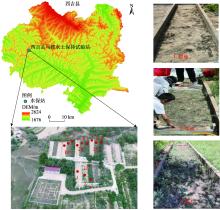
图1
研究区概况示意图"

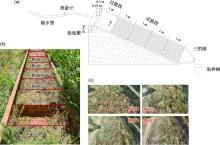
图2
试验装置及坡面布设示意图 注:图(a)为单场坡面冲刷装置布设;图(b)为单场冲刷野外实景;图(c)为4个冲刷断面实景近图。"

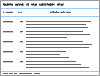
表1
样地产流时间"
| 坡度 | 冲刷强度 /(L·min-1) | 土地利 用类型 | 产流时间/s | 坡度 | 冲刷强度 /(L·min-1) | 土地利 用类型 | 产流时间/s | ||
|---|---|---|---|---|---|---|---|---|---|
| 初始产 流时间 | 结束产 流时间 | 初始产 流时间 | 结束产 流时间 | ||||||
| 10° | 4 | 耕地 | 172 | 163 | 20° | 4 | 耕地 | 88 | 83 |
| 草地 | 218 | 213 | 草地 | 93 | 97 | ||||
| 灌木 | 299 | 296 | 灌木 | 249 | 244 | ||||
| 8 | 耕地 | 75 | 42 | 8 | 耕地 | 51 | 45 | ||
| 草地 | 120 | 103 | 草地 | 65 | 54 | ||||
| 灌木 | 240 | 239 | 灌木 | 159 | 160 | ||||
| 16 | 耕地 | 43 | 37 | 16 | 耕地 | 24 | 22 | ||
| 草地 | 68 | 62 | 草地 | 38 | 33 | ||||
| 灌木 | 133 | 117 | 灌木 | 91 | 85 | ||||
| 15° | 4 | 耕地 | 113 | 98 | 25° | 4 | 耕地 | 56 | 44 |
| 草地 | 127 | 124 | 草地 | 74 | 63 | ||||
| 灌木 | 275 | 273 | 灌木 | 129 | 104 | ||||
| 8 | 耕地 | 63 | 46 | 8 | 耕地 | 35 | 33 | ||
| 草地 | 101 | 95 | 草地 | 44 | 31 | ||||
| 灌木 | 102 | 100 | 灌木 | 147 | 151 | ||||
| 16 | 耕地 | 31 | 27 | 16 | 耕地 | 15 | 12 | ||
| 草地 | 52 | 51 | 草地 | 27 | 24 | ||||
| 灌木 | 106 | 95 | 灌木 | 43 | 41 | ||||
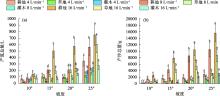
图3
总产流产沙量 注:不同小写字母表示在相同坡度下,不同土地利用类型坡面总产流量或总产沙量存在显著差异(P<0.05)。下同。"

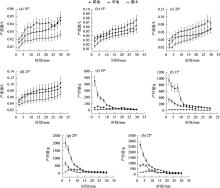
图4
坡面水沙变化过程"

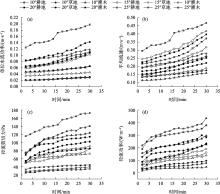
图5
水动力参数随产流时间的变化特征"

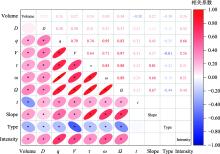
图6
各因子与产沙量的相关性分析 注:Volume表示产沙量;D表示平均径流深度;q表示单位径流量;V表示平均流速;τ表示径流剪切力;ω表示径流功率;Ω表示单位水流功率;t表示产流时间;Slope表示样地坡度;Type表示土地利用类型;Intensity表示冲刷强度;*表示在0.05水平上显著相关。下同。"

表2
冲刷强度、土地利用类型、样地坡度对产沙量及相关因子的影响"
| 产沙量 | D | V | τ | ω | Ω | t | |
|---|---|---|---|---|---|---|---|
| Intensity | 156.1*** | 240.1*** | 667.7*** | 430.9*** | 285.1*** | 667.7*** | 0.1634 |
| Type | 161.5*** | 71.07*** | 918.3*** | 134.3*** | 65.64*** | 918.2*** | 0.1634 |
| Slope | 158.2*** | 73.82*** | 121.9*** | 1609*** | 420.3*** | 1649*** | 0.0553 |
| Intensity×Type | 7.836*** | 3.141** | 24.87*** | 5.154*** | 11.59*** | 24.89 | 0.1621 |
| Intensity×Slope | 1.205 | 7.723*** | 1.271 | 44.36*** | 5.221*** | 1.266*** | 0.0548 |
| Type×Slope | 9.221*** | 2.661** | 4.773*** | 3.883*** | 4.092*** | 4.761*** | 0.0548 |
| Intensity×Type×Slope | 1.912* | 4.285*** | 2.281*** | 4.486*** | 7.507*** | 2.276** | 0.0541 |
表3
产沙量与各参数间的逐步回归分析"
| 冲刷强度/(L·min-1) | 土地利 用类型 | 逐步回归模型 | R2 | |
|---|---|---|---|---|
| 预测 变量 | 模型方程 | |||
| 4 | 耕地 | t | Y=-1.049t+1.916ω-3.676V- 7.291 | 0.796 |
| ω | ||||
| V | ||||
| 草地 | Slope | Y=3.533Slope-5.938V-17.814 | 0.707 | |
| V | ||||
| 灌木 | Slope | Y=6.58Slope-2.131Ω-23.301 | 0.797 | |
| Ω | ||||
| 8 | 耕地 | t | Y=-0.856t+2.139τ-2.962D+ 11.272 | 0.921 |
| τ | ||||
| D | ||||
| 草地 | Slope | Y=8.503Slope-5.281Ω-35.754 | 0.773 | |
| Ω | ||||
| 灌木 | Slope | Y=8.205Slope-3.091Ω-0.92τ- 25.773 | 0.790 | |
| Ω | ||||
| τ | ||||
| 16 | 耕地 | t | Y=-1.589t+2.758τ-2.099V- 5.123 | 0.922 |
| τ | ||||
| V | ||||
| 草地 | Slope | Y=7.079Slope-4.314τ+4.077 | 0.897 | |
| τ | ||||
| 灌木 | Slope | Y=9.916Slope-3.683Ω- 1.069ω+0.507t-30.479 | 0.781 | |
| Ω | ||||
| ω | ||||
| t | ||||
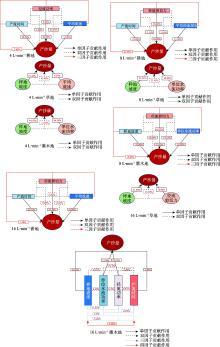
图7
不同冲刷强度下3种土地利用类型所对应各影响因子对产沙量的贡献度"

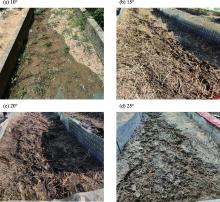
图8
坡度变化下草地的土壤侵蚀"

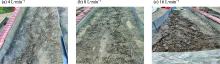
图9
冲刷强度变化下草地的土壤侵蚀"

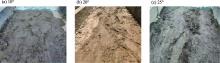
图10
坡度变化下的耕地侵蚀"

表4
能量参数对产沙量的贡献度"
| 冲刷强度/(L·min-1) | 能量参数 | 贡献度/% |
|---|---|---|
| 4 | 剪切力 | 18.23 |
| 径流功率 | 4.77 | |
| 单位水流功率 | 77.00 | |
| 8 | 剪切力 | 5.12 |
| 径流功率 | 47.28 | |
| 单位水流功率 | 47.60 | |
| 16 | 剪切力 | 23.23 |
| 径流功率 | 48.34 | |
| 单位水流功率 | 28.43 |
| [1] | Merritt W S, Letcher R A, Jakeman A J, et al. A review of erosion and sediment transport models[J]. Environmental Modelling & Software, 2003, 18(8-9): 761-799. |
| [2] | 史志华, 王玲, 刘前进, 等. 土壤侵蚀: 从综合治理到生态调控[J]. 中国科学院院刊, 2018, 33(2): 198-205. |
| [ Shi Zhihua, Wang Ling, Liu Qianjin, et al. Soil erosion: From comprehensive control to ecological regulation[J]. Bulletin of Chinese Academy of Sciences, 2018, 33(2): 198-205. ] | |
| [3] |
Wei W, Jia F, Yang L, et al. Effects of surficial condition and rainfall intensity on runoff in a loess hilly area, China[J]. Journal of Hydrology, 2014, 513: 115-126.
doi: 10.1016/j.jhydrol.2014.03.022 |
| [4] | 李占斌, 朱冰冰, 李鹏. 土壤侵蚀与水土保持研究进展[J]. 土壤学报, 2008, 45(5): 802-809. |
| [ Li Zhanbin, Zhu Bingbing, Li Peng. Advancement in study on soil erosion and soil and water conservation[J]. Acta Pedologica Sinica, 2008, 45(5): 802-809. ] | |
| [5] | 王伟, 李志能, 李鹏, 等. 连续极端暴雨事件下小流域侵蚀泥沙流失规律研究[J]. 西安理工大学学报, 2020, 36(3): 286-293. |
| [ Wang Wei, Li Zhineng, Li Peng, et al. Study on the law of erosion and sediment loss in continuous extreme rainstorm events in the Loess Plateau[J]. Journal of Xi’an University of Technology, 2020, 36(3): 286-293. ] | |
| [6] | 廖娇娇, 窦艳星, 刘良旭, 等. 黄土高原宁南山区土壤养分空间分布特征[J]. 水土保持研究, 2024, 31(3): 101-107. |
| [ Liao Jiaojiao, Dou Yanxing, Liu Liangxu, et al. Characteristics of spatial distribution of soil nutrients in different land uses in loess hills[J]. Research of Soil and Water Conservation, 2024, 31(3): 101-107. ] | |
| [7] |
Wang L, Wang Y, Saskia K, et al. Effect of soil management on soil erosion on sloping farmland during crop growth stages under a large-scale rainfall simulation experiment[J]. Journal of Arid Land, 2018, 10(6): 921-931.
doi: 10.1007/s40333-018-0016-z |
| [8] | 牛耀彬, 吴旭, 高照良, 等. 降雨和上方来水条件下工程堆积体坡面土壤侵蚀特征[J]. 农业工程学报, 2020, 36(8): 69-77. |
| [ Niu Yaobin, Wu Xu, Gao Zhaoliang, et al. Characteristics of soil erosion on engineering accumulation slope under the rainfall and inflow conditions[J]. Transactions of the Chinese Society of Agricultural Engineering, 2020, 36(8): 69-77. ] | |
| [9] | 崔钦凯, 刘俊娥, 陈浩, 等. 草被覆盖、雨强和坡度对黄土坡面径流含沙量的影响[J]. 水土保持学报, 2023, 37(5): 40-47. |
| [ Cui Qinkai, Liu Jun’e, Chen Hao, et al. Influence of grass coverage, rain intensity and slope on sediment concentration of runoff on loess slope[J]. Journal of Soil and Water Conservation, 2023, 37(5):40-47. ] | |
| [10] | Chen B, Long Y, Wei H, et al. A weak-coupling flow-power forecasting method for small hydropower station group[J]. International Journal of Energy Research, 2023, 1: 1214269. |
| [11] | 肖海, 刘刚, 刘普灵. 集中流作用下黄土坡面剥蚀率对侵蚀动力学参数的响应[J]. 农业工程学报, 2016, 32(17): 106-111. |
| [ Xiao Hai, Liu Gang, Liu Puling. Response of detachment rate of loess slope to hydrodynamic characteristics under concentrate flow condition[J]. Transactions of the Chinese Society of Agricultural Engineering, 2016, 32(17): 106-111. ] | |
| [12] | 吴淑芳, 吴普特, 宋维秀, 等. 黄土坡面径流剥离土壤的水动力过程研究[J]. 土壤学报, 2010, 47(2): 223-228. |
| [ Wu Shufang, Wu Pute, Song Weixiu, et al. Hydrodynamic process of soil detachment by surface runoff on loess slope[J]. Acta Pedologica Sinica, 2010, 47(2): 223-228. ] | |
| [13] |
Zhang Q, Wang Z, Wang X, et al. Relationship among runoff, soil erosion, and rill morphology on slopes of overburdened stockpiles under simulated rainfall[J]. Journal of Hydrology, 2024, 633: 130991.
doi: 10.1016/j.jhydrol.2024.130991 |
| [14] | 王龙生, 蔡强国, 蔡崇法, 等. 黄土坡面细沟发育过程中含沙量与水动力学参数的关系[J]. 水土保持学报, 2013, 27(5): 1-6. |
| [ Wang Longsheng, Cai Qiangguo, Cai Chongfa, et al. The relationship between runoff sediment and hydrodynamic parameters of rill evolution process on the loess slope[J]. Journal of Soil and Water Conservation, 2013, 27(5): 1-6. ] | |
| [15] | 曹颖, 张光辉, 唐科明, 等. 地表覆盖对坡面流流速影响的模拟试验[J]. 山地学报, 2011, 29(6): 654-659. |
| [ Cao Ying, Zhang Guanghui, Tang Keming, et al. Experiment on the effect of simulated surface cover on the overland flow velocity[J]. Mountain Research, 2011, 29(6): 654-659. ] | |
| [16] |
Ma Q, Zhang K, Cao Z, et al. Soil detachment by overland flow on steep cropland in the subtropical region of China[J]. Hydrological Processes, 2020, 34(8): 1810-1820.
doi: 10.1002/hyp.v34.8 |
| [17] | 李朋飞, 曹凯, 胡晋飞, 等. 黄土丘陵沟壑区不同雨强下坡面侵蚀空间异质性及其机理[J]. 水土保持研究, 2025, 32(1): 1-12. |
| [ Li Pengfei, Cao Kai, Hu Jinfei, et al. The spatial heterogeneity and mechanisms of hillslope erosion under different rainfall intensities in hilly and gully Loess Plateau[J]. Research of Soil and Water Conservation, 2025, 32(1): 1-12. ] | |
| [18] |
Zhao L, Qin Q, Geng H, et al. Effects of upslope inflow rate, tillage depth, and slope gradients on hillslope erosion processes and hydrodynamic mechanisms[J]. Catena, 2023, 228: 107189.
doi: 10.1016/j.catena.2023.107189 |
| [19] |
Sun L, Zhang B, Yin Z, et al. Assessing the performance of conservation measures for controlling slope runoff and erosion using field scouring experiments[J]. Agricultural Water Management, 2022, 259: 107212.
doi: 10.1016/j.agwat.2021.107212 |
| [20] | 陈浩, 张晓萍, 权伟, 等. 退耕还林前后北洛河上游流域土壤侵蚀时空变化分析[J]. 人民黄河, 2023, 45(6): 111-116. |
| [ Chen Hao, Zhang Xiaoping, Quan Wei, et al. Spatial and temporal changes of soil erosion in the upper reaches of beiluo river watershed before and after the grain for green project[J]. Yellow River, 2023, 45(6): 111-116. ] | |
| [21] |
Lann T, Bao H, Lan H, et al. Hydro-mechanical effects of vegetation on slope stability: A review[J]. Science of the Total Environment, 2024, 926: 171691.
doi: 10.1016/j.scitotenv.2024.171691 |
| [22] | 张霞, 李鹏, 李占斌, 等. 不同植被格局下凸型坡径流流速时空变化及产沙研究[J]. 水土保持学报, 2018, 32(6): 16-21. |
| [ Zhang Xia, Li Peng, Li Zhanbin, et al. Study on temporal and spatial variation of runoff velocity and sediment in the convex hillslope under different vegetation patterns[J]. Journal of Soil and Water Conservation, 2018, 32(6): 16-21. ] | |
| [23] | 王婷婷, 沈海鸥, 梁羽石, 等. 不同坡度条件下连续降雨及汇流对黑土坡面侵蚀的影响[J]. 水土保持学报, 2025, 39(2): 12-20. |
| [ Wang Tingting, Shen Hai’ou, Liang Yushi, et al. Effects of continuous rainfall and runoff under different slope conditions on hillslope soil erosion[J]. Journal of Soil and Water Conservation, 2025, 39(2): 12-20. ] | |
| [24] | 王伟, 苏远逸, 李鹏, 等. 解冻期覆沙黄土坡面能量参数与径流产沙关系[J]. 水土保持学报, 2021, 35(1): 56-64. |
| [ Wang Wei, Su Yuanyi, Li Peng, et al. Relationship between energy parameters of sand-covered loess slope[J]. Journal of Soil and Water Conservation, 2021, 35(1): 56-64. ] | |
| [25] |
金鑫, 刘浩楠, 宋颖, 等. 细沟向浅沟发育过程中沟道几何形态特征变化规律研究[J]. 中国农村水利水电, 2022(12): 8-16.
doi: 10.12396/znsd.220573 |
|
[ Jin Xin, Liu Haonan, Song Ying, et al. Changes of the channel geometric characteristics during the development of rills to shallow ditches[J]. China Rural Water and Hydropower, 2022(12): 8-16. ]
doi: 10.12396/znsd.220573 |
|
| [26] | 张春霞, 董智, 高波, 等. 侵蚀性雨型分类及不同植被类型对棕壤坡面土壤侵蚀的影响[J]. 水土保持研究, 2023, 30(2): 36-41. |
| [ Zhang Chunxia, Dong Zhi, Gao Bo, et al. Effects of erosive rainfall patterns and different vegetation types on soil erosion in slope with brown soil[J]. Research of Soil and Water Conservation, 2023, 30(2): 36-41. ] | |
| [27] |
Meng Z, Dang X, Gao Y, et al. Interactive effects of wind speed, vegetation coverage and soil moisture in controlling wind erosion in a temperate desert steppe, Inner Mongolia of China[J]. Journal of Arid Land, 2018, 10(4): 534-547.
doi: 10.1007/s40333-018-0059-1 |
| [28] | 黄少平, 陈俊毅, 肖衡林, 等. 不同坡度植被边坡降雨入渗和径流侵蚀规律的试验研究[J]. 岩土力学, 2023, 44(12): 3435-3447. |
| [ Huang Shaoping, Chen Junyi, Xiao Henglin, et al. Test on rules of rainfall infiltration and runoff erosion on vegetated slopes with different gradients[J]. Rock and Soil Mechanics, 2023, 44(12): 3435-3447. ] | |
| [29] |
Yang S, Gao Z, Li Y, et al. Erosion control of hedgerows under soils affected by disturbed soil accumulation in the slopes of loess plateau, China[J]. Catena, 2019, 181: 104079.
doi: 10.1016/j.catena.2019.104079 |
| [30] |
Sun T, Deng L, Fei K, et al. Runoff characteristics and soil loss mechanism in the weathered granite area under simulated rainfall[J]. Water, 2021, 13(23): 3453.
doi: 10.3390/w13233453 |
| [31] |
Chen X, Liang Z, Zhang Z, et al. Effects of soil and water conservation measures on runoff and sediment yield in red soil slope farmland under natural rainfall[J]. Sustainability, 2020, 12(8): 3417.
doi: 10.3390/su12083417 |
| [32] |
Rasheed M W, Tang J, Sarwar A, et al. Soil moisture measuring techniques and factors affecting the moisture dynamics: A comprehensive review[J]. Sustainability, 2022, 14(18): 11538.
doi: 10.3390/su141811538 |
| [33] | 袁和第, 信忠保, 蒋秋玲, 等. 连续降雨作用下褐土坡面侵蚀及其水动力学特征[J]. 水土保持学报, 2020, 34(4): 14-20. |
| [ Yuan Hedi, Xin Zhongbao, Jiang Qiuling, et al. Slope erosion and its hydrodynamic characteristic of cinnamon soil under continuous rainfall[J]. Journal of Soil and Water Conservation, 2020, 34(4): 14-20. ] | |
| [34] |
Zhang Y, Li R, Jing J. Soil erosion gradient and quantitative attribution in southwest China based on karst development degree[J]. Ecological Indicators, 2022, 144: 109496.
doi: 10.1016/j.ecolind.2022.109496 |
| [1] | 王旭旻, 高鑫, 胡子豪, 周杰. 新疆和田河对两侧风沙地貌空间格局的影响[J]. 干旱区研究, 2025, 42(2): 333-348. |
| [2] | 邱春霞, 刘晓宏, 李豆, 张佳淼, 李朋飞. 机载LiDAR和模糊推理系统在黄土高原土壤侵蚀监测中的应用[J]. 干旱区研究, 2024, 41(8): 1331-1342. |
| [3] | 姚春艳, 刘洪鹄, 刘竞. 长江源区1980—2020年水沙变化规律[J]. 干旱区研究, 2023, 40(5): 726-736. |
| [4] | 郑欣如, 王树森, 王博, 张欣, 刘静, 胡晶华, 李诗文, 袁亚楠, 王丫博. 采煤沉陷区模拟土壤侵蚀胁迫对黑沙蒿生理生长特性的影响[J]. 干旱区研究, 2023, 40(11): 1806-1814. |
| [5] | 赵蒙恩,闫庆武,刘政婷,王文铭,李桂娥,吴振华. 鄂尔多斯市土壤侵蚀时空演变及影响因子分析[J]. 干旱区研究, 2022, 39(6): 1819-1831. |
| [6] | 袁立敏,杨制国,薛博,高海燕,韩照日格图. 呼伦贝尔草原风蚀坑土壤水分异质效应研究[J]. 干旱区研究, 2022, 39(5): 1598-1606. |
| [7] | 张建文, 李鹏, 高海东, 杨倩楠, 刘展. 覆沙坡面微地形变化与侵蚀产沙的响应关系[J]. 干旱区研究, 2020, 37(3): 757-. |
| [8] | 陈童尧, 贾燕锋, 王佳楠, 张宇, 李萍, 刘楚颖. 基于InVEST模型的祁连山国家级自然保护区土壤保持现状与功能[J]. 干旱区研究, 2020, 37(1): 150-159. |
| [9] | 马素洁, 贾生海, 花立民. 基于水土流失评价的高寒草甸经营模式比较[J]. 干旱区研究, 2018, 35(6): 1280-1289. |
| [10] | 赵来朋, 樊梦成, 胥鹏海, 丁肇龙, 刘巍, 杨建军. 风蚀区137Cs与有机质剖面分布及其关系——以新疆准东地区为例[J]. 干旱区研究, 2018, 35(5): 1097-1104. |
| [11] | 韩鹏冉, 严成, 孙永秀, 岳健. 克拉玛依市中部城区外围生态敏感性评价[J]. 干旱区研究, 2018, 35(5): 1217-1222. |
| [12] | 朱聿申, 陈宇轩, 查同刚, 杨宗儒, 张志强, 冯焕成, 张晓霞, 王高敏. 大鱼鳞坑双苗造林技术在黄土沟壑区的应用效果[J]. 干旱区研究, 2016, 33(3): 560-568. |
| [13] | 李柏延, 任志远, 易浪. 2001—2010年榆林市土壤侵蚀动态变化趋势[J]. 干旱区研究, 2015, 32(5): 918-925. |
| [14] | 张伟, 李晶. 关中—天水经济区土地生态系统水土保持价值收[J]. 干旱区研究, 2013, 30(6): 1136-1143. |
| [15] | 白晋华, 王暾, 郭晋平, 徐艳平, 郭红彦. 3种因素对油松移植苗根系活力的影响[J]. 干旱区研究, 2013, 30(4): 646-651. |
|
||
