
干旱区研究 ›› 2025, Vol. 42 ›› Issue (8): 1473-1487.doi: 10.13866/j.azr.2025.08.11 cstr: 32277.14.AZR.20250811
赵晓玉1,2,3( ), 姜凤1,2,3, 周金龙1,2,3(), 周殷竹1,4, 丁启振1,2,3
收稿日期:2025-04-09
修回日期:2025-06-05
出版日期:2025-08-15
发布日期:2025-11-24
通讯作者:
周金龙. E-mail: zjzhoujl@163.com作者简介:赵晓玉(2001-),硕士研究生,主要从事水文地球化学方面的研究. E-mail: 18135926563@163.com
基金资助:
ZHAO Xiaoyu1,2,3(), JIANG Feng1,2,3, ZHOU Jinlong1,2,3(), ZHOU Yinzhu1,4, DING Qizhen1,2,3
Received:2025-04-09
Revised:2025-06-05
Published:2025-08-15
Online:2025-11-24
摘要: 地下水对吐鲁番盆地绿洲区经济发展起着不可替代的作用,但其“三氮”(NO3--N、NO2--N和NH4+-N)造成了一定程度的污染风险,影响着当地居民的健康。基于2023年采集的54组水样分析结果,综合运用数理统计法、APCS-MLR模型、相关性分析、离子比值法、空间插值法等方法分析该区域地下水“三氮”空间分布与影响因素。结果表明:(1) 研究区地下水整体呈中性偏弱碱性,多为淡水。NO3--N超标率为35.56%,NO2--N和NH4+-N均未超标。水平方向上,NO3--N含量呈现由西北向东南逐渐递增趋势;垂直方向上,超标的NO3--N多集中于60~100 m的浅层潜水和20~55 m的承压水区浅层地下水。(2) 研究区地下水中“三氮”分别处于不同污染源中,由APCS-MLR模型量化得出,NO3--N主要在人类活动污染源上载荷较大(47.56%),NO2--N主要受自然条件影响(62.47%),NH4+-N主要受碱性还原环境影响(55.73%)。(3) 影响吐鲁番盆地绿洲区地下水“三氮”分布的因素包括人类活动、水化学环境、地下水位埋深及包气带岩性。
赵晓玉, 姜凤, 周金龙, 周殷竹, 丁启振. 吐鲁番盆地绿洲区地下水“三氮”空间分布与影响因素[J]. 干旱区研究, 2025, 42(8): 1473-1487.
ZHAO Xiaoyu, JIANG Feng, ZHOU Jinlong, ZHOU Yinzhu, DING Qizhen. Spatial distribution and factors influencing “three nitrogen” in groundwater in the oasis area of the Turpan Basin[J]. Arid Zone Research, 2025, 42(8): 1473-1487.
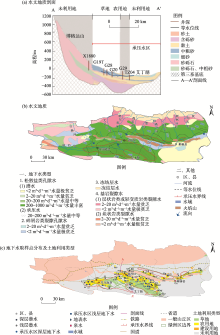
图1
研究区水文地质与采样点分布"


图2
水化学参数分布 注:小提琴图的宽幅为数据在该数据范围内的分布密度;图中点为单个原始数据。"


图3
吐鲁番盆地绿洲区地下水Piper三线图"

表1
吐鲁番盆地绿洲区地下水、不同含水层及不同区、县地下水中“三氮”含量统计"
| 类型 | 指标 | 样本数/个 | 检出率/% | 超标个数/个 | 点位超标率/% | 最大值/(mg·L-1) | 最小值 /(mg·L-1) | 平均值 /(mg·L-1) | 标准差 | 变异系数/% |
|---|---|---|---|---|---|---|---|---|---|---|
| 吐鲁番盆地绿洲区地下水 | NO3--N | 45 | 100.00 | 16 | 35.56 | 121.16 | 2.50 | 24.21 | 28.04 | 115.81 |
| NO2--N | 45 | 100.00 | 0 | 0.00 | 0.05 | 0.01 | 0.02 | 0.01 | 45.00 | |
| NH4+-N | 45 | 95.56 | 0 | 0.00 | 0.29 | ND | 0.12 | 0.06 | 48.44 | |
| 浅层潜水 | NO3--N | 15 | 100.00 | 6 | 40.00 | 121.16 | 2.93 | 36.09 | 38.87 | 107.68 |
| NO2--N | 15 | 100.00 | 0 | 0.00 | 0.03 | 0.01 | 0.02 | 0.01 | 32.71 | |
| NH4+-N | 15 | 86.67 | 0 | 0.00 | 0.29 | ND | 0.11 | 0.06 | 59.30 | |
| 深层潜水 | NO3--N | 12 | 100.00 | 3 | 25.00 | 45.38 | 3.71 | 13.61 | 11.49 | 84.45 |
| NO2--N | 12 | 100.00 | 0 | 0.00 | 0.05 | 0.01 | 0.03 | 0.01 | 46.05 | |
| NH4+-N | 12 | 100.00 | 0 | 0.00 | 0.22 | 0.06 | 0.11 | 0.05 | 45.95 | |
| 承压水区浅层地下水 | NO3--N | 13 | 100.00 | 7 | 53.85 | 72.89 | 4.20 | 27.39 | 20.92 | 76.40 |
| NO2--N | 13 | 100.00 | 0 | 0.00 | 0.05 | 0.01 | 0.02 | 0.01 | 47.89 | |
| NH4+-N | 13 | 100.00 | 0 | 0.00 | 0.20 | 0.07 | 0.13 | 0.04 | 32.16 | |
| 承压水区深层地下水 | NO3--N | 5 | 100.00 | 1 | 20.00 | 41.14 | 2.50 | 12.33 | 14.51 | 117.64 |
| NO2--N | 5 | 100.00 | 0 | 0.00 | 0.04 | 0.02 | 0.03 | 0.01 | 29.26 | |
| NH4+-N | 5 | 100.00 | 0 | 0.00 | 0.27 | 0.07 | 0.12 | 0.07 | 63.82 | |
| 地表水 | NO3--N | 8 | 100.00 | 0 | 0.00 | 7.24 | 2.47 | 4.40 | 1.30 | 29.55 |
| NO2--N | 8 | 100.00 | 0 | 0.00 | 0.08 | 0.02 | 0.05 | 0.02 | 49.52 | |
| NH4+-N | 8 | 87.50 | 0 | 0.00 | 0.27 | ND | 0.17 | 0.06 | 38.16 | |
| 泉水 | NO3--N | 1 | 100.00 | 0 | 0.00 | - | - | - | - | - |
| NO2--N | 1 | 100.00 | 0 | 0.00 | - | - | - | - | - | |
| NH4+-N | 1 | 100.00 | 0 | 0.00 | - | - | - | - | - | |
| 鄯善县地下水 | NO3--N | 20 | 100.00 | 7 | 35.00 | 121.16 | 2.93 | 30.64 | 32.44 | 105.85 |
| NO2--N | 20 | 100.00 | 0 | 0.00 | 0.05 | 0.01 | 0.03 | 0.01 | 40.67 | |
| NH4+-N | 20 | 95.00 | 0 | 0.00 | 0.22 | ND | 0.09 | 0.04 | 42.47 | |
| 高昌区地下水 | NO3--N | 17 | 100.00 | 6 | 35.29 | 72.89 | 2.50 | 18.94 | 18.61 | 98.27 |
| NO2--N | 17 | 100.00 | 0 | 0.00 | 0.03 | 0.01 | 0.02 | 0.01 | 35.16 | |
| NH4+-N | 17 | 94.12 | 0 | 0.00 | 0.27 | ND | 0.13 | 0.06 | 43.52 | |
| 托克逊县地下水 | NO3--N | 8 | 100.00 | 3 | 37.50 | 47.40 | 6.35 | 19.33 | 12.97 | 67.12 |
| NO2--N | 8 | 100.00 | 0 | 0.00 | 0.03 | 0.01 | 0.02 | 0.01 | 33.82 | |
| NH4+-N | 8 | 100.00 | 0 | 0.00 | 0.29 | 0.07 | 0.15 | 0.06 | 44.68 |

图4
吐鲁番盆地绿洲区地下水“三氮”含量水平分布"


图5
吐鲁番盆地绿洲区地下水“三氮”含量与井深"
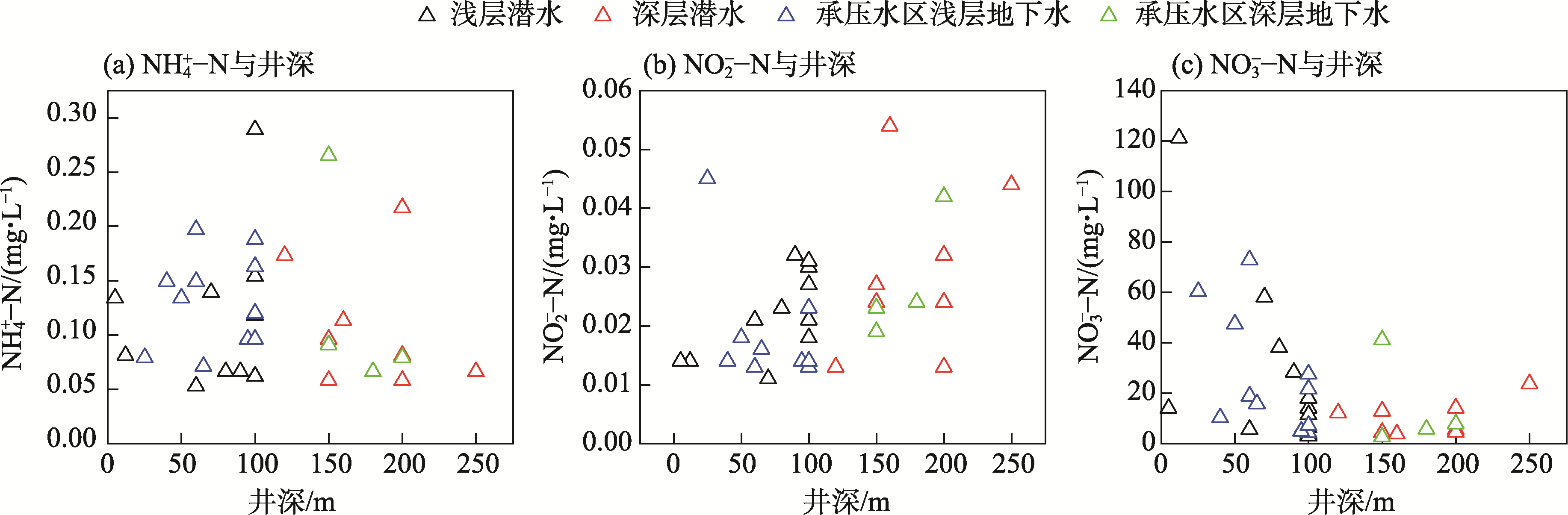
表2
公因子特征值、旋转成分矩阵及各因子贡献率"
| 总方差解释 | 旋转成分矩阵 | 各因子贡献率/% | |||||||||||
|---|---|---|---|---|---|---|---|---|---|---|---|---|---|
| 公因子 | 初始特征值 | 理化指标 | 公因子 | 理化指标 | 公因子 | ||||||||
| 总计 | 方差贡献率/% | 累计贡献率/% | F1 | F2 | F3 | F4 | F1 | F2 | F3 | F4 | |||
| 1 | 7.11 | 50.80 | 50.80 | Na+ | 0.94 | 0.17 | 0.05 | 0.06 | pH | 0.55 | 7.60 | 7.06 | 0.41 |
| 2 | 2.23 | 15.92 | 66.72 | SO42- | 0.93 | 0.05 | -0.14 | 0.16 | ORP | 3.50 | 2.20 | 12.69 | 51.55 |
| 3 | 1.42 | 10.14 | 76.85 | TDS | 0.91 | 0.38 | 0.01 | -0.03 | TDS | 68.59 | 19.91 | 2.40 | 4.99 |
| 4 | 1.11 | 7.95 | 84.80 | EC | 0.90 | 0.39 | 0.00 | -0.04 | EC | 71.33 | 20.17 | 0.23 | 7.40 |
| 5 | 0.75 | 5.32 | 90.13 | K+ | 0.89 | -0.05 | -0.17 | 0.18 | K+ | 37.21 | 6.35 | 22.65 | 20.69 |
| 6 | 0.61 | 4.37 | 94.50 | Mg2+ | 0.89 | 0.18 | -0.17 | 0.16 | Na+ | 33.33 | 21.61 | 10.95 | 10.85 |
| 7 | 0.32 | 2.32 | 96.81 | Cl- | 0.78 | 0.39 | 0.10 | -0.17 | Mg2+ | 25.41 | 23.67 | 14.07 | 20.73 |
| 8 | 0.22 | 1.54 | 98.35 | NO3--N | 0.17 | 0.86 | -0.03 | 0.22 | NH4+-N | 0.54 | 4.45 | 55.73 | 18.17 |
| 9 | 0.12 | 0.82 | 99.17 | HCO3- | 0.30 | 0.76 | -0.39 | -0.03 | Cl- | 45.82 | 11.02 | 13.28 | 19.25 |
| 10 | 0.08 | 0.55 | 99.73 | pH | -0.40 | -0.67 | 0.56 | 0.04 | SO42- | 25.95 | 9.06 | 25.40 | 25.95 |
| 11 | 0.02 | 0.16 | 99.89 | As | -0.08 | -0.20 | 0.85 | -0.20 | HCO3- | 1.86 | 38.52 | 22.06 | 1.26 |
| 12 | 0.01 | 0.07 | 99.96 | NH4+-N | 0.07 | -0.08 | 0.84 | 0.31 | NO3--N | 1.14 | 47.56 | 1.73 | 11.74 |
| 13 | 0.00 | 0.03 | 99.98 | NO2--N | 0.12 | -0.17 | -0.20 | -0.82 | NO2--N | 0.35 | 5.78 | 6.43 | 62.47 |
| 14 | 0.00 | 0.02 | 100.00 | ORP | 0.39 | -0.03 | -0.15 | 0.71 | As | 0.56 | 11.73 | 55.70 | 11.37 |
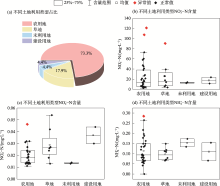
图6
不同土地利用类型的地下水“三氮”含量"
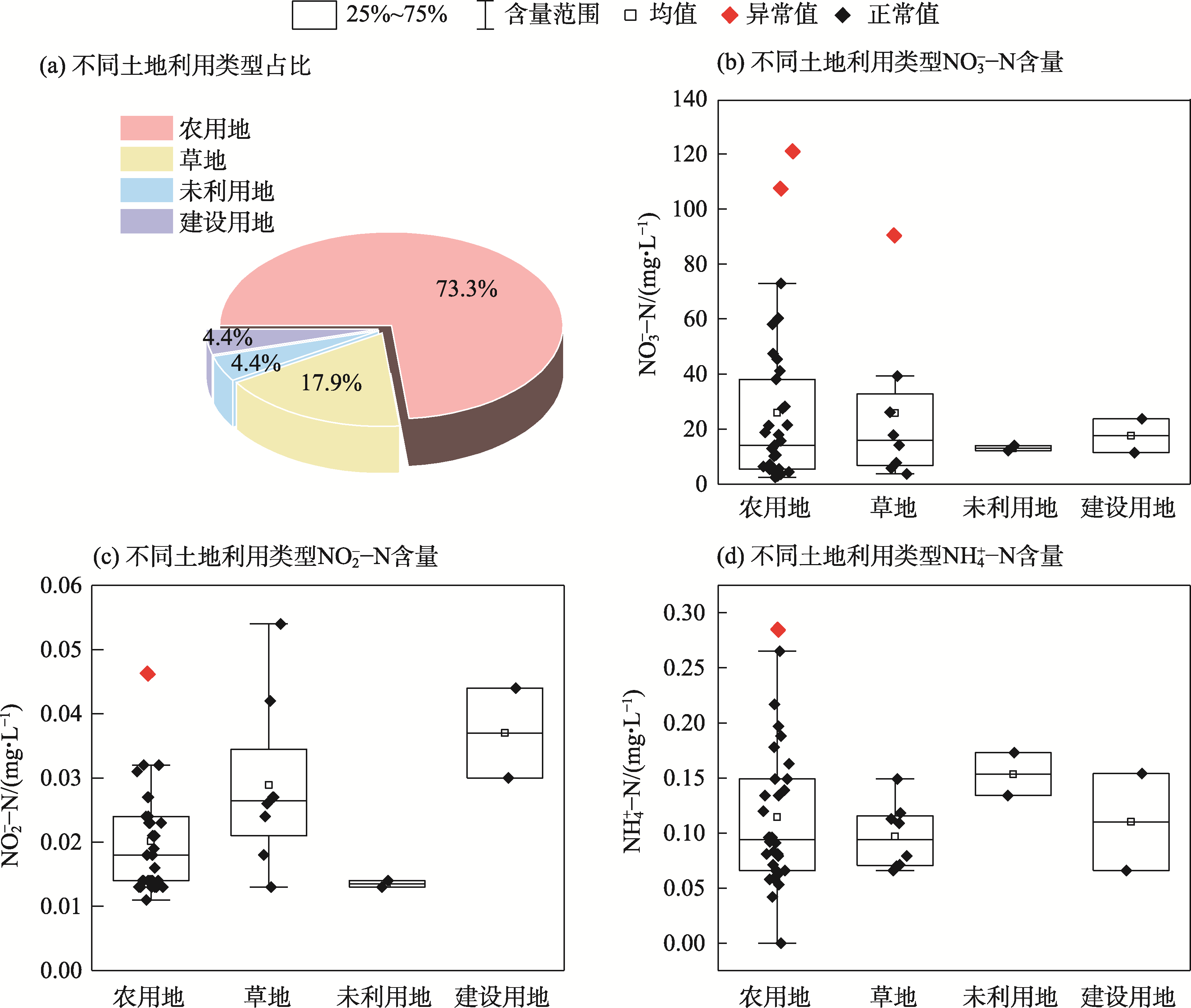

图7
研究区NO3--N与Cl-和NO3--N/Na+与Cl-/Na+的关系"


图8
吐鲁番盆地绿洲区地下水化学参数相关性分析 注:*、**、***分别表示相关系数通过P≤0.05、P≤0.01、P≤0.001显著水平检验。"

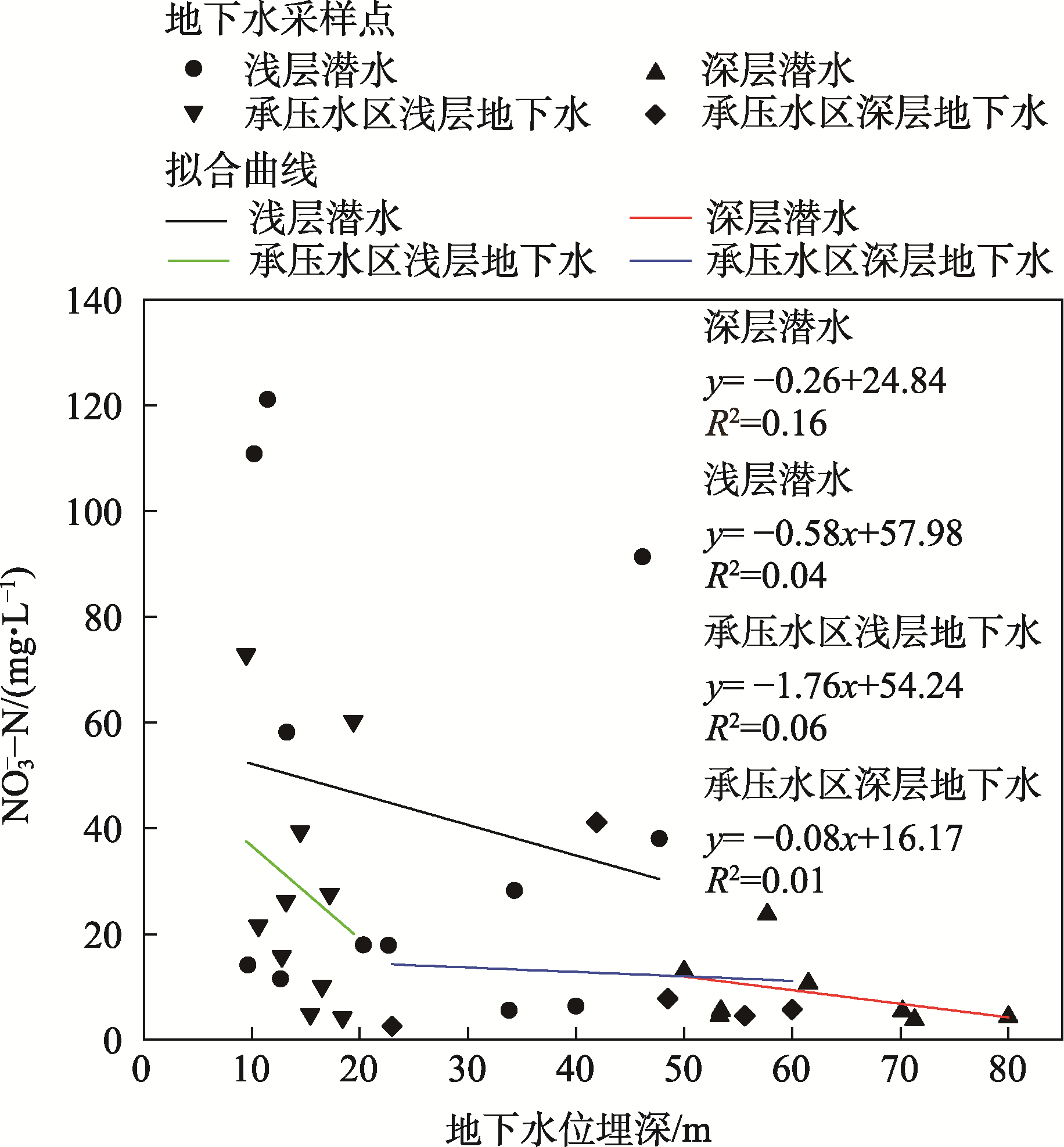
图9
NO3--N与地下水位埋深的关系"
| [1] |
Fernandez E, Grilli A, Alvarez D, et al. Evaluation of nitrate levels in groundwater under agricultural fields in two pilot areas in central Chile: A hydrogeological and geochemical approach[J]. Hydrological Processes, 2017, 31(6): 1206-1224.
doi: 10.1002/hyp.11103 |
| [2] | 殷秀兰, 李圣品. 基于监测数据的全国地下水质动态变化特征[J]. 地质学报, 2021, 95(5): 1356-1365. |
| [Yin Xiulan, Li Shengpin. Research on dynamic characteristics of groundwater quality based on monitoring data in China[J]. Acta Geologica Sinica, 2021, 95(5): 1356-1365.] | |
| [3] | 盛丹睿, 温小虎, 冯起, 等. 张掖盆地地下水硝酸盐污染与人体健康风险评价[J]. 中国沙漠, 2019, 39(5): 37-44. |
|
[Sheng Danrui, Wen Xiaohu, Feng Qi, et al. Groundwater nitrate pollution and human health risk assessment in the Zhangye Basin, Gansu, China[J]. Journal of Desert Research, 2019, 39(5): 37-44.]
doi: 10.7522/j.issn.1000-694X.2018.00081 |
|
| [4] | 吕晓立, 刘景涛, 周冰, 等. 塔城盆地地下水“三氮”污染特征及成因[J]. 水文地质工程地质, 2019, 46(2): 42-50. |
| [Lü Xiaoli, Liu Jingtao, Zhou Bing, et al. Distribution and source of nitrogen pollution in groundwater in the Tacheng Basin[J]. Hydrogeology and Engineering Geology, 2019, 46(2): 42-50.] | |
| [5] | 吕晓立, 刘景涛, 韩占涛, 等. 甘肃秦王川灌区地下水硝酸盐污染特征及成因[J]. 干旱区资源与环境, 2020, 34(6): 139-145. |
| [Lü Xiaoli, Liu Jingtao, Han Zhantao, et al. Distribution and source of nitrogen pollution in groundwater of Qin Wangchuan Basin[J]. Journal of Arid Land Resources and Environment, 2020, 34(6): 139-145.] | |
| [6] | 葛婷婷, 周金龙, 曾妍妍. 新疆克里雅河流域平原区地下水“三氮”的空间分布特征及影响因素[J]. 干旱区资源与环境, 2022, 36(1): 89-95. |
| [Ge Tingting, Zhou Jinlong, Zeng Yanyan. Spatial distribution characteristics of groundwater “three-nitrogen” in the plain area of the Keriya River Basin in Xinjiang[J]. Journal of Arid Land Resources and Environment, 2022, 36(1): 89-95.] | |
| [7] | 陈劲松, 周金龙, 魏兴, 等. 新疆喀什噶尔河流域平原区地下水“三氮”含量分布特征及影响因素分析[J]. 环境化学, 2020, 39(11): 3246-3254. |
| [Chen Jingsong, Zhou Jinlong, Wei Xing, et al. Spatial distribution and influencing factors of “three nitrogen” of groundwater in the plain of Kashgar River Basin, Xinjiang[J]. Environmental Chemistry, 2020, 39(11): 3246-3254.] | |
| [8] | 於嘉闻, 周金龙, 曾妍妍, 等. 新疆喀什地区东部地下水“三氮”空间分布特征及影响因素[J]. 环境化学, 2016, 35(11): 2402-2410. |
| [Yu Jiawen, Zhou Jinlong, Zeng Yanyan, et al. Spatial distribution and influencing factors of “three-nitrogen” in groundwater of the eastern area of Kashgar, Xinjiang[J]. Environmental Chemistry, 2016, 35(11): 2402-2410.] | |
| [9] | 侯珺, 周金龙, 曾妍妍, 等. 石河子地区地下水“三氮”空间分布特征及影响因素分析[J]. 水资源与水工程学报, 2018, 29(1): 1-8. |
| [Hou Jun, Zhou Jinlong, Zeng Yanyan, et al. Analysis of spatial distribution characteristics and influence factors of Ammonia-N, Nitrate-N and Nitrite-N in groundwater in Shihezi area[J]. Journal of Water Resources and Water Engineering, 2018, 29(1): 1-8.] | |
| [10] | 任乐, 丁启振, 周殷竹, 等. 吐鲁番市高昌区南部绿洲区低水位期地下水化学变化规律及来源解析[J]. 环境科学, 2025, 46(1): 227-238. |
| [Ren Le, Ding Qizhen, Zhou Yinzhu, et al. Analysis of groundwater hydrochemical variation and its source during the low water level period in the southern oasis area of Gaochang District, Turpan City[J]. Environmental Science, 2025, 46(1): 227-238.] | |
| [11] | 丁启振, 周殷竹, 周金龙, 等. 吐鲁番盆地平原区地下水水化学成因机制及灌溉适宜性[J]. 中国环境科学, 2024, 44(10): 5818-5829. |
| [Ding Qizhen, Zhou Yinzhu, Zhou Jinlong, et al. Hydrogeochemical mechanism and irrigation suitability of groundwater in the plain area of Turpan Basin[J]. China Environmental Science, 2024, 44(10): 5818-5829.] | |
| [12] |
白凡, 周金龙, 曾妍妍. 吐鲁番盆地平原区地下水水化学特征及水质评价[J]. 干旱区研究, 2022, 39(2): 419-428.
doi: 10.13866/j.azr.2022.02.09 |
|
[Bai Fan, Zhou Jinlong, Zeng Yanyan. Hydrochemical characteristics and quality of groundwater in the plains of the Turpan Basin[J]. Arid Zone Research, 2022, 39(2): 419-428.]
doi: 10.13866/j.azr.2022.02.09 |
|
| [13] |
郑钰, 孙英, 周金龙, 等. 新疆额尔齐斯河流域平原区地下水水化学特征及高氟水成因机制[J]. 干旱区研究, 2024, 41(12): 2056-2070.
doi: 10.13866/j.azr.2024.12.08 |
|
[Zheng Yu, Sun Ying, Zhou Jinlong, et al. Hydrochemical properties and genetic mechanisms of high-fluoride groundwater in the Irtysh River Basin Plain, Xinjiang[J]. Arid Zone Research, 2024, 41(12): 2056-2070.]
doi: 10.13866/j.azr.2024.12.08 |
|
| [14] | 张文芮, 张妍, 石雯敏, 等. 渭河流域关中段地下水硝态氮来源解析[J]. 中国环境科学, 2022, 42(10): 4758-4767. |
| [Zhang Wenrui, Zhang Yan, Shi Wenmin, et al. The source identification of nitrate in groundwater in Guanzhong section of Weihe River Basin[J]. China Environmental Science, 2022, 42(10): 4758-4767.] | |
| [15] | 李培月, 李凌茜, 田艳, 等. 浅层地下水硝酸盐来源解析及健康风险评价:以渭南市华州区为例[J]. 西北地质, 2025, 58(2): 80-90. |
| [Li Peiyue, Li Lingxi, Tian Yan, et al. Identification of nitrate sources and main controlling factors in shallow groundwater based on MixSIAR and random forest model[J]. Northwestern Geology, 2025, 58(2): 80-90.] | |
| [16] | 中华人民共和国国家标准. 地下水质量标准 (GB/T 14848—2017). 北京: 中国标准出版社, 2017. |
| [National Standard of the People’s Republic of China. Environmental Quality Standards for Groundwater (GB/T 14848—2017). Beijing: China Standard Press, 2017.] | |
| [17] | 左朝晖. 北京东北部平原区地下水氮素污染源解析及其贡献率研究[D]. 石家庄: 河北地质大学, 2020. |
| [Zuo Zhaohui. Source Analysis and Contribution Rate of Groundwater Nitrogen Pollution in the Plain Area of Northeast Beijing[D]. Shijiazhuang: Hebei GEO University, 2020.] | |
| [18] | 张振超, 梁莹, 许洁, 等. 高砷地下水中氮循环对砷释放过程的影响[J]. 地球科学, 2024, 49(9): 3428-3439. |
| [Zhang Zhenchao, Liang Ying, Xu Jie, et al. Effect of nitrogen cycling on arsenic release in groundwater with high arsenic content[J]. Earth Science, 2024, 49(9): 3428-3439.] | |
| [19] | 张卓, 郭华明, 韩双宝, 等. 沉积物中砷的赋存特征及对地下水砷富集的控制——以内蒙古河套盆地为例[J]. 中国地质, 2024, 51(4): 1331-1341. |
| [Zhang Zhuo, Guo Huaming, Han Shuangbao, et al. Distribution characteristics of arsenic in sediments and its control on groundwater arsenic enrichment: A case study of Hetao Basin, Inner Mongolia[J]. Geology in China, 2024, 51(4): 1331-1341.] | |
| [20] |
Park J M, Lee J S, Lee J U, et al. Microbial effects on geochemical behavior of arsenic in As-contaminated sediments[J]. Journal of Geochemical Exploration, 2005, 88(1): 134-138.
doi: 10.1016/j.gexplo.2005.08.026 |
| [21] | 张千千, 王慧玮, 翟天伦, 等. 滹沱河冲洪积扇地下水硝酸盐的污染特征及污染源解析[J]. 水文地质工程地质, 2017, 44(6): 110-117. |
| [Zhang Qianqian, Wang Huiwei, Zhai Tianlun, et al. Characteristics and source apportionment of groundwater nitrate contamination in the Hutuo River alluvial-pluvial fan regions[J]. Hydrogeology and Engineering Geology, 2017, 44(6): 110-117.] | |
| [22] | 方敏. 三江平原松花江-挠力河流域浅层地下水“三氮”污染形成过程研究[D]. 长春: 吉林大学, 2019. |
| [Fang Min. Formation Process of Inorganic Nitrogen Pollution in Shallow Groundwater of Songhua and Naoli River Basin, Sanjiang Plain[D]. Changchun: Jilin University, 2019.] | |
| [23] | 葛勤, 张俊朋, 汪洋, 等. 大同盆地地下水硝酸盐分布、转化过程及来源解析[J/OL]. 中国环境科学, [2025-03-04]. https://doi.org/10.19674/j.cnki.issn1000-6923.20241017.003. |
| [Ge Qin, Zhang Junpeng, Wang Yang, et al. Distribution, transformation and source apportionment of nitrate in groundwater of the Datong Basin[J/OL]. China Environmental Science,[2025-03-04]. https://doi.org/10.19674/j.cnki.issn1000-6923.20241017.003.] | |
| [24] | 丁启振, 周殷竹, 周金龙, 等. 新疆东部平原区地下水无机污染物空间分布、源解析及健康风险评价[J]. 地球科学, 2024, 49(11): 4008-4021. |
| [Ding Qizhen, Zhou Yinzhu, Zhou Jinlong, et al. Spatial distribution, source apportionment and health risk assessment of inorganic pollutant in groundwater in eastern plain of Xinjiang[J]. Earth Science, 2024, 49(11): 4008-4021.] | |
| [25] |
Liu Z J, Wang X H, Jia S Q, et al. Multi-methods to investigate spatiotemporal variations of nitrogen-nitrate and its risks to human health in China’s largest fresh water lake (Poyang Lake)[J]. Science of the Total Environment, 2023, 863: 160975.
doi: 10.1016/j.scitotenv.2022.160975 |
| [26] | 韩双宝, 周殷竹, 郑焰, 等. 银川平原地下水化学成因机制与组分来源解析[J]. 环境科学, 2024, 45(8): 4577-4588. |
| [Han Shuangbao, Zhou Yinzhu, Zheng Yan, et al. Formation mechanism and source apportionment of hydrochemical components in groundwater in the Yinchuan Plain[J]. Environmental Science, 2024, 45(8): 4577-4588.] | |
| [27] |
卫雨西, 陈丽娟, 冯起, 等. 干旱区盐碱土微生物特征及其影响因素研究进展[J]. 中国沙漠, 2024, 44(3): 18-30.
doi: 10.7522/j.issn.1000-694X.2023.000126 |
|
[Wei Yuxi, Chen Lijuan, Feng Qi, et al. Progress on microbial characteristics in arid salt-affected soils and related factors[J]. Journal of Desert Research, 2024, 44(3): 18-30.]
doi: 10.7522/j.issn.1000-694X.2023.000126 |
|
| [28] | 赵阳. 沈阳细河交互带中硝酸盐污染物迁移转化特征及影响因素研究[D]. 沈阳: 沈阳农业大学, 2023. |
| [Zhao Yang. Study on the Migration and Transformation Characteristics and Influencing Factors of Nitrate Pollutants in the Hyporheic Zone of Xi River, Shenyang[D]. Shenyang: Shenyang Agricultural University, 2023.] | |
| [29] | 吴亚坤. 关中盆地典型剖面氮迁移转化规律和数值模拟研究[D]. 西安: 长安大学, 2023. |
| [Wu Yakun. Nitrogen Migration and Transformation Patterns of Typical Profiles in the Guan Zhong Basin and Numerical Simulation Studies[D]. Xi’an: Chang’an University, 2023.] | |
| [30] |
Babiker S I, Mohamed A M, Terao H, et al. Assessment of groundwater contamination by nitrate leaching from intensive vegetable cultivation using geographical information system[J]. Environment International, 2004, 29(8): 1009-1017.
doi: 10.1016/S0160-4120(03)00095-3 pmid: 14680883 |
| [31] |
Moore J M, Fout A R. Tetrapodal iron complexes invoke observable intermediates in nitrate and nitrite reduction[J]. Chemical science, 2024, 16(2): 840-845.
doi: 10.1039/D4SC06570K |
| [32] |
Ji Y Y, Zhou Y Z, Zhao X Y, et al. Distribution and co-enrichment factors of arsenic and fluoride in the groundwater of the plain area of the Aksu River Basin, Xinjiang, P R China[J]. Water, 2024, 16(22): 3201.
doi: 10.3390/w16223201 |
| [33] | 耿宏志, 郇环, 李鸣晓, 等. 潮白河冲洪积扇典型包气带剖面反硝化强度垂向空间分布规律[J]. 环境科学, 2018, 39(11): 4972-4980. |
| [Geng Hongzhi, Huan Huan, Li Mingxiao, et al. Vertical spatial distribution of denitrification intensity in the vadose zone of typical sections of Chaobai River alluvial fan[J]. Environmental Science, 2018, 39(11): 4972-4980.] | |
| [34] | 丁启振, 周殷竹, 周金龙, 等. 吐鲁番盆地绿洲区地下水硼的水文地球化学过程及健康风险[J]. 中国环境科学, 2025, 45(4): 2183-2196. |
| [Ding Qizhen, Zhou Yinzhu, Zhou Jinlong, et al. Hydrogeochemical process and health risk of boron in groundwater in oasis area of Turpan Basin[J]. China Environmental Science, 2025, 45(4): 2183-2196.] |
| [1] | 黄龙, 杜埼敏, 李敏琪, 古斯乐图, 司月君, 黄日辉, 杭晓菊, 牛东风. 12.6 ka以来毛乌素沙地典型风成沉积剖面光释光定年及其意义[J]. 干旱区研究, 2025, 42(9): 1681-1690. |
| [2] | 鲁力, 郭建华, 王友年. 干旱区地下水埋深对土壤水盐运移影响的模拟与调控——以阿克苏河下游河岸带典型田块为例[J]. 干旱区研究, 2025, 42(7): 1196-1210. |
| [3] | 刘亮, 董江伟, 周金龙, 李江. 且末县绿洲区地表水与地下水中硼的分布特征及其影响因素[J]. 干旱区研究, 2025, 42(7): 1222-1235. |
| [4] | 季亚新, 李璐, 杨学东, 厚富来, 张萌, 董少刚. 沙漠区地下水化学特征及碳循环——以乌兰布和沙漠东部区为例[J]. 干旱区研究, 2025, 42(5): 800-809. |
| [5] | 王微, 杨淑婷, 海云瑞. 宁夏土地利用碳排放时空演变及影响因素[J]. 干旱区研究, 2025, 42(3): 545-555. |
| [6] | 鲁力, 葛燕燕, 李升, 张云. 新疆阿克苏河流域高砷地下水化学特征及富集成因[J]. 干旱区研究, 2025, 42(2): 258-273. |
| [7] | 张擂, 周煜明, 董杰谋, 李祥, 刘时栋, 徐丽萍. 中国耕地非农化与非粮化时空分异及其治理策略[J]. 干旱区研究, 2025, 42(2): 372-383. |
| [8] | 张群慧, 常亮, 顾小凡, 王倩, 马卯楠, 李小等, 段瑞, 犹香智. 1979—2020年柴达木盆地人体舒适度指数时空变化及趋势分析[J]. 干旱区研究, 2024, 41(8): 1300-1308. |
| [9] | 张宏伟, 别强, 石莹, 苏晓杰, 李欣璋. 黄河流域上游植被覆盖变化特征及其影响因素[J]. 干旱区研究, 2024, 41(8): 1385-1394. |
| [10] | 李小等, 常亮, 段瑞, 王倩, 张群慧, 杨炳超. 和田河流域水化学特征与地下水补给来源分析[J]. 干旱区研究, 2024, 41(6): 917-927. |
| [11] | 胡广录, 刘鹏, 李嘉楠, 陶虎, 周成乾. 黑河中游绿洲边缘三种景观类型土壤水分动态特征及影响因素[J]. 干旱区研究, 2024, 41(4): 550-565. |
| [12] | 王平顺, 苗新岳, 燕亚平, 董生旺, 董少刚. 内蒙古伊敏盆地地下水水化学特征及其成因[J]. 干旱区研究, 2024, 41(3): 411-420. |
| [13] | 李平平, 盖楠, 王晓丹, 杨俊仓. 敦煌月牙泉域地下水系统水文地球化学特征分析[J]. 干旱区研究, 2024, 41(2): 240-249. |
| [14] | 聂汉林, 樊良新, 郭琎, 张梦可, 王志君. 县域尺度下关中地区农作物水足迹时空特征及影响因素[J]. 干旱区研究, 2024, 41(2): 339-352. |
| [15] | 郑钰, 孙英, 周金龙, 李如跃. 新疆额尔齐斯河流域平原区地下水水化学特征及高氟水成因机制[J]. 干旱区研究, 2024, 41(12): 2056-2070. |
|
||
