
Arid Zone Research ›› 2025, Vol. 42 ›› Issue (7): 1269-1278.doi: 10.13866/j.azr.2025.07.10
• Plant Ecology • Previous Articles Next Articles
GUO Qiang1( ), WANG Yuqin2, SONG Meiling2()
Received:2025-03-27
Revised:2025-04-15
Online:2025-07-15
Published:2025-07-07
Contact:
SONG Meiling
E-mail:gq0971@hotmail.com;meilings@163.com
GUO Qiang, WANG Yuqin, SONG Meiling. Effects of meteorological factors on the litter decomposition of the fungal endophyte Stipa purpurea symbiont in alpine grassland[J].Arid Zone Research, 2025, 42(7): 1269-1278.
Add to citation manager EndNote|Reference Manager|ProCite|BibTeX|RefWorks
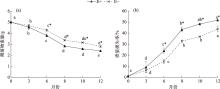
Fig. 1
Change of litter weight and decomposition rate of Stipa purpurea with time"

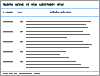
Tab. 1
Olson exponential model and decomposition rate of E+ and E- Stipa purpurea litters"
| 凋落物 种类 | 回归方程 | 相关系 数(R2) | 分解速 率(k) | ||
|---|---|---|---|---|---|
| E+ | y=1.1024e-0.869t | 0.970 | 0.869 | 0.80 | 3.45 |
| E- | y=1.09698e-0.66t | 0.963 | 0.66 | 1.05 | 4.54 |
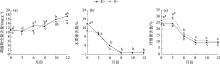
Fig. 2
Changes of total nitrogen, lignin and cellulose contents of Stipa purpurea with time"

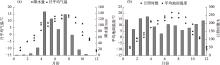
Fig. 3
Changes of monthly mean temperature, precipitation, monthly mean ground temperature and sunshine hours"

Tab. 2
Correlation analysis of litter decomposition characteristics and meteorological factors of Stipa purpurea"
| 凋落物种类 | 指标 | 月平均 气温 | 降水量 | 月平均地 面温度 | 日照时数 |
|---|---|---|---|---|---|
| E+ | 凋落物重量 | -0.990** | -0.802 | -0.993** | 0.290 |
| 质量损失率 | 0.989** | 0.805 | 0.992** | -0.287 | |
| 全氮 | 0.872* | 0.915* | 0.856* | -0.502 | |
| 木质素 | -0.938** | -0.659 | -0.955** | 0.169 | |
| 纤维素 | -0.924** | -0.703 | -0.935** | 0.065 | |
| E- | 凋落物重量 | -0.995** | -0.831* | -0.992** | 0.369 |
| 质量损失率 | 0.993** | 0.835* | 0.989** | -0.367 | |
| 全氮 | 0.931** | 0.885* | 0.917* | -0.398 | |
| 木质素 | -0.894* | -0.640 | -0.910* | 0.033 | |
| 纤维素 | -0.913* | -0.710 | -0.921** | 0.063 |
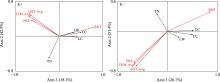
Fig. 4
RDA analysis of meteorological factors and litter decomposition characteristics of Stipa purpurea"

| [1] |
王静, 赵萌莉, Willms W, 等. 内蒙古典型草原及不同功能群生产力对凋落物添加的响应[J]. 植物生态学报, 2010, 34(8): 907-914.
doi: 10.3773/j.issn.1005-264x.2010.08.003 |
|
[Wang Jing, Zhao Mengli, Willms W, et al. Productivity responses of different functional groups to litter addition in typical grassland of Inner Mongolia[J]. Chinese Journal of Plant Ecology, 2010, 34(8): 907-914.]
doi: 10.3773/j.issn.1005-264x.2010.08.003 |
|
| [2] | 王静, 张峰, 李治国, 等. 不同剂量凋落物添加对荒漠草原生物量的影响[J]. 中国草地学报, 2023, 45(6): 64-72. |
| [Wang Jing, Zhang Feng, Li Zhiguo, et al. Effect of different doses of litter addition on the biomass of desert steppe[J]. Chinese Journal of Grassland, 2023, 45(6): 64-72.] | |
| [3] | 曲浩, 赵学勇, 赵哈林, 等. 科尔沁沙地3种灌木凋落物分解速率及其与关键气象因子的关系[J]. 中国沙漠, 2010, 30(4): 844-849. |
| [Qu Hao, Zhao Xueyong, Zhao Halin, et al. Litter decomposition rates of three shrub species in Horqin Sandy Land and their relationship with key meteorological factors[J]. Journal of Desert Research, 2010, 30(4): 844-849.] | |
| [4] | 薛立, 邝立钢. 杉木凋落物分解速率的研究[J]. 四川林业科技, 1990, 11(1): 1-4. |
| [Xue Li, Kuang Ligang. Study on decomposition rate of Chinese fir litter[J]. Journal of Sichuan Forestry Science and Technology, 1990, 11(1): 1-4.] | |
| [5] | Couteaux M M, Bottner P, Berg B. Litter decomposition climate and litter quality[J]. Trends in Ecology and Evolution, 1995, 10(2): 63-66. |
| [6] | Swift M J, Heal O W, Anderson J M. Decomposition in terrestrial ecosystems[J]. Studies in Ecology, 1979, 5(14): 2772-2774. |
| [7] | Lucía V, Amy T A. The importance of macro-and micro-nutrients over climate for leaf litter decomposition and nutrient release in Patagonian temperate forests[J]. Forest Ecology and Management, 2019, 441: 144-154. |
| [8] | 李凯, 赵文东, 朱传晟, 等. 滨海防护林月凋落物量及其与气象因子的关系[J]. 森林与环境学报, 2021, 41(6): 570-575. |
| [Li Kai, Zhao Wendong, Zhu Chuansheng, et al. Monthly litter production of Acacia aulacocarpa and Pinus elliottii artificial forest and its relationship with meteorological factors[J]. Journal of Forest and Environment, 2021, 41(6): 570-575.] | |
| [9] | Kitayamak , Aiba S. Ecosystem structure and productivity of tropical rain forests along altitudinal gradients with contrasting soil phosphorus pools on Mount Kinabalu, Borneo[J]. Journal of Ecology, 2002, 90(1): 37. |
| [10] | Liu G F, Wang L, Liang L, et al. Specific leaf area predicts dryland litter decomposition via two mechanisms[J]. Journal of Ecology, 2018, 106: 218-229. |
| [11] | 邓秀秀, 王忠诚, 李程, 等. 浙江天童常绿阔叶林凋落物量季节动态及其与气象因子的关系[J]. 中南林业科技大学学报, 2017, 37(3): 73-78. |
| [Deng Xiuxiu, Wang Zhongcheng, Li Cheng, et al. Seasonal dynamics of the litter fall production of evergreen broadleaf forest and its relationships with meteorological factors at Tiantong of Zhejiang Province[J]. Journal of Central South University of Forestry & Technology, 2017, 37(3): 73-78.] | |
| [12] |
宋梅玲, 王玉琴, 王宏生, 等. 内生真菌对高寒草地紫花针茅凋落物分解的影响[J]. 草业学报, 2021, 30(9): 150-158.
doi: 10.11686/cyxb2020462 |
|
[Song Meiling, Wang Yuqin, Wang Hongsheng, et al. Effect of Epichloë endophyte on the litter decomposition of Stipa purpurea in alpine grassland[J]. Acta Prataculturae Sinica, 2021, 30(9): 150-158.]
doi: 10.11686/cyxb2020462 |
|
| [13] |
岳鹏鹏, 卢学峰, 叶润蓉, 等. 青海湖地区紫花针茅草原群落特征[J]. 草业学报, 2014, 23(4): 10-19.
doi: 10.11686/cyxb20140402 |
|
[Yue Pengpeng, Lu Xuefeng, Ye Runrong, et al. Community characteristies of Stipa purpurea stepp in the Qinghai Lake region[J]. Acta Prataculturae Sinica, 2014, 23(4): 10-19.]
doi: 10.11686/cyxb20140402 |
|
| [14] | 张晓艳, 胡玉昆, 李凯辉, 等. 围封条件下紫花针茅群落主要结构特征和地上生物量变化[J]. 干旱区资源与环境, 2009, 23(1): 197-200. |
| [Zhang Xiaoyan, Hu Yukun, Li Kaihui, et al. The changes of community structure and above ground biomass in Stipa purpurea steppe of enclosure[J]. Journal of Arid Land Resources and Environment, 2009, 23(1): 197-200.] | |
| [15] | 洪江涛, 吴建波, 王小丹. 放牧和围封对藏北高寒草原紫花针茅群落生物量分配及碳、氮、磷储量的影响[J]. 草业科学, 2015, 32(11): 1878-1886. |
| [Hong Jiangtao, Wu Jianbo, Wang Xiaodan. Effects of grazing and fencing on Stipa purpurea community biomass allocation and carbon, nitrogen and phosphorus pools on the northern Xizang Plateau alpine[J]. Pratacultural Science, 2015, 32(11): 1878-1886.] | |
| [16] |
付莉娇, 李雪琴, 范继辉, 等. 藏北高寒草原典型植物根际土壤细菌群落结构多样性及根系特征分析[J]. 草地学报, 2022, 30(5): 1131-1140.
doi: 10.11733/j.issn.1007-0435.2022.05.013 |
|
[Fu Lijiao, Li Xueqin, Fan Jihui, et al. Analysis of rhizosphere soil bacterial community structure diversity and root characteristics of typical plants in alpine steppe of Northern Tibet[J]. Acta Agrestia Sinica, 2022, 30(5): 1131-1140.]
doi: 10.11733/j.issn.1007-0435.2022.05.013 |
|
| [17] | 鲍根生. 甘肃马先蒿寄生对紫花针茅内生真菌共生体生长和光合特性的影响[D]. 兰州: 兰州大学, 2015. |
| [Bao Gensheng. Effects of the Hemiparasitic Plant Pedicularis kansuensis on Growth and Photosynthetic Properties of Stipa purpurea-Epichloë symbiosis[D]. Lanzhou: Lanzhou University, 2015.] | |
| [18] | Gundel P E, Helander M, Garibaldi L A, et al. Role of foliar fungal endophytes in litter decomposition among species and population origins[J]. Fungal Ecology, 2016, 21: 50-56. |
| [19] | 李春杰, 南志标, 刘勇, 等. 醉马草内生真菌检测方法的研究[J]. 中国食用菌, 2008, 27 (Suppl.): 16-19. |
| [Li Chunjie, Nan Zhibiao, Liu Yong, et al. Methodology of endophyte detection of drunken horse grass (Achnatherum inebrians)[J]. Edible Fungi of China, 2008, 27 (Suppl.): 16-19.] | |
| [20] | 黎冬容, 张世庆, 甘世端, 等. 全自动凯氏定氮仪测定土壤全氮含量[J]. 南方国土资源, 2015(8): 38-39. |
| [Li Dongrong, Zhang Shiqing, Gan Shirui, et al. Determination of total nitrogen content in soil by automatic Kjeldahl nitrogen analyzer[J]. Southern Land Resources, 2015(8): 38-39.] | |
| [21] | 何忠武. 酸性洗涤纤维和木质素测定的国际标准[J]. 饲料广角, 2011(6): 31-32. |
| [He Zhongwu. International standard for determination of acid detergent fibers and lignin[J]. Feed China, 2011(6): 31-32.] | |
| [22] | 李娜, 赵传燕, 郝虎, 等. 海拔和郁闭度对祁连山青海云杉林叶凋落物分解的影响[J]. 生态学报, 2021, 41(11): 4493-4502. |
| [Li Na, Zhao Chuanyan, Hao Hu, et al. Decomposition and its nutients dyamic of Qinghai spruce leaf litter with elevation gradient in Qilian Mountains[J]. Acta Ecologica Sinica, 2021, 41(11): 4493-4502.] | |
| [23] | Olson J S. Energy storage and the balance of producers and decomposers in ecological systems[J]. Ecology, 1963, 44: 322-331. |
| [24] |
王嘉年, 李向义, 李成道, 等. 自然光照和荫蔽条件下两种荒漠植物叶片凋落物分解特征研究[J]. 干旱区地理, 2023, 46(6): 949-957.
doi: 10.12118/j.issn.1000-6060.2022.434 |
|
[Wang Jianian, Li Xiangyi, Li Chengdao, et al. Decomposition characteristics of two desert plant leaf under natural light and shade environment[J]. Arid Land Geography, 2023, 46(6): 949-957.]
doi: 10.12118/j.issn.1000-6060.2022.434 |
|
| [25] | 张悦, 张艺凡, 马怡波, 等. 森林生态系统凋落物分解影响因素研究进展[J]. 环境生态学, 2023, 5(4): 45-56. |
| [Zhang Yue, Zhang Yifan, Ma Yibo, et al. Research progress on influencing factors of litter decomposition in forest ecosystem[J]. Environmental Ecology, 2023, 5(4): 45-56.] | |
| [26] | Uroz S, Buee M, Deveau A, et al. Ecology of the forest microbiome: Highlights of temperate and boreal ecosystems[J]. Soil Biology and Biochemistry, 2016, 103: 471-488. |
| [27] | Saikkonen K, Mikola J, Helander M. Endophytic phyllosphere fungi and nutrient cycling in terrestrial ecosystems[J]. Current Science, 2015, 109(1): 121-126. |
| [28] | 侯卓男, 李欣彤, 张新军, 等. 海拔和坡向对色季拉山高山杜鹃凋落物分解的影响[J]. 中国农业大学学报, 2024, 29(4): 264-273. |
| [Hou Zhuonan, Li Xintong, Zhang Xinjun, et al. Effects of elevation and slope orientation on litter decomposition of Rhododendron simsii in Mount Segrila[J]. Journal of China Agricultural University, 2024, 29(4): 264-273.] | |
| [29] | Bell-Dereske L, Gao X D, Masiello C A, et al. Plant-fungal symbiosis affects litter decomposition during primary succession[J]. Oikos, 2017, 126(6): 801-811. |
| [30] | Andersson M, Kjøller A, Struwe S. Microbial enzyme activities in leaf litter, humus and mineral soil layers of European forests[J]. Soil Biology and Biochemistry, 2004, 36(10): 1527-1537. |
| [31] |
Lemons A, Clay K, Rudgers J A. Connecting plant-microbial interactions above and belowground: A fungal endophyte affects decomposition[J]. Oecologia, 2005, 145(4): 595-604.
pmid: 16001218 |
| [32] | Jiang Y F, Yin X Q, Wang F B. The influence of litter mixing on decomposition and soil fauna assemblages in a Pinus koraiensis mixed broadleaved forest of the Changbai Mountains, China[J]. European Journal of Soil Biology, 2013, 55: 28-39. |
| [33] | 宋学贵, 胡庭兴, 鲜骏仁, 等. 川西南常绿阔叶林凋落物分解及养分释放对模拟氮沉降的响应[J]. 应用生态学报, 2007, 18(10): 2167-2172. |
|
[Song Xuegui, Hu Tingxing, Xian Junren, et al. Responses of litter decom position and nutrient release to simulated nitrogen deposition m an evergreen broad-leaved forest in southwestern Sichuan[J]. Chinese Journal of Applied Ecology, 2007, 18(10): 2167-2172.]
pmid: 18163293 |
|
| [34] | Xu D W, Liu J F, Marshall P, et al. Leaf litter decomposition dynamics in unmanaged Phyllostachys pubescens stands at high elevations in the Daiyun Mountain national nature reserve[J]. Journal of Mountain Science, 2017, 14(11): 2246-2256. |
| [35] | Frey S, Elliott E, Paustian K, et al. Fungal translocation as a mechanism for soil nitrogen inputs to surface residue decomposition in a no-tillage agroecosystem[J]. Soil Biology and Biochemistry, 2000, 32(5): 689-698. |
| [36] | 彭少麟, 刘强. 森林凋落物动态及其对全球变暖的响应[J]. 生态学报, 2002, 22(9): 1534-1544. |
| [Peng Shaolin, Liu Qiang. The dynamics of forest litter and its responses to global warming[J]. Acta Ecologica Sinica, 2002, 22(9): 1534-1544.] | |
| [37] | Liu G D, Sun J F, Tian K, et al. Long-term responses of leaf litter decomposition to temperature, liter quality and litter mixing in plateau wetlands[J]. Freshwater Biology, 2017, 62(1): 178-190. |
| [38] |
周梦田, 刘莉, 付若仙, 等. 杉木与木荷凋落物分解对杉木人工林土壤碳氮含量和酶活性的影响[J]. 南京林业大学学报(自然科学版), 2024, 48(5): 131-138.
doi: 10.12302/j.issn.1000-2006.202304024 |
| [Zhou Mengtian, Liu Li, Fu Ruoxian, et al. Effects of litter decomposition of Cunninghamia lanceolata and Schima superba on soil carbon contents, nitrogen contents and enzyme activities in Cunninghamia lanceolata plantations[J]. Journal of Nanjing Forestry University (Natural Sciences Edition), 2024, 48(5): 131-138.] | |
| [39] | 熊红福. 贵州省喀斯特地区凋落物分解对气候变暖的响应[J]. 现代农业科技, 2023(24): 118-121, 127. |
| [Xiong Hongfu. Litter decomposition and its responses to climate warming in Karst area of Guizhou Province[J]. Modern Agricultural Science and Technology, 2023(24): 118-121, 127.] | |
| [40] |
Kravchenko I K, Tikhonova E N, Ulanova R V, et al. Effect of temperature on litter decomposition, soil microbial community structure and biomass in a mixed-wood forest in European Russia[J]. Current Science, 2019, 116(5): 765-772.
doi: 10.18520/cs/v116/i5/765-772 |
| [41] | 代松家, 周晨霓, 段斐, 等. 组分和生境差异对藏东南原始冷杉林凋落物分解和养分释放特征的影响[J]. 中国水土保持科学, 2020, 18(6): 72-80. |
| [Dai Sunjia, Zhou Chenni, Duan Fei, et al. Effects of composition and habitat differences on litter decomposition and nutrient release characteristics of Abies georgei var. smithii in southeastern Xizang[J]. Science of Soil and Water Conservation, 2020, 18(6): 72-80.] | |
| [42] | 霍利霞, 红梅, 赵巴音那木拉, 等. 氮沉降和降雨变化对荒漠草原凋落物分解的影响[J]. 生态学报, 2019, 39(6): 2139-2146. |
| [Huo Lixia, Hong Mei, Zhao Bayinnamula, et al. Effects of increased nitrogen deposition and changing rainfall patterns on litter decomposition in a desert grassland[J]. Acta Ecologica Sinica, 2019, 39(6): 2139-2146.] | |
| [43] | Salamanca E F, Kaneko N, Katagiri S. Rainfall manipulation effects on litter decomposition and the microbial biomass of the forest floor[J]. Applied Soil Ecology, 2003, 22(3): 271-281. |
| [44] | 王新源, 赵学勇, 李玉霖, 等. 环境因素对干旱半干旱区凋落物分解的影响研究进展[J]. 应用生态学报, 2013, 24(11): 3300-3310. |
|
[Wang Xinyuan, Zhao Xueyong, Li Yulin, et al. Effects of environmental factors on litter decomposition in arid and semi-arid regions: A review[J]. Chinese Journal of Applied Ecology, 2013, 24(11): 3300-3310.]
pmid: 24564163 |
|
| [45] | 郑俊强, 郭瑞红, 李东升, 等. 氮沉降和干旱对阔叶红松林凋落物分解的影响[J]. 北京林业大学学报, 2016, 38(4): 21-28. |
| [Zhen Junqiang, Guo Ruihong, Li Dongsheng, et al. Effects of nitrogen deposition and drought on litter decomposition in a temperate forest[J]. Journal of Beijing Forestry University, 2016, 38(4): 21-28.] | |
| [46] | Kurzatkowski D, Martius C, Höfer H, et al. Litter decomposition, microbial biomass and activity of soil organisms in three agroforestry sites in Central Amazonia[J]. Nutrient Cycling in Agroecosystems, 2004, 69(3): 257-267. |
| [47] | Day T A, Guenonr, Ruhland C T. Photodegradation of plant litter in the Sonoran Desert varies by litter type and age[J]. Soil Biology and Biochemistry, 2015, 89: 109-122. |
| [48] |
Baker N R, Allison S D. Ultraviolet photodegradation facilitates microbial litter decomposition in a Mediterranean climate[J]. Ecology, 2015, 96: 1994-2003.
pmid: 26378321 |
| [49] | He M, Zhao R D, Tian Q X, et al. Predominant effects of litter chemistry on lignin degradation in the early stage of leaf litter decomposition[J]. Plant Soil, 2019, 442: 453-469. |
| [1] | ZHANG Qunhui, CHANG Liang, GU Xiaofan, WANG Qian, MA Maonan, LI Xiaodeng, DUAN Rui, YOU Xiangzhi. Spatial-temporal variations and trends in the human body comfort index in the Qaidam Basin, China, during 1979-2020 [J]. Arid Zone Research, 2024, 41(8): 1300-1308. |
| [2] | YUAN Ping, HAN Huan, ZHAO Hongmei, LI Congjuan. Effects of bare versus sand burial on the decomposition and nutrient release of apophyges in extremely arid zones [J]. Arid Zone Research, 2024, 41(2): 293-300. |
| [3] | LI Hong, LI Zhongqin, CHEN Puchen, PENG Jiajia. Spatio-temporal variation of snow cover in Altai Mountains of Xinjiang in recent 20 years and its influencing factors [J]. Arid Zone Research, 2023, 40(7): 1040-1051. |
| [4] | YU Guangling,LI Kaihui,ZHOU Jianqin,LI Keyi,CONG Mengfei,HU Yang,WANG Xuyang,JIA Hongtao. Effects of long-term enclosure on soil aggregate stability and erodibility in Bayinbuluk alpine grassland [J]. Arid Zone Research, 2022, 39(6): 1842-1851. |
| [5] | SANG Jing,WANG Yingbin,QIAN Lianhong,WANG Haimei,WANG Qiyu. Analysis of the relationship between the dynamic snowmelt process of meadow grassland and meteorological factors: Ergun City [J]. Arid Zone Research, 2022, 39(5): 1428-1436. |
| [6] | GAO Xiaoyu,TANG Pengcheng,ZHANG Sha,QU Zhongyi,YANG Wei. Drought characteristics and regression models of drought characteristics and response factors of various climatic areas in Inner Mongolia during main crop growing season [J]. Arid Zone Research, 2022, 39(5): 1410-1427. |
| [7] | QIANG Yuquan,XU Xianying,ZHANG Jinchun,LIU Hujun,GUO Shujiang,DUAN Xiaofeng. Characteristics of stem sap flow of Haloxylon ammodendron and its response to environmental factors in Qingtu Lake, Minqin [J]. Arid Zone Research, 2022, 39(4): 1143-1154. |
| [8] | ZHANG Yaozong,ZHANG Bo,ZHANG Duoyong,LIU Yanyan. Spatio temporal patterns of pan evaporation from 1960 to 2018 over the Loess Plateau: Changing properties and possible causess [J]. Arid Zone Research, 2022, 39(1): 1-9. |
| [9] | YANG Qi,LI Shuheng,LI Jiahao,WANG Jiachuan. Phenology of forest vegetation and its response to climate change in the Qinling Mountains [J]. Arid Zone Research, 2021, 38(4): 1065-1074. |
| [10] | ZHANG Anning,LIU Rentao,CHEN Wei,CHANG Haitao,JI Xueru. Effects of climatic factors on litter decomposition and soil fauna in arid regions [J]. Arid Zone Research, 2021, 38(3): 867-874. |
| [11] | HONG Guangyu,WANG Xiaojiang,LIU Guohou,ZHANG Lei,GAO Xiaowei,LI Zhuofan,LIU Tieshan,LIU Chenming,LI Zihao. Characteristics of Salix psammophila sap flow and its response to environmental factors in Mu Us Sandy Land [J]. Arid Zone Research, 2021, 38(3): 794-801. |
| [12] | CAO Lijun,SUN Huilan,LAN Xiaoli,ZHANG Lele,LU Baobao,LIU Tianyi. Spatio-temporal evolution of the extreme dry and wet events in Tianshan Mountains, Xinjiang, China [J]. Arid Zone Research, 2021, 38(1): 188-197. |
| [13] | ZONG Ning, SHI Pei-li, SUN Jian. Estimation of ecological thresholds in plant and soil properties during desertification in an alpine grassland [J]. Arid Zone Research, 2020, 37(6): 1580-1589. |
| [14] | CHEN Zhi-qing, SHAO Tian-jie, ZHAO Jing-bo, CAO Jun-ji, YUE Da-peng. Spatial-temporal differentiation of near-surface ozone concentration and dominant meteorological factors in Inner Mongolia [J]. Arid Zone Research, 2020, 37(6): 1504-1512. |
| [15] | LE Jiajia, SU Yuan, PENG Qingwen, GENG Fengzhan, HAN Wenxuan, LI Wenli, LI Kaihui, LIU Xuejun. Effects of nitrogen addition on soil enzyme activities and ecoenzymatic stoichiometry in alpine grassland of the Tianshan Mountains [J]. Arid Zone Research, 2020, 37(2): 382-389. |
|
||
