
Arid Zone Research ›› 2025, Vol. 42 ›› Issue (4): 708-717.doi: 10.13866/j.azr.2025.04.12
• Ecology and Environment • Previous Articles Next Articles
WANG Jingqi1( ), QU Jianjun1,2(), WANG Yanxi1, LI Mengchao1
Received:2024-10-17
Revised:2025-01-13
Online:2025-04-15
Published:2025-04-10
Contact:
QU Jianjun
E-mail:wjq010818@163.com;qujianj@lzb.ac.cn
WANG Jingqi, QU Jianjun, WANG Yanxi, LI Mengchao. Characteristics of singing sands in Mulei, Xinjiang[J].Arid Zone Research, 2025, 42(4): 708-717.
Add to citation manager EndNote|Reference Manager|ProCite|BibTeX|RefWorks
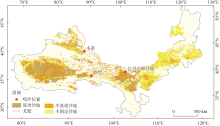
Fig. 1
Location map of singing sand dunes at Mulei, Badain Jaran Desert, and Dunhuang"

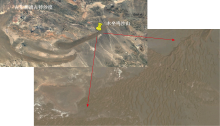
Fig. 2
Map and sand dune morphology of Mulei singing sand mountain"

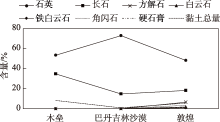
Fig. 3
Comparison of mineral content of Mulei singing sand with that of Badain Jaran Desert and Dunhuang"

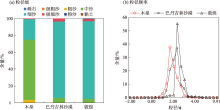
Fig. 4
Grain size gradation diagram (a) and grain size frequency curve (b) of Mulei and other singing sand"

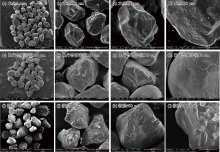
Fig. 5
Scanning electron microscope image of surface morphology of singing sand"

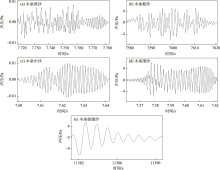
Fig. 6
Time domain waveform diagram of singing sand"

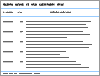
Tab. 1
Root-mean-square value of sound pressure signal of singing sand sample (Rms)"
| 类型 | 原沙 | 粗沙 | 中沙 | 细沙 | 极细沙 |
|---|---|---|---|---|---|
| 作用时间/s | 0.0650 | 0.0420 | 0.0420 | 0.0609 | 0.0096 |
| 均方根值/Pa | 0.0027 | 0.0021 | 0.0045 | 0.0024 | 0.0023 |
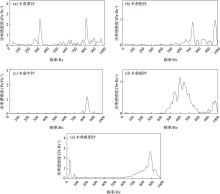
Fig. 7
FFT analysis diagram of transient waveform of impact sound pressure response of singing sand"

Tab. 2
Main frequency distribution of sound pressure signal of singing sand sample"
| 样品类型 | 主要频率/Hz | ||
|---|---|---|---|
| 原沙 | 317.615 | 807.495 | - |
| 粗沙 | 732.129 | 974.377 | - |
| 中沙 | 834.412 | - | - |
| 细沙 | 538.330 | 597.546 | 640.613 |
| 极细沙 | 26.917 | 845.178 | 888.245 |
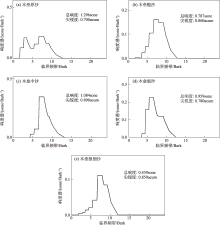
Fig. 8
Instantaneous sound quality analysis diagram of percussive sound pressure response transient waveform of singing sand"

Tab. 3
Results of instantaneous sound quality analysis of sample sound pressure signal"
| 样品类型 | 总响度sone | 尖锐度acum |
|---|---|---|
| 原沙 | 1.296 | 0.700 |
| 中沙 | 1.084 | 0.890 |
| 细沙 | 0.959 | 0.780 |
| 极细沙 | 0.439 | 0.850 |
| [1] | Carus-Wilson C. Musical sands[J]. Nature, 1909, 81(6): 159. |
| [2] | Andreotti B, Bonneau L. Booming dune instability[J]. Physical Review Letters, 2009, 103(23): 1-4. |
| [3] | 马瑞俊. 我国古籍中有关沙鸣现象的记述[J]. 中国沙漠, 1994, 14(1): 93-96. |
| [Ma Ruijun. The phenomena of singing sand in ancient Chinese books[J]. Journal of Desert Research, 1994, 14(1): 93-96.] | |
| [4] | 韩菲. 中国北方沙漠鸣沙特征对比及其成因研究[D]. 北京: 中国地质大学(北京), 2017. |
| [Han Fei. Comparative Study on the Characteristics and Cause of the Resonance of Sound-producing Sands in North China[D]. Beijing: China University of Geosciences, 2017.] | |
| [5] | Andreotti B. Sonic sands[J]. Reports on Progress in Physics, 2012, 75(2): 1-24. |
| [6] | Humphries D W. The booming sand of Korizo, Sahara, and the squeaking sand of Gower, S. Wales: A comparison of the fundamental characteristics of two musical sands[J]. Sedimentology, 1966, 6(2): 135-152. |
| [7] | Brown A E. Musical Sand: The Singing Sands of the Seashore Part Ⅱ[M]. Proceedings of the University of Durham Philosophical Society, 1964. |
| [8] | Haff P K. Booming dunes[J]. American Scientist, 1986, 74(4): 377-381. |
| [9] | 拜格诺. 风沙和荒漠沙丘物理学[M]. 北京: 科学出版社, 1959. |
| [Bagnold R A. The Physics of Blown Sand and Desert Dunes[M]. Beijing: Science Press, 1959.] | |
| [10] | Lewis A D. Roaring sands of the Kalahari Desert[J]. South African Geographical Journal, 1936, 19(1): 33-49. |
| [11] | 马玉明. 银肯沙内响沙的探讨[J]. 内蒙古林业科技, 1979, 4(4): 43. |
| [Ma Yuming. Exploration of rattling sand in Ginkensha[J]. Journal of Inner Mongolia Forestry Science and Technology, 1979, 4(4): 43.] | |
| [12] | Bolton H C. Recent visits to “singing beach” in Scotland and America[J]. Transactions of the New York Academy of Sciences, 1884, 3(1): 72-76. |
| [13] |
陈麦池, 张捷, 张宏磊, 等. 鸣沙景观的地理分布及发声机理[J]. 中国沙漠, 2019, 39(5): 120-126.
doi: 10.7522/j.issn.1000-694X.2018.00124 |
|
[Chen Maichi, Zhang Jie, Zhang Honglei, et al. Overview on geographical distribution and sounding mechanisms of singing sand soundscape[J]. Journal of Desert Research, 2019, 39(5): 120-126.]
doi: 10.7522/j.issn.1000-694X.2018.00124 |
|
| [14] | 叶喜艳, 宋春晖, 于昊, 等. 敦煌鸣沙“共鸣箱”成因类型[J]. 中国沙漠, 2016, 36(6): 1-7. |
| [Ye Xiyan, Song Chunhui, Yu Hao, et al. Genetic types of singing sand “Resonant Tank” in Dunhuang[J]. Journal of Desert Research, 2016, 36(6): 1-7.] | |
| [15] | 吉尔格拉, 杨秀花, 孙明忠. 库布齐沙漠沙鸣现象的研究[J]. 内蒙古林学院学报, 1996, 18(4): 52-56. |
| [Jirogla, Yang Xiuhua, Sun Mingzhong. On appearance about sand ringing of Kubuqi Desert[J]. Journal of Neimenggu Forestry College, 1996, 18(4): 52-56.] | |
| [16] | 闫德仁, 安晓亮, 武智双. 响沙成因问题探讨[J]. 内蒙古林业调查设计, 2001, 23(3): 54-56. |
| [Yan Deren, An Xiaoliang, Wu Zhishuang. Discussion on contributing factors of sounding sand[J]. Inner Mongolia Forestry Investigation and Design, 2001, 23(3): 54-56.] | |
| [17] | 王文彪, 马俊杰. 库布齐沙漠不同地表类型沙粒粒径分析[J]. 内蒙古林业科技, 2011, 37(3): 27-30. |
| [Wang Wenbiao, Ma Junjie. Analysis on particle size of different land surface types in Kubuqi Desert[J]. Journal of Inner Mongolia Forestry Science and Technology, 2011, 37(3): 27-30.] | |
| [18] | Irving A. Musical sands[J]. Nature, 1909, 81(4): 99. |
| [19] | 屈建军, 孙波, 张克存, 等. 鸣沙表面结构特征与共鸣制的模拟实验研究[J]. 中国科学(D辑:地球科学), 2007, 37(7): 949-956. |
| [Qu Jianjun, Sun Bo, Zhang Kecun, et al. Simulation experimental study on surface structure characteristics and resonance mechanism of singing sand[J]. Science in China (Series D: Earth Sciences), 2007, 37(7): 949-956.] | |
| [20] | Bolton H C. Researches on musical sand in the Hawaiian Islands and in California[J]. Transactions of the New York Academy of Sciences, 1889, 10(1): 28-35. |
| [21] | 屈建军, 代枫年, 康国定, 等. 鸣沙研究及其展望[J]. 地球科学进展, 1993, 8(4): 63-65. |
| [Qu Jianjun, Dai Fengnian, Kang Guoding, et al. Study and prospect of singing sand[J]. Advances in Earth Science, 1993, 8(4): 63-65.] | |
| [22] | 郑晓静, 杨堃. 关于鸣沙[J]. 力学与实践, 2004, 26(2): 86-87. |
| [Zheng Xiaojing, Yang Kun. About mingsha[J]. Mechanics in Engineering, 2004, 26(2): 86-87.] | |
| [23] | 姚洪林, 马玉明, 查国东, 等. 银肯响沙湾表层含水量、持水量、容重的研究[J]. 内蒙古林业科技, 2001, 6(4): 3-6. |
| [Yao Honglin, Ma Yuming, Zha Guodong, et al. Moisture content, moisture capacity and volume weight of the surface of Yinken soundingsand hill[J]. Journal of Inner Mongolia Forestry Science and Technology, 2001, 6(4): 3-6.] | |
| [24] |
徐利强. 新疆巴里坤鸣沙山风成沉积物粒度特征[J]. 中国沙漠, 2017, 37(5): 836-842.
doi: 10.7522/j.issn.1000-694X.2016.00062 |
|
[Xu Liqiang. Grain size features for aeolian sediments from Balikun mingshashan desert, Xinjiang, China[J]. Journal of Desert Research, 2017, 37(5): 836-842.]
doi: 10.7522/j.issn.1000-694X.2016.00062 |
|
| [25] | 庞营军, 屈建军, 牛清河, 等. 敦煌月牙泉景区沙丘表面沙物质的粒度特征[J]. 干旱区研究, 2017, 34(3): 701-706. |
| [Pang Yingjun, Qu Jianjun, Niu Qinghe, et al. Grain size characters of dune surface sediment in the crescent spring scenic spot, Dunhuang[J]. Arid Zone Research, 2017, 34(3): 701-706.] | |
| [26] | 天地奇响沙海神迹——新疆木垒鸣沙山国家沙漠公园[J]. 新疆林业, 2021, 47(4): 49. |
| [Wonders of heaven and earth, miracles of the sand sea-mingsha mountain national desert park, Mulei, Xinjiang[J]. Forestry of Xinjiang, 2021, 47(4): 49.] | |
| [27] | 聂晶川. 滑沙鸣响音量之最——“木垒鸣沙山”[J]. 新疆社科论坛, 2011, 1(1): 98. |
| [Nie Jingchuan. The largest volume of sand-skiing sounds-“Mulei sand mountain”[J]. Tribune of Social Sciences in Xinjiang, 2011, 1(1): 98.] | |
| [28] | 陈德斌, 陆成新, 田德超, 等. 新疆木垒县鸣沙山地质遗迹的特征成因及保护规划初探[J]. 干旱区资源与环境, 2009, 23(4): 85-89. |
| [Chen Debin, Lu Chengxin, Tian Dechao, et al. The preliminary discussion on the characteristics reasons and protection plan of geology vestige of sounding sand mountain in Mulei county, Xinjiang[J]. Journal of Arid Land Resources and Environment, 2009, 23(4): 85-89.] | |
| [29] | 王占和, 陈德斌, 黄振富, 等. 新疆木垒县鸣沙山的地质成因[J]. 科学之友, 2010, 31(24): 125-126. |
| [Wang Zhanhe, Chen Debin, Huang Zhenfu, et al. Xinjiang Mulei County Mt. Mingsha’s geologic origin[J]. Friend of Science Amateurs, 2010, 31(24): 125-126.] | |
| [30] | 张玉堂. 木垒借鸣沙山获吉尼斯“最佳项目”打造旅游胜地[N]. 新疆日报(汉), 2011-04-01(002). |
| [Zhang Yutang. Mulei took advantage of mingsha mountain to win the “Best Project” of Guinness to create a tourist resort[N]. Xinjiang Daily, 2011-04-01(002).] | |
| [31] | 刘金霞, 张磊. 新疆木垒县小麦生产现状及发展对策[J]. 新疆农垦科技, 2019, 42(9): 14-15. |
| [Liu Jinxia, Zhang Lei. Current situation of wheat production in Mulei county, Xinjiang and development countermeasures[J]. Xinjiang Farm Research of Science and Technology, 2019, 42(9): 14-15.] | |
| [32] | 叶尔克江·霍依哈孜, 阿帕尔·肉孜, 柳宏英, 等. 新疆木垒县近51年春、夏季气象干旱特征分析[J]. 湖北农业科学, 2021, 60(14): 57-63. |
| [Hoyhazi Erkejan, Ruzi Apar, Liu Hongying, et al. Analysis on the characteristics of spring and summer meteorological drought in Mulei county of Xinjiang in recent 51 years[J]. Hubei Agricultural Sciences, 2021, 60(14): 57-63.] | |
| [33] | 杨维康, 乔建芳, 姚军, 等. 新疆木垒波斑鸨生态学研究初报[J]. 干旱区研究, 2001, 18(4): 13-18. |
| [Yang Weikang, Qiao Jianfang, Yao Jun, et al. A preliminary study on the ecology of Houbara Bustards (Chlamydotis undulata macqueenii) population in Mori, Xinjiang[J]. Arid Zone Research, 2001, 18(4): 13-18.] | |
| [34] | 李杨, 刘艳, 张璞. 古尔班通古特沙漠植被覆盖变化及其对沙尘天气的影响[J]. 干旱区资源与环境, 2010, 24(3): 141-146. |
| [Li Yang, Liu Yan, Zhang Pu. Desertvegetation coverage changes and their impacts on sand-dust weather in Guerbantonggut Desert[J]. Journal of Arid Land Resources and Environment, 2010, 24(3): 141-146.] | |
| [35] | Carus-Wilson C. The production of musical notes from non-musical sands[J]. Nature, 1891, 44(14): 322-323. |
| [36] | 薛伟伟, 谭先锋, 李泽民, 等. 碎屑岩中长石的溶解机制及其对成岩作用的贡献[J]. 复杂油气藏, 2015, 8(1): 1-6, 61. |
| [Xue Weiwei, Tan Xianfeng, Li Zemin, et al. Dissolution mechanism of feldspar in the clastic rocks and its contribution to diagenesis[J]. Complex Hydrocarbon Reservoirs, 2015, 8(1): 1-6, 61.] | |
| [37] | 吴正. 风沙地貌与治沙工程学[M]. 北京: 科学出版社, 2010. |
| [Wu Zheng. Aeolian Landform and Desert Control Engineering[M]. Beijing: Science Press, 2010.] | |
| [38] | 刘斯文. 巴丹吉林沙漠东南部鸣沙的分布发育特征及成因机制研究[D]. 北京: 中国地质大学(北京), 2010. |
| [Liu Siwen. The Distribution, Developing Features and Mechanism Originesis of Singing Sands of the SE Badain Jaran Desert[D]. Beijing: China University of Geosciences, 2010.] | |
| [39] |
金晨阳, 杜宏茹. 新疆耕地系统韧性时空变化特征及其分区划定[J]. 干旱区研究, 2024, 41(10): 1778-1788.
doi: 10.13866/j.azr.2024.10.15 |
|
[Jin Chenyang, Du Hongru. Characteristics of spatial and temporal changes and zoning of cultivated land resilience in Xinjiang[J]. Arid Zone Research, 2024, 41(10): 1778-1788.]
doi: 10.13866/j.azr.2024.10.15 |
|
| [40] |
王成武, 尧良杰, 汪宙峰, 等. 2000—2020年三江源地区景观生态风险评价及驱动因素[J]. 干旱区研究, 2024, 41(11): 1908-1920
doi: 10.13866/j.azr.2024.11.11 |
|
[Wang Chnegwu, Yao Liangjie, Wang Zhoufeng, et al. Landscape ecological risk assessment and driving factors analysis in the Three River Source Region from 2000 to 2020[J]. Arid Zone Research, 2024, 41(11): 1908-1920.]
doi: 10.13866/j.azr.2024.11.11 |
|
| [41] |
杨荣钦, 肖玉磊, 池苗苗, 等. 近20 a塔里木河流域人类活动及景观生态风险时空变化[J]. 干旱区研究, 2024, 41(6): 1010-1020.
doi: 10.13866/j.azr.2024.06.10 |
|
[Yang Rongqin, Xiao Yulei, Chi Miaomiao, et al. Temporal and spatial variations of human activities and landscape ecological risks in the Tarim River Basin, China, during the last 20 years[J]. Arid Zone Research, 2024, 41(6): 1010-1020.]
doi: 10.13866/j.azr.2024.06.10 |
| [1] | DU Hai-Yan, ZHOU Zhi-Bin, LIU Feng-Shan, YAN Bing. Variation of Fractal Dimension of Soil Particle Size Distribution in the Aral Reclamation Area in Oasis Development [J]. , 2013, 30(4): 615-622. |
| [2] | GUI Dong-wei, LEI Jia-qiang, ZENG Fan-jiang, MU Gui-jin, PAN Yan-fang, LI Kai-feng. Analysis on Soil PSD and Its Affecting Factors at Different Depths in Oasis Farmland —A Case Study in the Qira Oasis [J]. , 2011, 28(4): 622-629. |
| [3] | SHI Zhan-fei, WANG Li, WANG Jian-guo. Volume Fractal Characteristics and Significance of Soil Particles in the Shenmu Colliery in North Shaanxi Province [J]. , 2011, 28(3): 394-400. |
|
||
