
Arid Zone Research ›› 2025, Vol. 42 ›› Issue (10): 1913-1924.doi: 10.13866/j.azr.2025.10.14
• Ecology and Environment • Previous Articles Next Articles
CHEN Xin( ), LIU Yunqing, WANG Xinglei()
Received:2025-01-22
Revised:2025-04-03
Online:2025-10-15
Published:2025-10-22
Contact:
WANG Xinglei
E-mail:632215456@qq.com;wangxl1127@sina.com
CHEN Xin, LIU Yunqing, WANG Xinglei. Analysis of ozone pollution characteristics, meteorological influences, and potential sources in Yining, Xinjiang[J].Arid Zone Research, 2025, 42(10): 1913-1924.
Add to citation manager EndNote|Reference Manager|ProCite|BibTeX|RefWorks
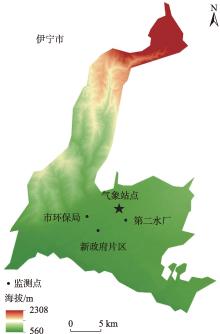
Fig. 1
Topography and monitoring locations in Yining"
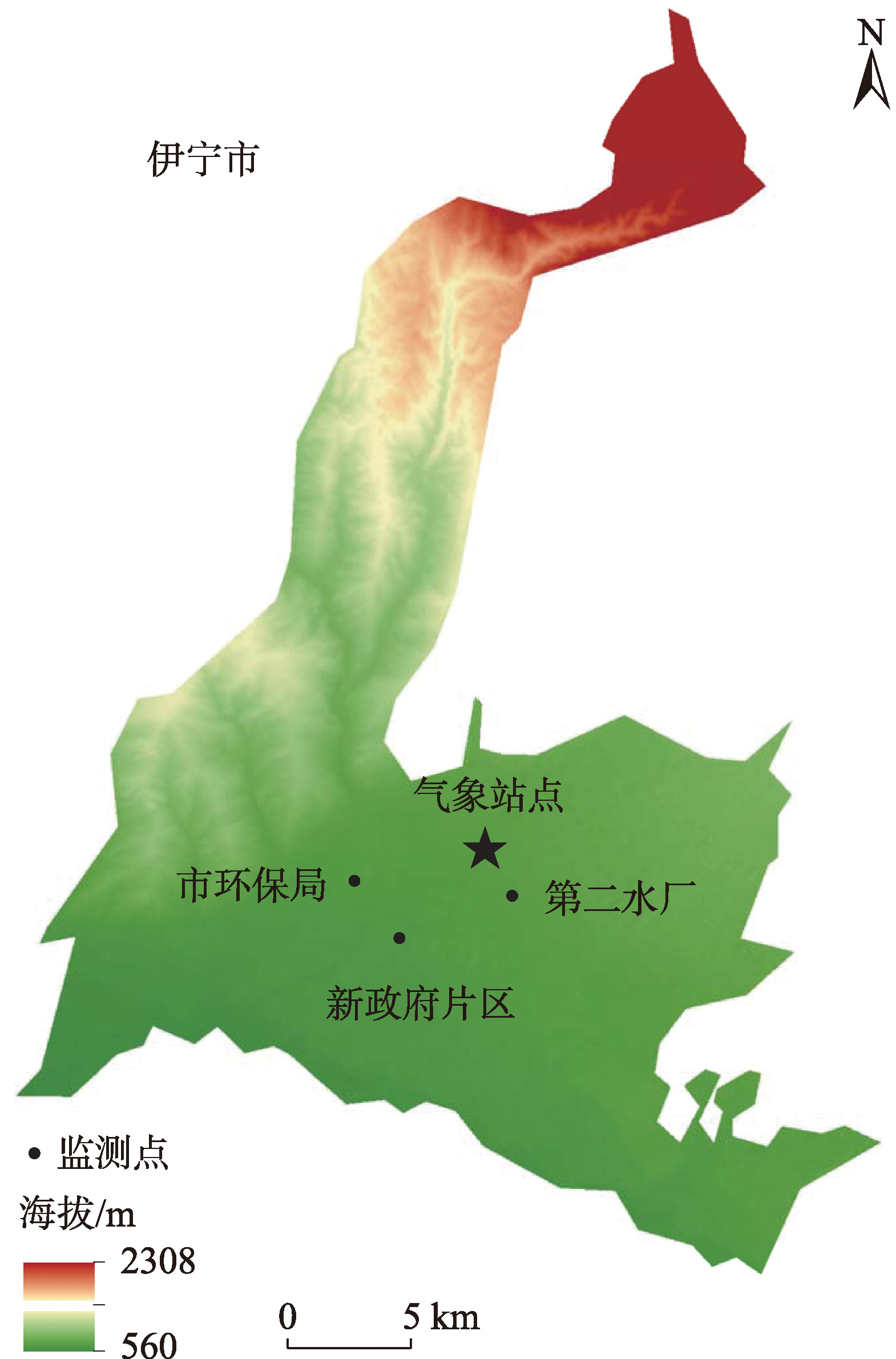
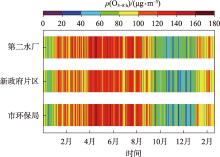
Fig. 2
Variation in the daily mass concentration of O3 at each monitoring station in Yining,2022"

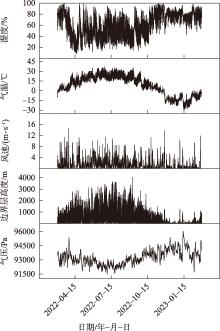
Fig. 3
Characteristics of daily variation of meteorological factors changes in Yining,2022"

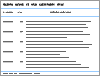
Tab. 1
Average monthly O3 concentration and number of days exceeding the standard at each station in Yining, 2022"
| 时间 | O3浓度/(μg·m-3) | 超标天数/d | |||||
|---|---|---|---|---|---|---|---|
| 第二 水厂 | 新政府 片区 | 市环 保局 | 第二 水厂 | 新政府 片区 | 市环 保局 | ||
| 3月 | 79.23 | 76.9 | 74.13 | 4 | 3 | 2 | |
| 4月 | 106.23 | 105.37 | 101.73 | 22 | 22 | 20 | |
| 5月 | 108.29 | 102.16 | 106.87 | 22 | 16 | 19 | |
| 6月 | 129.37 | 125.3 | 131.47 | 29 | 28 | 29 | |
| 7月 | 127.42 | 121.68 | 128.23 | 29 | 29 | 29 | |
| 8月 | 120.26 | 110.58 | 121.1 | 25 | 23 | 25 | |
| 9月 | 118.77 | 111.57 | 122.17 | 25 | 23 | 25 | |
| 10月 | 82.68 | 82.61 | 84.74 | 7 | 5 | 9 | |
| 11月 | 59.03 | 59.27 | 58.57 | 0 | 0 | 0 | |
| 12月 | 58.97 | 52.39 | 55.87 | 0 | 0 | 0 | |
| 1月 | 76.61 | 66.87 | 69.9 | 6 | 1 | 4 | |
| 2月 | 92.29 | 91.64 | 91.36 | 8 | 7 | 6 | |
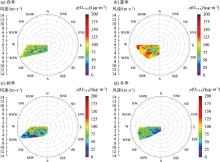
Fig. 4
Rose map of O3 wind pollution for all seasons in Yining, 2022"

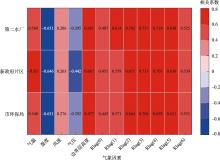
Fig. 5
Correlation coefficient between O3 concentration and meteorological factors at various stations in Yining, 2022"


Fig. 6
Hourly average values of O3 and solar radiation at stations in the four seasons of Yining, 2022"

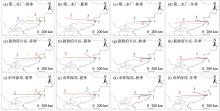
Fig. 7
Cluster analysis of four-season backward trajectories in Yining, 2022"

Tab. 2
Results of clustering analyses of four-season backward trajectories across sites"
| 季节 | 轨迹 | 第二水厂 | 新政府片区 | 市环保局 | |||||||||||
|---|---|---|---|---|---|---|---|---|---|---|---|---|---|---|---|
| 占比/% | ρ/(μg·m-3) | 超标轨迹 | 占比/% | ρ/(μg·m-3) | 超标轨迹 | 占比/% | ρ/(μg·m-3) | 超标轨迹 | |||||||
| 数量 | ρ/(μg·m-3) | 数量 | ρ/(μg·m-3) | 数量 | ρ/(μg·m-3) | ||||||||||
| 春 | 1 | 41.25 | 63.98 | 176 | 118.93 | 35.93 | 65.50 | 147 | 118.03 | 36.57 | 61.52 | 133 | 116.99 | ||
| 2 | 2.18 | 82.38 | 17 | 117.82 | 1.44 | 84.77 | 11 | 112.09 | 1.81 | 81.10 | 15 | 114.27 | |||
| 3 | 24.26 | 66.93 | 52 | 110.90 | 17.36 | 65.18 | 25 | 110.32 | 16.11 | 62.67 | 14 | 107.14 | |||
| 4 | 32.31 | 66.53 | 124 | 113.19 | 45.28 | 65.98 | 147 | 112.96 | 45.51 | 61.52 | 133 | 112.54 | |||
| 夏 | 1 | 37.59 | 86.37 | 334 | 127.16 | 47.51 | 87.87 | 408 | 122.58 | 47.01 | 87.10 | 432 | 128.76 | ||
| 2 | 17.39 | 91.48 | 180 | 122.88 | 15.17 | 92.00 | 150 | 118.52 | 14.18 | 90.48 | 146 | 122.57 | |||
| 3 | 45.02 | 80.63 | 340 | 123.87 | 37.32 | 81.47 | 252 | 118.76 | 38.81 | 81.59 | 314 | 123.16 | |||
| 秋 | 1 | 79.15 | 52.57 | 240 | 122.28 | 87.54 | 56.44 | 264 | 115.71 | 79.24 | 54.49 | 257 | 123.72 | ||
| 2 | 1.82 | 56.95 | 4 | 103.75 | 1.53 | 51.88 | 0 | 0 | 2.25 | 56.98 | 4 | 104.75 | |||
| 3 | 19.03 | 53.99 | 29 | 120.79 | 10.93 | 58.80 | 9 | 111.00 | 18.5 | 56.84 | 38 | 119.63 | |||
| 冬 | 1 | 28.10 | 41.05 | 41 | 111.68 | 38.44 | 38.44 | 20 | 109.80 | 16.81 | 47.47 | 28 | 109.86 | ||
| 2 | 15.97 | 52.62 | 14 | 106.21 | 51.87 | 51.87 | 17 | 104.76 | 16.39 | 55.46 | 10 | 105.60 | |||
| 3 | 55.93 | 41.71 | 73 | 115.01 | 42.09 | 42.09 | 49 | 109.73 | 66.81 | 44.12 | 64 | 112.16 | |||
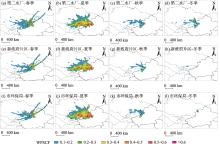
Fig. 8
Analysis of the WPSCF for the four seasons in Yining, 2022"


Fig. 9
Analysis of the WCWT for the four seasons in Yining, 2022"

| [1] | 俞辉, 姚易辰, 徐学哲, 等. 基于过氧自由基原位测量的大气臭氧光化学生成速率研究[J]. 分析化学, 2023, 51(2): 287-295. |
| [Yu Hui, Yao Yichen, Xu Xuezhe, et al. Study on atmospheric ozone photochemical production rate based on in-situ measurement of peroxy radical[J]. Chinese Journal of Analytical Chemistry, 2023, 51(2): 287-295. ] | |
| [2] |
马正权, 闫劲烨, 帕丽达·牙合甫, 等. 乌鲁木齐市和喀什市近地面O3变化特征及潜在源研究[J]. 干旱区研究, 2024, 41(12): 2004-2014.
doi: 10.13866/j.azr.2024.12.03 |
|
[Ma Zhengquan, Yan Jinye, Palida Yahefu, et al. Characteristics and potential sources of surface O3 variation in Urumqi and Kashgar[J]. Arid Zone Research, 2024, 41(12): 2004-2014. ]
doi: 10.13866/j.azr.2024.12.03 |
|
| [3] | 夏永杰, 周璐, 牛越, 等. 2020年中国大气臭氧对慢性阻塞性肺病死亡影响的疾病负担分析和健康经济学评价[J]. 环境科学研究, 2023, 36(2): 237-245. |
| [Xia Yongjie, Zhou Lu, Niu Yue, et al. COPD mortality burden and related health economic assessment associated related with to ambient ozone in 2020 in China[J]. Research of Environmental Sciences, 2023, 36(2): 237-245. ] | |
| [4] | 陈刘雯, 呼佳宁, 李丹, 等. 上海某居民区恶臭污染溯源、臭氧生成潜势及健康风险评估[J]. 北京工业大学学报, 2023, 49(12): 1295-1310. |
| [Chen Liuwen, Hu Jianing, Li Dan, et al. Traceability, ozone formation potential and health risk assessment of odor pollution in a residential area of shanghai[J]. Journal of Beijing University of Technology, 2023, 49(12): 1295-1310. ] | |
| [5] | 常会云, 王丽珩, 黄珂, 等. 济南市2013—2019年大气臭氧暴露对居民超额应急呼叫的风险评估[J]. 中华疾病控制杂志, 2024, 28(4): 479-485. |
| [Chang Huiyun, Wang Liheng, Huang Ke, et al. Effects analysis and excess risk assessment on O3 related emergency calls in Jinan City, 2013-2019[J]. Chinese Journal of Disease Control and Prevention, 2024, 28(4): 479-485. ] | |
| [6] | 何琰, 林惠娟, 曹舒娅, 等. 城市臭氧污染特征与高影响气象因子: 以苏州为例[J]. 环境科学, 2023, 44(1): 85-93. |
| [He Yan, Lin Huijuan, Cao Shuya, et al. Characteristics of ozone pollution and high-impact meteorological factors in urban cities: A case of Suzhou[J]. Environmental Science, 2023, 44(1): 85-93. ] | |
| [7] | 赵月. 长三角典型城市臭氧污染特征及VOCs来源解析[J]. 环境科学研究, 2024, 37(7): 1500-1512. |
| [Zhao Yue. Analysis of variation characteristics and source of atmospheric ozone pollution in the Yangtze River Delta region[J]. Research of Environmental Sciences, 2024, 37(7): 1500-1512. ] | |
| [8] | 温丽容, 江明, 黄渤, 等. 珠三角典型区域臭氧成因分析与VOCs来源解析——以中山为例[J]. 生态环境学报, 2023, 32(3): 500-513. |
| [Wen Lirong, Jiang Ming, Huang Bo, et al. Analysis of ozone pollution causes and source analysis of VOCs in typical areas of Pearl River Delta: A case study of Zhongshan City[J]. Ecology and Environmental Sciences, 2023, 32(3): 500-513. ] | |
| [9] | 张莹, 许建敏, 汪瑶, 等. 京津冀地区2015—2020年臭氧持续污染事件特征、气象影响及潜在源区分析[J]. 中国环境科学, 2023, 43(6): 2714-2721. |
| [Zhang Ying, Xu Jianmin, Wang Yao, et al. Characteristics, meteorological impacts and potential sources of persistent ozone pollution events in Beijing-Tianjin-Hebei Region during 2015-2020[J]. China Environmental Science, 2023, 43(6): 2714-2721. ] | |
| [10] | 钱昱先, 王刚, 孟庆晓, 等. 2019—2022年华北平原典型地区不同污染等级和污染持续时间下的O3污染规律及来源[J]. 中国环境科学, 2024, 44(7): 3581-3591. |
| [Qian Yuxian, Wang Gang, Meng Qingxiao, et al. Characteristics and sources of O3 pollution under different pollution levels and durations in typical areas of North China Plain from 2019 to 2022[J]. China Environmental Science, 2024, 44(7): 3581-3591. ] | |
| [11] | Lu Y, Wang T. Decisive role of atmospheric circulation in the troposphere on ozone pollution in the Beijing-Tianjin-Hebei region[J]. Atmospheric Pollution Research, 2024, 15(3): 102024. |
| [12] | Lei S T, Ju T Z, Li B N, et al. Analysis of remote sensing monitoring of atmospheric ozone in Japan from 2010 to 2021[J]. Water, Air, & Soil Pollution, 2023, 234(9): 562. |
| [13] | 张嘉迪, 王东旭, 王振楠, 等. 宜都市PM2. 5与O3季节性分布特征及潜在源区分析[J]. 中国环境监测, 2024, 40(2): 84-94. |
| [Zhang Jiadi, Wang Dongxu, Wang Zhennan, et al. Distribution characteristics and potential source areas of PM2.5 and O3 in different seasons in Yidu City[J]. Environmental Monitoring in China, 2024, 40(2): 84-94. ] | |
| [14] | 王笠成, 邵波霖, 彭彤茵, 等. 基于PSCF与CWT模型对乌鲁木齐市地表臭氧源区分析[J]. 环境科学与技术, 2023, 46(10): 129-137. |
| [Wang Licheng, Shao Bolin, Peng Tongyin, et al. Analysis of land-surface ozone source-areas in Urumqi City based on PSCF and CWT models[J]. Environmental Science & Technology, 2023, 46(10): 129-137. ] | |
| [15] | 冼爱丹, 徐文帅, 邢巧, 等. 文昌市臭氧污染特征、输送路径及潜在源区分析[J]. 环境化学, 2023, 42(9): 3017-3027. |
| [Xian Aidan, Xu Wenshuai, Xing Qiao, et al. Characteristics, transport routes and potential sources of ozone pollution in Wenchang[J]. Environmental Chemistry, 2023, 42(9): 3017-3027. ] | |
| [16] | 常毅, 刘文君, 周惜荫. 基于超级站观测的兰州大气挥发性有机污染物特征及对臭氧形成的影响[J]. 环境化学, 2024, 43(3): 1025-1034. |
| [Chang Yi, Liu Wenjun, Zhou Xiyin. Characteristics of atmospheric volatile organic compounds and their relationship with ozone concentration in Lanzhou based superstation observation[J]. Environmental Chemistry, 2024, 43(3): 1025-1034. ] | |
| [17] | 王聪慧, 施光耀, 杨思琪, 等. 银川城市公园气象及大气污染物对臭氧影响机制[J]. 环境科学, 2024, 45(9): 5149-5156. |
| [Wang Conghui, Shi Guangyao, Yang Siqi, et al. Effect of meteorological elements and air pollutants on ozone in Yinchuan City park[J]. Environmental Science, 2024, 45(9): 5149-5156. ] | |
| [18] | 代冉, 谷超, 徐涛, 等. 伊犁河谷城市群夏季不同粒径大气颗粒物组分特征及来源解析[J]. 环境工程技术学报, 2023, 13(3): 909-920. |
| [Dai Ran, Gu Chao, Xu Tao, et al. Characteristics and sources apportionment of size-segregated atmospheric particles in Ili Valley urban agglomeration in summer[J]. Journal of Environmental Engineering Technology, 2023, 13(3): 909-920. ] | |
| [19] | 谷超, 徐涛, 马超, 等. 伊犁河谷核心区春季PM2. 5组分特征及来源解析[J]. 环境科学, 2023, 44(4): 1899-1910. |
| [Gu Chao, Xu Tao, Ma Chao, et al. Characteristics and source apportionment of PM2.5 in the core area of Ili River valley in spring[J]. Environmental Science, 2023, 44(4): 1899-1910. ] | |
| [20] | 张允旭, 鞠萍, 刘琪, 等. 新型冠状病毒感染后综合征的研究进展[J]. 中国感染控制杂志, 2023, 22(9): 1114-1120. |
| [Zhang Yunxu, Ju Ping, Liu Qi, et al. Research progress in post-COVID-19 syndrome[J]. Chinese Journal of Infection Control, 2023, 22(9): 1114-1120. ] | |
| [21] | 张泽华, 史雨晨, 柳景华, 等. 新型冠状病毒感染对脑出血合并肺部感染患者短期预后不良预测价值的多中心回顾性研究[J]. 中国脑血管病杂志, 2024, 21(4): 236-245. |
| [Zhang Zehua, Shi Yuchen, Liu Jinghua, et al. A multicenter retrospective study on the predictive value of coronavirus disease 2019 on the shortterm poor prognosis in patients with cerebral hemorrhage complicated with pulmonary infection[J]. Chinese Journal of Cerebrovascular Diseases, 2024, 21(4): 236-245. ] | |
| [22] | 田文君, 薛一波, 张小啸, 等. 2021年春季塔里木盆地典型沙尘天气过程气溶胶垂直分布及传输[J]. 干旱区研究, 2025, 12(1): 14-26. |
| [Tian Wenjun, Xue Yibo, Zhang Xiaoxiao, et al. Study on the vertical distribution and transport of dust aerosols during typical dust weather events in the Tarim Basin, Northwest China in spring, 2021[J]. Arid Zone Research 2025, 12(1): 14-26. ] | |
| [23] | 张芊, 庞可, 马彩云, 等. 甘肃地区春冬季颗粒物输送路径及潜在源分析——基于HYSPLIT4模式及TraPSA分析平台[J]. 中国环境科学, 2022, 42(2): 509-518. |
| [Zhang Qian, Pang Ke, Ma Caiyun et al. Analysis of transportation path and potential sources of atmospheric particulate matter over Gansu Province in spring and winter—Based on HYSPLIT4 model and TraPSA analysis platform[J]. China Environmental Science, 2022, 42(2): 509-518. ] | |
| [24] | 王星, 霍艾迪, 吕继强, 等. 关中地区大气臭氧污染变化特征及其来源解析[J]. 环境科学, 2024, 45(7): 3789-3798. |
| [Wang Xing, Huo Aidi, Lü Jiqiang, et al. Variation characteristics and source analysis of atmospheric ozone pollution in Guanzhong Region[J]. Environmental Science, 2024, 45(7): 3789-3798. ] | |
| [25] |
吴佳康, 陈丽花, 车彦军, 等. 东昆仑木孜塔格峰地区水汽来源分析[J]. 干旱区研究, 2024, 41(2): 211-219.
doi: 10.13866/j.azr.2024.02.04 |
|
[Wu Jiakang, Chen Lihua, Che Yanjun, et al. Prediction of ozone pollution in Sichuan Basin based on random forest model[J]. Arid Zone Research, 2024, 41(2): 211-219. ]
doi: 10.13866/j.azr.2024.02.04 |
|
| [26] | 闻译竣, 卢志贤, 李勇. 金昌市不同季节大气颗粒物的传输路径和潜在源分析[J]. 环境监测管理与技术, 2022, 34(1): 43-48. |
| [Wen Yijun, Lu Zhixian, Li Yong. Transport pathways and potential sources of atmospheric particulates in different seasons in Jinchang[J]. The Administration and Technique of Environmental Monitoring, 2022, 34(1): 43-48. ] | |
| [27] | 纪晓腾, 马心怡, 马博健, 等. 邯郸市大气PM2. 5时空分布及季节性潜在源分析[J]. 环境科学学报, 2024, 44(2): 298-309. |
| [Ji Xiaoteng, Ma Xinyi, Ma Bojian, et al. Spatial and temporal distributions and seasonal potential sources of atmospheric PM2.5 in Handan[J]. Acta Scientiae Circumstantiae, 2024, 44(2): 298-309. ] | |
| [28] | 徐媛倩, 岳利波, 曹霞, 等. 许昌市夏季臭氧污染特征与气象因子影响分析[J]. 环境污染与防治, 2024, 46(3): 367-372, 379. |
| [Xu Yuanqian, Yue Libo, Cao Xia, et al. Analysis of summe rozone pollution characteristics and the influence of meteorological factors in Xuchang City[J]. Environmental Pollution & Control, 2024, 46(3): 367-372, 379. ] | |
| [29] | 孙国金, 朱绍东, 李优楠, 等. 绍兴市臭氧污染特征及气象因素分析[J]. 环境污染与防治, 2020, 42(5): 608-613. |
| [Sun Guojin, Zhu Shaodong, Li Younan, et al. Analysis of ozone pollution characteristics and meteorological factors in Shaoxing[J]. Environmental Pollution & Control, 2020, 42(5): 608-613. ] | |
| [30] | 姚笛, 陈浩, 王明, 等. 2020年宣城市臭氧污染特征及气象影响因素分析[J]. 大气与环境光学学报, 2024, 19(5): 589-598. |
| [Yao Di, Chen Hao, Wang Ming, et al. Characteristics of surface ozone pollution and meteorological parameters analysis in Xuancheng City in 2020[J]. Journal of Atmospheric and Environmental Optics, 2024, 19(5): 589-598. ] | |
| [31] | 谈建国, 陆国良, 耿福海, 等. 上海夏季近地面臭氧浓度及其相关气象因子的分析和预报[J]. 热带气象学报, 2007, 23(5): 515-520. |
| [Tan Jianguo, Lu Guoliang, Geng Fuhai, et al. Analysis and prediction of surface O3 concentration and related meteorological factors in summertime in urban area of Shanghai[J]. Journal of Tropical Meteorology, 2007, 23(5): 515-520. ] | |
| [32] | 易明建, 黄雪梅, 姜永清, 等. 对合肥夏季臭氧的数值模拟: 太阳辐射及其关联机制的作用[J]. 光学学报, 2024, 44(6): 143-152. |
| [Yi Mingjian, Huang Xuemei, Jiang Yongqing, et al. Numerical simulation of summer ozone in Hefei: Role of solar radiation and its associated mechanisms[J]. Acta Optica Sinica, 2024, 44(6): 143-152. ] | |
| [33] | Huang X M, Yi M J, Deng S M, et al. The characteristics of daily solar irradiance variability and its relation to ozone in Hefei, China[J]. Air Quality, Atmosphere & Health, 2022, 16(2): 277-288. |
| [1] | ZHOU Fei, WANG Changyan, WANG Fang, WU Qiaoli, SU Xiaoli, ZHANG Daizhou, WU Feng. Estimation of soil NOX emissions in the deserts and surrounding areas of Northern China [J]. Arid Zone Research, 2025, 42(5): 820-828. |
| [2] | MA Zhengquan, YAN Jingye, Palida YAHEFU, Alim ABBAS. Characteristics and potential sources of surface O3 variation in Urumqi and Kashgar [J]. Arid Zone Research, 2024, 41(12): 2004-2014. |
| [3] | LIU Zilong,DAI Bin,CUI Zhuoyan,LIU Yonggao,XU Zhu,ZHENG Xinjun. Concentration characteristics and potential source of atmospheric pollutants: A case study in Urumqi [J]. Arid Zone Research, 2021, 38(2): 562-569. |
| [4] | CHEN Zhi-qing, SHAO Tian-jie, ZHAO Jing-bo, CAO Jun-ji, YUE Da-peng. Spatial-temporal differentiation of near-surface ozone concentration and dominant meteorological factors in Inner Mongolia [J]. Arid Zone Research, 2020, 37(6): 1504-1512. |
| [5] | CHEN Zhi-qing, SHAO Tian-jie, ZHAO Jing-bo. Spatiotemporal Variation of Ozone Concentration and Its Influential Factors in Inner Mongolia in Recent 3 Years [J]. Arid Zone Research, 2019, 36(4): 990-996. |
| [6] | MENG Hong-fei, ZHANG Ming-jun, WANG Sheng-jie, QIU Xue, DU Ming-xia, MA Rong. Application of CWT Method in Identifying Water Vapor Sources of Summer Precipitation in China [J]. Arid Zone Research, 2018, 35(4): 872-881. |
|
||
