
干旱区研究 ›› 2025, Vol. 42 ›› Issue (7): 1313-1322.doi: 10.13866/j.azr.2025.07.14 cstr: 32277.14.AZR.20250714
胡继然1( ), 姚娟1(), 熊长江2
收稿日期:2024-11-13
修回日期:2025-04-23
出版日期:2025-07-15
发布日期:2025-07-07
通讯作者:
姚娟. E-mail: 409454654@qq.com作者简介:胡继然(1993-),女,博士,讲师,主要从事生态经济与生态旅游方面的研究. E-mail: hujiran123@163.com
基金资助:
HU Jiran1(), YAO Juan1(), XIONG Changjiang2
Received:2024-11-13
Revised:2025-04-23
Published:2025-07-15
Online:2025-07-07
摘要: 水供给服务维系着人类社会的生存与发展,是推进中国生态文明建设和流域高质量发展的关键。以新疆伊犁河谷为研究区,基于统计年鉴数据和遥感数据,利用水供给服务供需模型、水资源安全指数(FSI)、供需匹配等方法,分析研究区2005—2020年水供给服务供需的平衡特征及其匹配状况。结果表明:(1) 伊犁河谷水资源安全指数呈“升-降”波动,供需平衡呈现“一般赤字-一般盈余-赤字持续”三阶段演变。空间分异显著:伊宁市、伊宁县、霍城县、察布查尔锡伯自治县、新源县五县市持续赤字;尼勒克县、特克斯县、昭苏县三县及霍尔果斯市(2020年)维持盈余,其中2010年出现阶段性盈余拐点。(2) 水供给服务的供需匹配呈现三种主导类型:“低供给-高需求”“低供给-低需求”和“高供给-低需求”。供需匹配类型空间分布具有东、中、西梯度分异,同模式县市呈现空间集聚与产业趋同特征,且受区域经济结构驱动显著,具体表现为:生态本底优越的畜牧区维持高供给能力,而耕地密集型农业区持续面临高需求压力。基于上述研究结果,划定出生态涵养区、生态调控区、生态改良区等生态管理分区以促进流域生态系统可持续管理及水资源高效利用。
胡继然, 姚娟, 熊长江. 基于水供给服务供需关系的伊犁河谷生态管理分区[J]. 干旱区研究, 2025, 42(7): 1313-1322.
HU Jiran, YAO Juan, XIONG Changjiang. Ecological management zoning in the Ili River Valley based on supply and demand of water supply services[J]. Arid Zone Research, 2025, 42(7): 1313-1322.
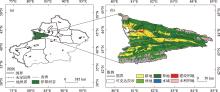
图1
伊犁河谷地区示意图 注:底图采用国家地理信息公共服务平台标准地图制作,审图号为GS(2024)0650号,对底图边界无修改。图(b)中的空白处为可克达拉市,因该市成立不久,相关数据缺少,不在本研究范围内。下同。"

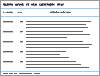
表1
水供给服务“供-需”平衡状况分级标准"
| 分类等级 | 高赤字 | 较高赤字 | 一般赤字 | 平衡 | 一般盈余 | 较高盈余 | 高盈余 |
|---|---|---|---|---|---|---|---|
| 供需比 | (-3,-2) | (-2,-1) | (-1,0) | 0 | (0,1) | (1,2) | (2,3) |
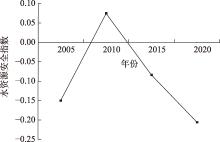
图2
2005—2020年伊犁河谷水供给服务“供-需”平衡关系的演变趋势"


图3
2005—2020年伊犁河谷地区各县市的水供给服务“供-需”平衡状况 注:霍尔果斯市统计数据始于2018年,2005—2015年水供给服务需求数据尚未被年鉴统计。"

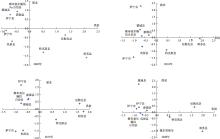
图4
2005—2020年伊犁河谷水供给服务“供-需”匹配特征"

| [1] | United Nations. Transforming Our World: The 2030 Agenda for Sustainable Development[R]. New York: United Nations, 2014: 1-41. |
| [2] | 黄治化, 赵军, 肖涵余, 等. 石羊河流域水服务供需状况及驱动因素[J]. 水土保持学报, 2021, 35(3): 228-235. |
| [Huang Zhihua, Zhao Jun, Xiao Hanyu, et al. Water service supply and demand situation and driving factors in Shiyang River Basin[J]. Journal of Soil and Water Conservation, 2021, 35(3): 228-235.] | |
| [3] |
傅伯杰, 周国逸, 白永飞, 等. 中国主要陆地生态系统服务功能与生态安全[J]. 地球科学进展, 2009, 24(6): 571-576.
doi: 10.11867/j.issn.1001-8166.2009.06.0571 |
|
[Fu Bojie, Zhou Guoyi, Bai Yongfei, et al. The main terrestrial ecosystem services and ecological security in China[J]. Advances in Earth Science, 2009, 24(6): 571-576.]
doi: 10.11867/j.issn.1001-8166.2009.06.0571 |
|
| [4] | Fu B J, Wang S, Su C H, et al. Linking ecosystem processes and ecosystem services[J]. Current Opinion in Environmental Sustainability, 2013, 5(1): 4-10. |
| [5] | 陈晓虎. 河道流域地表水资源的优势与开发使用的潜力分析[J]. 陕西水利, 2020(11): 41-43. |
| [Chen Xiaohu. Analysis on the advantages of surface water resources in river basins and the potential for development and utilization[J]. Shaanxi Water Resources, 2020(11): 41-43.] | |
| [6] | 李妮. 水资源利用与环境经济协调发展研究——评《水资源与环境经济协调发展模型及其应用研究》[J]. 人民黄河, 2019, 41(7): 163. |
| [Li Ni. Research on the coordinated development of water resources utilization and environmental economy——comment on “Research on the Coordinated Development Model of Water Resources and Environmental Economy and Its Application”[J]. Yellow River, 2019, 41(7): 163.] | |
| [7] | 颜瑜严, 杨辽, 王伟胜, 等. 伊犁河谷景观生态风险时空变化及其地形梯度分析[J]. 生态科学, 2020, 39(4): 125-136. |
| [Yan Yuyan, Yang Liao, Wang Weisheng, et al. Analysis of spatial-temporal variation of landscape ecological risk and its terrain gradient in Ili valley[J]. Ecological Science, 2020, 39(4): 125-136.] | |
| [8] |
文广超, 赵梅娟, 谢洪波, 等. 伊犁河谷西部土地植被覆盖演化及驱动力分析[J]. 干旱区研究, 2021, 38(3): 843-854.
doi: 10.13866/j.azr.2021.03.26 |
|
[Wen Guangchao, Zhao Meijuan, Xie Hongbo, et al. Analysis of land vegetation cover evolution and driving forces in the western part of the Ili River Valley[J]. Arid Zone Research, 2021, 38(3): 843-854.]
doi: 10.13866/j.azr.2021.03.26 |
|
| [9] | 杨良健, 曹开军. 新疆85个县市旅游生态安全时空格局演变及驱动机制[J]. 生态学报, 2021, 41(23): 9239-9252. |
| [Yang Liangjian, Cao Kaijun. Spatiotemporal pattern and driving mechanism of tourism ecological security in 85 counties and cities of Xinjiang[J]. Acta Ecologica Sinica, 2021, 41(23): 9239-9252.] | |
| [10] |
杨磊, 冯青郁, 陈利顶. 黄土高原水土保持工程措施的生态系统服务[J]. 资源科学, 2020, 42(1): 87-95.
doi: 10.18402/resci.2020.01.09 |
|
[Yang Lei, Feng Qingyu, Chen Liding. Ecosystem services of soil and water conservation measures on the Loess Plateau[J]. Resources Science, 2020, 42(1): 87-95.]
doi: 10.18402/resci.2020.01.09 |
|
| [11] | Wolff S, Schulp C J E, Kastner T, et al. Quantifying spatial variation in ecosystem services demand: A global mapping approach[J]. Ecological Economics, 2017, 136: 14-29. |
| [12] | Schroter M, Barton D N, Remme R P, et al. Accounting for capacity and flow of ecosystem services: A conceptual model and a case study for Telemark, Norway[J]. Ecological Indicators, 2014, 36: 539-551. |
| [13] | Nedkov S, Burkhard B. Flood regulating ecosystem services: Mapping supply and demand, in the Etropole municipality, Bulgaria[J]. Ecological Indicators, 2012, 21: 67-79. |
| [14] |
Wu W, Tang H, Yang P, et al. Scenario-based assessment of future food security[J]. Journal of Geographical Sciences, 2011, 21(1): 3-17.
doi: 10.1007/s11442-011-0825-x |
| [15] | Burkhard B, Kroll F, Nedkov S, et al. Mapping ecosystem service supply, demand and budgets[J]. Ecological Indicators, 2012, 21(3): 17-29. |
| [16] | Boithias L, Acuña V, Vergoñós L, et al. Assessment of the water supply: Demand ratios in a Mediterranean basin under different global change scenarios and mitigation alternatives[J]. Science of the Total Environment, 2014, 470: 567-577. |
| [17] | Bagstad J K, Villa F, Batker D, et al. From theoretical to actual ecosystem services: Mapping beneficiaries and spatial flows in ecosystem service assessments[J]. Ecology and Society, 2014, 19(2): 64. |
| [18] | 张欣蓉, 王晓峰, 程昌武, 等. 基于供需关系的西南喀斯特区生态系统服务空间流动研究[J]. 生态学报, 2021, 41(9): 3368-3380. |
| [Zhang Xinrong, Wang Xiaofeng, Cheng Changwu, et al. Ecosystem service flows in Karst area of China based on the relationship between supply and demand[J]. Acta Ecologica Sinica, 2021, 41(9): 3368-3380.] | |
| [19] | 章维鑫, 吴秀芹, 于洋, 等. 2005—2015年小江流域生态系统服务供需变化及对石漠化的响应[J]. 水土保持学报, 2019, 33(5): 139-150. |
| [Zhang Weixing, Wu Xiuqin, Yu Yang, et al. The changes of ecosystem services supply-demand and responses to rocky desertification in Xiaojiang Basin during 2005-2015[J]. Journal of Soil and Water Conservation, 2019, 33(5): 139-150.] | |
| [20] | 占湉, 于洋, 吴秀芹. 湟水流域生态系统服务供需匹配关系[J]. 生态学报, 2021, 41(18): 7260-7272. |
| [Zhan Tian, Yu Yang, Wu Xiuqin. Supply-demand spatial matching of ecosystem services in the Huangshui River Basin[J]. Acta Ecologica Sinica, 2021, 41(18): 7260-7272.] | |
| [21] |
朱建佳, 刘金铜, 梁红柱, 等. 太行山区水资源供需关系的垂直梯度特征[J]. 应用生态学报, 2019, 30(2): 472-480.
doi: 10.13287/j.1001-9332.201902.008 |
|
[Zhu Jianjia, Liu Jingtong, Liang Hongzhu, et al. Vertical gradients of water supply and demand in Taihang Mountains, China[J]. Chinese Journal of Applied Ecology, 2019, 30(2): 472-480.]
doi: 10.13287/j.1001-9332.201902.008 |
|
| [22] | 屠文竹, 赵文武, 刘月, 等. 基于生态系统服务供需关系的黄土高原生态修复分区[J]. 生态学报, 2024, 44(21): 9695-9707. |
| [Tu Wenzhu, Zhao Wenwu, Liu Yue, et al. Ecological restoration zoning on the Loess Plateau based on the supply and demand of ecosystem services[J]. Acta Ecologica Sinica, 2024, 44(21): 9695-9707.] | |
| [23] |
Guan Mengyuan, Zhang Qiang, Wang Baoliang, et al. Spatio-temporal evolution and flow of water provision service balance in Jinghe River Basin[J]. Journal of Resources and Ecology, 2022, 13(5): 797-812.
doi: 10.5814/j.issn.1674-764x.2022.05.005 |
| [24] | 黄云, 刘静, 郑博福, 等. 基于服务流视角的长江经济带水供给服务供需匹配特征及驱动机制[J/OL]. 环境科学,1-20 [2025-04-23]. 10.13227/j.hjkx.2024060847. |
| [Huang Yun, Liu Jing, Zheng Bofu, et al. Characteristics and driving mechanisms of matching supply and demand of water supply servicesin the Yangtze River Economic Belt based on the perspective of service flow[J/OL]. Environmental Science, 1-20 [2025-04-23]. 10.13227/j.hjkx.2024060847.] | |
| [25] | 任檬, 毛德华. 涟水流域水产出服务供需分析与服务流研究[J]. 生态科学, 2021, 40(2): 186-195. |
| [Ren Meng, Mao Dehua. Supply and demand analysis and service flow research of water production service in Lianshui River Basin[J]. Ecological Science, 2021, 40(2): 186-195.] | |
| [26] | 杨明杰, 杨广, 高普章, 等. 基于SD模型的干旱区城市水资源供需分析——以新疆克拉玛依市为例[J]. 人民长江, 2018, 49(5): 45-51, 73. |
| [Yang Mingjie, Yang Guang, Gao Puzhang, et al. Analysis of the supply and demand of water resources for city in arid region based on SD model: A case of Karamay, Xinjiang[J]. Yangtze River, 2018, 49(5): 45-51, 73.] | |
| [27] | 王宗志, 叶爱玲, 刘克琳, 等. 流域水资源供需双侧调控模型及应用[J]. 水利学报, 2021, 52(3): 265-276. |
| [Wang Zongzhi, Ye Ailing, Liu Kelin, et al. Modeling of bilateral joint regulation of basin-wide water resources supply and demand[J]. Journal of Hydraulic Engineering, 2021, 52(3): 265-276.] | |
| [28] | 官冬杰, 孙灵丽, 蒋赖寒, 等. 三峡库区水供给服务供需关系动态变化及演化趋势分析[J]. 重庆交通大学学报(自然科学版), 2023, 42(2): 75-85. |
| [Guan Dongjie, Sun Lingli, Jiang Laihan, et al. Dynamic change and evolutionary trend in the supply and demand relationship of water supply services in the Three Gorges Reservoir Area[J]. Journal of Chongqing Jiaotong University (Natural Science), 2023, 42(2): 75-85.] | |
| [29] | 刘鑫, 温天福, 曾新民, 等. 袁河流域水资源供需平衡与空间差异[J]. 南水北调与水利科技(中英文), 2020, 18(5): 94-101. |
| [Liu Xing, Wen Tianfu, Zen Xinmin, et al. Analysis and spatial differences of water supply and demand balance in Yuanhe River basin[J]. South-to-North Water Transfers and Water Science & Technology, 2020, 18(5): 94-101.] | |
| [30] | 张靖琳, 吉喜斌, 陈学亮, 等. 河西走廊中段临泽绿洲水资源供需平衡及承载力分析[J]. 干旱区地理, 2018, 41(1): 38-47. |
| [Zhang Jingling, Ji Xibing, Chen Xueliang, et al. Regional supply-demand balance and carrying capacity of water resources for Linze Oasis in the middle of Hexi Corridor[J]. Arid Land Geography, 2018, 41(1): 38-47.] | |
| [31] | 石茜茜, 张金萍, 李佳艺. 自然供水条件下灌区水资源供需时序随机模拟[J]. 人民黄河, 2018, 40(9): 148-152, 156. |
| [Shi Qianqian, Zhang Jingping, Li Jiayi. Random simulation for natural water supply time series in irrrgation area[J]. Yellow River, 2018, 40(9): 148-152, 156.] | |
| [32] | 王录仓, 高静. 基于灌区尺度的聚落与水土资源空间耦合关系研究——以张掖绿洲为例[J]. 自然资源学报, 2014, 29(11): 1888-1901. |
| [Wang Lucang, Gao Jing. Spatial coupling relationship between settlement and land and water resources based on irrigation scale—A case study of Zhangye City[J]. Journal of Natural Resources, 2014, 29(11): 1888-1901.] | |
| [33] | 蒙吉军, 汪疆玮, 王雅, 等. 基于绿洲灌区尺度的生态需水及水资源配置效率研究——黑河中游案例[J]. 北京大学学报(自然科学版), 2018, 54(1): 171-180. |
| [Meng Jijun, Wang Jiangwei, Wang Ya, et al. A study of ecological water requirement and efficiency of water allocation based on oasis irrigation area scale: A case of middle reaches of Heihe River[J]. Acta Scientiarum Naturalium Universitatis Pekinensis, 2018, 54(1): 171-180.] | |
| [34] |
杨霞, 安大维, 周鸿奎, 等. 2012—2017年伊犁河谷冬季降水日变化特征[J]. 冰川冻土, 2020, 42(2): 609-619.
doi: 10.7522/j.issn.1000-0240.2020.0054 |
|
[Yang Xia, An Dawei, Zhou Hongkui, et al. Daily variation of winter precipitation in Ili River Valley of Xinjiang from 2012 to 2017[J]. Journal of Glaciology and Geocryology, 2020, 42(2): 609-619.]
doi: 10.7522/j.issn.1000-0240.2020.0054 |
|
| [35] | 何辉, 玉素甫江·如素力. 2001—2015年伊犁地区植被NDVI变化及其影响因子的相对作用分析[J]. 中南林业科技大学学报, 2019, 39(10): 76-87. |
| [He Hui, Yusufujiang Rusuli. Analysis of the relative role of vegetation cover changes and its influencing factors in Yili area from 2001 to 2015[J]. Journal of Central South University of Forestry & Technology, 2019, 39(10): 76-87.] | |
| [36] |
黄伟豪, 兰珊, 张艺圩, 等. 伊犁河流域农户对高标准农田建设成效的评价[J]. 干旱区研究, 2025, 42(4): 766-774.
doi: 10.13866/j.azr.2025.04.16 |
|
[Huang Weihao, Lan Shan, Zhang Yiwei, et al. Evaluation of farmers’ perspective on the effectiveness of high-standard farmland construction in the Ili River Basin[J]. Arid Zone Research, 2025, 42(4): 766-774.]
doi: 10.13866/j.azr.2025.04.16 |
|
| [37] | Sharp R, Tallis H T, Ricketts T, et al. InVEST 3.2.0 User’s Guide[M]. Stanford: The Natural Capital Project, 2015. |
| [38] | Zhang L, Dawes W R, Walker G R. Response of mean annual evapotranspiration to vegetation changes at catchment scale[J]. Water Resources Research, 2001, 37(3): 701-708. |
| [39] |
严莉, 曹广超, 康利刚, 等. 基于InVEST模型的共和县生境质量时空变化及驱动因素[J]. 干旱区研究, 2024, 41(2): 314-325.
doi: 10.13866/j.azr.2024.02.14 |
|
[Yan Li, Cao Guangchao, Kang Ligang, et al. Analysis of spatial and temporal changes in habitat quality and driving factors in Gonghe County using the InVEST model[J]. Arid Zone Research, 2024, 41(2): 314-325.]
doi: 10.13866/j.azr.2024.02.14 |
|
| [40] | 欧维新, 刘翠, 陶宇. 太湖流域水供给服务供需时空演变分析[J]. 长江流域资源与环境, 2020, 29(3): 623-633. |
| [Ou Weixin, Liu Cui, Tao Yu. An analysis of spatio-temporal evolution of water supply and demand in Taihu Basin[J]. Resources and Environment in the Yangtze Basin, 2020, 29(3): 623-633.] | |
| [41] | 陈登帅, 李晶, 张渝萌, 等. 延河流域水供给服务供需平衡与服务流研究[J]. 生态学报, 2020, 40(1): 112-122. |
| [Chen Dengshuai, Li Jing, Zhang Yumeng, et al. Quantification and simulation of supply, demand and flow of water provision service in the Yanhe watershed, China[J]. Acta Ecologica Sinica, 2020, 40(1): 112-122.] | |
| [42] | Li D, Wu S, Liu L, et al. Evaluating regional water security through a freshwater ecosystem service flow model: A case study in Beijing-Tianjian-Hebei region, China[J]. Ecological Indicators, 2017, 81(10): 159-170. |
| [43] | Wang J, Zhai T L, Lin Y F, et al. Spatial imbalance and changes in supply and demand of ecosystem services in China[J]. Science of the Total Environment, 2019, 657: 781-791. |
| [44] | 董潇楠, 谢苗苗, 张覃雅, 等. 承灾脆弱性视角下的生态系统服务需求评估及供需空间匹配[J]. 生态学报, 2018, 38(18): 6422-6431. |
| [Dong Xiaonan, Xie Miaomiao, Zhang Qinya, et al. Ecosystem services demand assessment regarding disaster vulnerability andsupply-demand spatial matching[J]. Acta Ecologica Sinica, 2018, 38(18): 6422-6431.] | |
| [45] |
张城, 李晶, 周自翔. 基于水供给服务空间流动模型的渭河流域水资源安全格局[J]. 地理科学, 2021, 41(2): 350-359.
doi: 10.13249/j.cnki.sgs.2021.02.018 |
|
[Zhang Cheng, Li Jing, Zhou Zixiang. Water resources security pattern of the Weihe River Basin based on spatial flow model of water supply service[J]. Scientia Geographica Sinica, 2021, 41(2): 350-359.]
doi: 10.13249/j.cnki.sgs.2021.02.018 |
|
| [46] | 王一达, 李晶, 周自翔, 等. 基于SWAT模型的无定河流域水供给服务空间流动模拟[J]. 陕西师范大学学报(自然科学版), 2022, 50(4): 81-91. |
| [Wang Yida, Li Jing, Zhou Zixiang, et al. Simulation of water provision sercices flow in Wuding River Basin based on the SWAT model[J]. Journal of Shaanxi Normal University (Natural Science Edition), 2022, 50(4): 81-91.] | |
| [47] | 刘春芳, 王佳雪, 许晓雨. 基于生态系统服务流视角的生态补偿区域划分与标准核算——以石羊河流域为例[J]. 中国人口·资源与环境, 2021, 31(8): 157-165. |
| [Liu Chunfang, Wang Jiaxue, Xu Xiaoyu. Regional division and standard accounting of ecological compensation from the perspective of ecosystem service flow: A case study of Shiyang River Basin[J]. China Population, Resources and Environment, 2021, 31(8): 157-165.] |
| [1] | 郝潘潘, 刘志有. 新疆绿洲土地利用隐性形态与土地生态安全协调特征——以伊犁河谷为例[J]. 干旱区研究, 2024, 41(9): 1605-1614. |
| [2] | 李娜, 信会男, 赖宁, 李永福, 吕彩霞, 耿庆龙, 段婧婧, 陈署晃. 不同土地利用方式对农田土壤有机碳组分及土壤微生物量碳的影响[J]. 干旱区研究, 2024, 41(10): 1789-1796. |
| [3] | 安彬,肖薇薇,朱妮,刘宇峰. 近60 a黄土高原地区降水集中度与集中期时空变化特征[J]. 干旱区研究, 2022, 39(5): 1333-1344. |
| [4] | 冯强,赵文武,段宝玲. 生态系统服务权衡强度与供需匹配度的关联性分析——以山西省为例[J]. 干旱区研究, 2022, 39(4): 1222-1233. |
| [5] | 文广超,赵梅娟,谢洪波,张毅,张娟. 伊犁河谷西部土地植被覆盖演化及驱动力分析[J]. 干旱区研究, 2021, 38(3): 843-854. |
| [6] | 艾力哈木·艾克拉木,周金龙,张杰,魏兴,余东,陈劲松. 伊犁河谷西北部地下水化学特征及成因分析[J]. 干旱区研究, 2021, 38(2): 504-512. |
| [7] | 徐娇媚,徐文修,李大平. 近51 a伊犁河谷热量资源时空变化[J]. 干旱区研究, 2014, 31(3): 472-480. |
|
||
