
干旱区研究 ›› 2025, Vol. 42 ›› Issue (6): 1093-1102.doi: 10.13866/j.azr.2025.06.12 cstr: 32277.14.AZR.20250612
金爽( ), 任佳慧, 冯芳(), 黄巧华, 何平
收稿日期:2024-08-19
修回日期:2024-11-05
出版日期:2025-06-15
发布日期:2025-06-11
通讯作者:
冯芳. E-mail: fengfangjs2006@163.com作者简介:金爽(1983-),男,博士,讲师,主要从事生态环境评价和可持续发展研究. E-mail: jinshuang@lzb.ac.cn
基金资助:
JIN Shuang(), REN Jiahui, FENG Fang(), HUANG Qiaohua, HE Ping
Received:2024-08-19
Revised:2024-11-05
Published:2025-06-15
Online:2025-06-11
摘要:
陕甘宁地区气候舒适度评价对区域红色旅游资源开发、促进生态文明建设具有重要意义。利用陕甘宁地区1953—2020年逐日平均气温、风速、相对湿度等气象要素数据,基于气候舒适度综合评价模型,通过GIS空间插值、综合区划法对其气候舒适度时空分布特征进行了系统评价。 结果表明:时间分布上,5—9月陕甘宁地区气候总体较舒适,12月—翌年2月气候总体不舒适。空间分布上,陕北地区气候较为舒适,而西南部西海固地区较不舒适。在全球变暖背景下,年均舒适日数呈增多趋势,2000年后年均不舒适日数明显下降。综合区划上,西南部及中部高海拔区域气候较不舒适,其他地区气候较舒适。气候舒适度指数每变化1个单位,红色旅游客流量指数变化0.593%。延安因红色旅游资源丰富、气候适宜,其吸引力指数远超其他地区。未来需动态优化红色旅游规划,以适应气候变化和游客需求。研究为区域旅游开发和红色旅游活动提供了参考。
金爽, 任佳慧, 冯芳, 黄巧华, 何平. 基于GIS的陕甘宁地区红色旅游气候舒适度评价[J]. 干旱区研究, 2025, 42(6): 1093-1102.
JIN Shuang, REN Jiahui, FENG Fang, HUANG Qiaohua, HE Ping. Evaluation of climate comfort for red tourism in the Shaanxi-Gansu-Ningxia Region based on GIS[J]. Arid Zone Research, 2025, 42(6): 1093-1102.
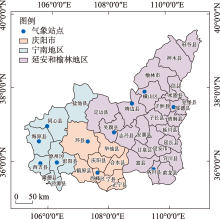
图1
陕甘宁地区示意图"

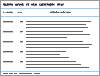
表1
气候舒适度指数分级"
| CCI取值 | 体感 | 级别 |
|---|---|---|
| CCI≤3.36 | 最舒适 | 1级 |
| 3.36<CCI≤6.92 | 较舒适 | 2级 |
| 6.92<CCI≤17.52 | 正常 | 3级 |
| 17.52<CCI≤22.52 | 较不舒适 | 4级 |
| CCI>22.52 | 最不舒适 | 5级 |

图2
1953—2020年陕甘宁地区各月平均舒适度指数"

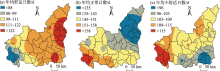
图3
1953—2020年陕甘宁地区气候舒适度指数空间分布"


图4
1953—2020年陕甘宁地区气候舒适度指数线性倾向率空间分布"


图5
1953—2020年陕甘宁地区气候舒适度指数M-K检验"

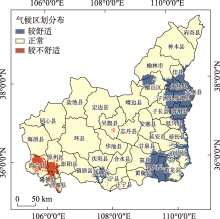
图6
陕甘宁地区气候舒适度综合区划"

| [1] | IPCC. Climate change 2021: The Physical Science Basis[R]. Cambridge University: IPCC, 2021. |
| [2] | Brunt D. Climate and human comfort[J]. Nature, 1945, 155(3941): 559-564. |
| [3] | Yao X Y, Zhang M J, Zhang Y, et al. Research on evaluation of climate comfort in Northwest China under climate change[J]. Sustainability, 2021, 13: 10111. |
| [4] | Zhang J T, Ren G Y, You Q L. Detection and projection of climatic comfort changes in China’s mainland in a warming world[J]. Advances in Climate Change Research, 2022, 13(4): 507-516. |
| [5] | Solaimani K, Ahmadi S B, Shokrian F. The spatiotemporal trend changes of extreme temperature-humidity variables and their impact on climatic comfort changes[J]. Ecological Indicators, 2024, 158: 111629. |
| [6] | 张辉. 旅游气候舒适度评价研究——以内蒙古自治区为例[D]. 上海: 上海师范大学, 2013. |
| [Zhang Hui. Tourism Climate Comfortableness Evaluation: A Case Study of Inner Mongolia[D]. Shanghai: Shanghai Normal University, 2013.] | |
| [7] | Cheng Q P, Zhong F L. Evaluation of tourism climate comfort in the Grand Shangri-La region[J]. Journal of Mountain Science, 2019, 16(6): 1452-1469. |
| [8] |
荣培君, 张荣荣, 赵现红. 中国气候舒适度时空演变及其对旅游业的影响[J]. 世界地理研究, 2024, 33(7): 139-149.
doi: 10.3969/j.issn.1004-9479.2024.07.20222103 |
|
[Rong Peijun, Zhang Rongrong, Zhao Xianhong. Spatial and temporal evolution of climate comfort index in China and its impact on tourism[J]. World Regional Studies, 2024, 33(7): 139-149.]
doi: 10.3969/j.issn.1004-9479.2024.07.20222103 |
|
| [9] | 官景得, 王咏青, 孙银川, 等. 近39 a宁夏旅游气候适宜期及变化分析[J]. 干旱区地理, 2020, 43(2): 339-348. |
| [Guan Jingde, Wang Yongqing, Sun Yinchuan, et al. Suitable period and change of tourism climate in Ningxia in the past 39 years[J]. Arid Land Geography, 2020, 43(2): 339-348.] | |
| [10] | 马丽君, 孙根年. 中国西部热点城市旅游气候舒适度[J]. 干旱区地理, 2009, 32(5): 791-797. |
| [Ma Lijun, Sun Gennian. Evaluation of climate comfort index for tourism hot-spot cities in west China[J]. Arid Land Geography, 2009, 32(5): 791-797.] | |
| [11] | 陈海英, 安莉娟, 代海燕, 等. 乌兰察布市草原景区旅游气候舒适度评价[J]. 草业科学, 2024, 41(9): 2181-2189. |
| [Chen Haiying, An Lijuan, Dai Haiyan, et al. Evaluation of tourism climate comfort of grassland scenic spots in Uanqab City[J]. Pratacultural Science, 2024, 41(9): 2181-2189.] | |
| [12] |
曹伟宏, 王淑新. 京津冀地区城市人居环境气候舒适性评价[J]. 冰川冻土, 2017, 39(2): 435-442.
doi: 10.7522/j.issn.1000-0240.2017.0050 |
|
[Cao Weihong, Wang Shuxin. Evaluation of climate suitability for urban human settlement in Beijing-Hebei region[J]. Journal of Glaciology and Geocryology, 2017, 39(2): 435-442.]
doi: 10.7522/j.issn.1000-0240.2017.0050 |
|
| [13] | 胡琳, 胡淑兰, 苏静, 等. 陕西省人体舒适度变化及其对气象因子的响应[J]. 干旱区研究, 2019, 36(6): 1450-1456. |
| [Hu Lin, Hu Shulan, Su Jing, et al. Variation of comfort index of human body and its response to meteorological factors in Shaanxi Province[J]. Arid Zone Research, 2019, 36(6): 1450-1456.] | |
| [14] | 曹伟宏, 何元庆, 李宗省, 等. 云南丽江旅游气候舒适度分析[J]. 冰川冻土, 2012, 34(1): 201-206. |
| [Cao Weihong, He Yuanqing, Li Zongxing, et al. Evaluation of the tourism climate comfort index in Lijiang City, Yunnan[J]. Journal of Glaciology and Geocryology, 2012, 34(1): 201-206.] | |
| [15] | 张可心. 1981—2018年庆阳市气候舒适度特征分析及评价[J]. 干旱区地理, 2020, 43(5): 1270-1277. |
|
[Zhang Kexin. Analysis and evaluation of climate comfort characteristics in Qingyang from 1981 to 2018[J]. Arid Land Geography, 2020, 43(5): 1270-1277.]
doi: 10.12118/j.issn.1000-6060.2020.05.12 |
|
| [16] | 任佳慧, 冯芳, 黄巧华, 等. 淮海经济区人居环境气候舒适性评价[J]. 江苏师范大学学报(自然科学版), 2023, 41(2): 67-71. |
| [Ren Jiahui, Feng Fang, Huang Qiaohua, et al. Climate comfort assessment of human settlement environment in Huaihai Economic Zone[J]. Journal of Jiangsu Normal University (Natural Science Edition), 2023, 41(2): 67-71.] | |
| [17] | 张曼义, 丁国香, 华梦飞, 等. 安徽省气候舒适度评价及旅游资源潜力分析[J]. 海洋湖沼通报, 2022, 44(6): 89-96. |
| [Zhang Manyi, Ding Guixiang, Hua Mengfei, et al. Evaluation of climate comfort analysis on tourism resources potential in Anhui Province[J]. Transactions of Oceanology and Limnology, 2022, 44(6): 89-96.] | |
| [18] |
王胜, 田红, 谢五三, 等. 近50年安徽省气候舒适度变化特征及区划研究[J]. 地理科学进展, 2012, 31(1): 40-45.
doi: 10.11820/dlkxjz.2012.01.006 |
|
[Wang Sheng, Tian Hong, Xie Wusan, et al. A study on variations and comprehensive zoning of climate comfort degree in Anhui Province in the past 50 years[J]. Progress in Geography, 2012, 31(1): 40-45.]
doi: 10.11820/dlkxjz.2012.01.006 |
|
| [19] |
张群慧, 常亮, 顾小凡, 等. 1979—2020年柴达木盆地人体舒适度指数时空变化及趋势分析[J]. 干旱区研究, 2024, 41(8): 1300-1308.
doi: 10.13866/j.azr.2024.08.04 |
|
[Zhang Qunhui, Chang Liang, Gu Xiaofan, et al. Spatial-temporal variations and trends in the human body comfort index in the Qaidam Basin, China, during 1979-2020[J]. Arid Zone Research, 2024, 41(8): 1300-1308.]
doi: 10.13866/j.azr.2024.08.04 |
|
| [20] |
李积宏, 周刊社, 张东东, 等. 西藏高原人体舒适度指数时空变化特征分析[J]. 干旱区地理, 2024, 47(6): 980-992.
doi: 10.12118/j.issn.1000-6060.2023.224 |
|
[Li Jihong, Zhou Kanshe, Zhang Dongdong, et al. Spatial and temporal variation characteristics of comfort index of human body in Xizang Plateau[J]. Arid Land Geography, 2024, 47(6): 980-992.]
doi: 10.12118/j.issn.1000-6060.2023.224 |
|
| [21] |
高家骥, 李鸿奎, 白芝珍, 等. GIS支持下的东北三省人居环境气候舒适度分异及影响因素分析[J]. 测绘通报, 2022(6): 148-153.
doi: 10.13474/j.cnki.11-2246.2022.0188. |
|
[Gao Jiaji, Li Hongkui, Bai Zhizhen, et al. Analysis of climate suitability pattern and influencing factors of human settlements in the three provinces of Northeast China based on GIS[J]. Bulletin of Surveying and Mapping, 2022(6): 148-153.]
doi: 10.13474/j.cnki.11-2246.2022.0188. |
|
| [22] |
曹开军, 杨兆萍, 孟现勇, 等. 基于栅格尺度的阿勒泰地区旅游气候舒适度评价[J]. 冰川冻土, 2015, 37(5): 1420-1427.
doi: 10.7522/j.isnn.1000-0240.2015.0157 |
|
[Cao Kaijun, Yang Zhaoping, Meng Xianyong, et al. An evaluation of tourism climate suitability in Altay Prefecture[J]. Journal of Glaciology and Geocryology, 2015, 37(5): 1420-1427.]
doi: 10.7522/j.isnn.1000-0240.2015.0157 |
|
| [23] | 邱粲, 曹洁, 林隆超, 等. 基于GIS的山东省旅游气候舒适度精细化评估[J]. 资源科学, 2013, 35(12): 2501-2506. |
| [Qiu Can, Cao Jie, Lin Longchao, et al. Estimation and evaluation of tourism climatic comfort levels in Shandong based on GIS[J]. Resources Science, 2013, 35(12): 2501-2506.] | |
| [24] |
任国平, 郑慧开, 汤放华, 等. 基于转化效率的资源型省份红色旅游经济高质量发展[J]. 自然资源学报, 2023, 38(3): 576-600.
doi: 10.31497/zrzyxb.20230302 |
|
[Ren Guoping, Zheng Huikai, Tang Fanghua, et al. High-quality development of red tourism economy in resourceful province based on resource transformation efficiency[J]. Journal of Natural Resources, 2023, 38(3): 576-600.]
doi: 10.31497/zrzyxb.20230302 |
|
| [25] | 杜涛, 白凯, 黄清燕, 等. 红色旅游资源的社会建构与核心价值[J]. 旅游学刊, 2022, 37(7): 16-26. |
| [Du Tao, Bai Kai, Huang Qingyan, et al. Social construction and core values of red tourism resources[J]. Tourism Tribune, 2022, 37(7): 16-26.] | |
| [26] | 常学礼, 赵爱芬, 李胜功. 生态脆弱带的尺度与等级特征[J]. 中国沙漠, 1999, 19(2): 20-24. |
| [Chang Xueli, Zhao Aifen, Li Shenggong. Spatial-temporal scale and hierarchy of vulnerable ecotone[J]. Journal of Desert Research, 1999, 19(2): 20-24.] | |
| [27] | 赵安周, 张安兵, 赵延旭, 等. 基于MODIS NDVI数据的陕甘宁地区植被覆盖时空变化及其对极端气候的响应[J]. 水土保持研究, 2018, 25(3): 224-231. |
| [Zhao Anzhou, Zhang Anbing, Zhao Yanxu, et al. Spatiotemporal changes of vegetation in the Shaanxi-Gansu-Ningxia region and response to climatic extremes based on MODIS NDVI data[J]. Research of Soil and Water Conservation, 2018, 25(3): 224-231.] | |
| [28] |
孙梦华, 牛文浩, 张蚌蚌, 等. 黄河流域土地利用变化下生态系统服务价值时空演变及其响应——以陕甘宁地区为例[J]. 应用生态学报, 2021, 32(11): 3913-3922.
doi: 10.13287/j.1001-9332.202111.016 |
|
[Sun Menghua, Niu Wenhao, Zhang Bangbang, et al. Spatial-temporal evolution and responses of ecosystem service value under land use change in the Yellow River Basin: A case study of Shaanxi-Gansu-Ningxia region,Northwest China[J]. Chinese Journal of Applied Ecology, 2021, 32(11): 3913-3922.]
doi: 10.13287/j.1001-9332.202111.016 |
|
| [29] |
芦佳玉, 延军平, 王鹏涛, 等. 全球气候变暖背景下陕甘宁地区风速时空变化特征[J]. 中国沙漠, 2017, 37(3): 554-560.
doi: 10.7522/j.issn.1000-694X.2016.00114 |
|
[Lu Jiayu, Yan Junping, Wang Pengtao, et al. Wind speed change characteristics of Shaanxi-Gansu-Ningxia area in 1960-2014[J]. Journal of Desert Research, 2017, 37(3): 554-560.]
doi: 10.7522/j.issn.1000-694X.2016.00114 |
|
| [30] | 杨新, 延军平. 陕甘宁地区气候暖干化趋势分析[J]. 干旱区研究, 2002, 19(3): 67-70. |
| [Yang Xin, Yan Junping. Analysis on the climatic warming-drying trend in the juncture of Shaanxi and Gansu Provinces and Ningxia Hui Autonomous Region[J]. Arid Zone Research, 2002, 19(3): 67-70.] | |
| [31] | 王晓冬. 陕甘宁地区气候变化及相关影响分析[J]. 干旱区地理, 2004, 27(1): 24-28. |
| [Wang Xiaodong. Climate change in Shaan-Gan-Ning area and its impacts analysis[J]. Arid Land Geography, 2004, 27(1): 24-28.] | |
| [32] | 彭春香. 陕甘宁红色旅游资源空间分布及跨域整合治理研究[D]. 西安: 西安建筑科技大学, 2023. |
| [Peng Chunxiang. Study on Spatial Distribution and Cross-domain Integrated Management of Red tourism Resources in Shaanxi-Gansu-Ningxia[D]. Xi’an: Xi’an University of Architecture and Technology, 2023.] | |
| [33] | 延安市统计局. 延安统计年鉴[M]. 2000-2019. |
| [Yan’an Bureau of Statistics. Yan’an Statistical Yearbook[M]. 2000-2019.] | |
| [34] | 张陇堂. 陕甘宁共推红色旅游线路[N]. 中国旅游报, 2009-09-30( 003). |
| [Zhang Longtang. Shaanxi, Gansu and Ningxia jointly promote red tourism routes[N]. China Tourism News, 2009-09-30( 003).] | |
| [35] | 马耀峰, 李旭, 梁雪松, 等. 陕西红色旅游发展战略研究[J]. 西北大学学报(哲学社会科学版), 2005, (4): 22-26. |
| [Ma Yaofeng, Li Xu, Liang Xuesong, et al. A Study on the strategies of developing red-tourism in Shaanxi Province[J]. Journal of Northwest University (Philosophy and Social Sciences Edition), 2005, (4): 22-26.] | |
| [36] |
卢珊, 王百朋, 张宏芳. 1971—2010年陕西省气候舒适度变化特征及区划[J]. 干旱气象, 2015, 33(6): 987-993.
doi: 10.11755/j.issn.1006-7639(2015)-06-0987 |
| [Lu Shan, Wang Baipeng, Zhang Hongfang. Variation characteristics and comprehensive division of climate comfort degree from 1971 to 2010 in Shaanxi Province[J]. Journal of Arid Meteorology, 2015, 33(6): 987-993.] | |
| [37] | 雷杨娜, 张侠, 赵晓萌. 1971—2018 年陕西省人体舒适度时空分布特征研究[J]. 干旱区地理, 2020, 43(6): 1417-1425. |
|
[Lei Yangna, Zhang Xia, Zhao Xiaomeng. Spatial-temporal distribution characteristics of comfort index of human body in Shaanxi Province from 1971 to 2018[J]. Arid Land Geography, 2020, 43(6): 1417-1425.]
doi: 10.12118/j.issn.1000-6060.2020.06.02 |
|
| [38] | 马丽君. 中国典型城市旅游气候舒适度及其与客流量相关性分析[D]. 西安: 陕西师范大学, 2012. |
| [Ma Lijun. Tourism Climate Comfort and Its Correlation with Tourist Flow in Typical Chinese Cities[D]. Xi’an: Shaanxi Normal University, 2012.] |
| No related articles found! |
|
||
