
干旱区研究 ›› 2025, Vol. 42 ›› Issue (7): 1257-1268.doi: 10.13866/j.azr.2025.07.09 cstr: 32277.14.AZR.20250709
严应存1,2( ), 孙树娇1,2, 余迪3, 高贵生4
收稿日期:2024-07-24
修回日期:2025-04-08
出版日期:2025-07-15
发布日期:2025-07-07
作者简介:严应存(1974-),女,正研级高级工程师,主要从事农业气象研究与服务工作. E-mail: yanyingcun@sohu.com
基金资助:
YAN Yingcun1,2(), SUN Shujiao1,2, YU Di3, GAO Guisheng4
Received:2024-07-24
Revised:2025-04-08
Published:2025-07-15
Online:2025-07-07
摘要: 探究柴达木盆地植被绿度变化气候影响定量预评估,有助于统筹推进山水林田湖草沙气一体化保护和系统治理。本文基于MODIS NDVI数据、气象数据、气候变化预估数据集,监测了2000—2023年柴达木盆地NDVI≤0.3的植被绿度变化,分析了不同绿度植被气候驱动因素,预估了未来不同绿度植被变化趋势。结果表明:近24 a来,柴达木盆地Ⅰ、Ⅱ和Ⅲ植被分别占低绿度植被的49.33%、19.81%、30.86%,其中植被面积Ssum、SⅠ、SⅡ极显著减少(P<0.001),SⅢ极显著增加,植被明显趋好;水热条件对低绿度植被的降水影响2~3 a、气温5 a的累积效应显著(P<0.01)大于当年,暖湿化气候促进草地良性发展;未来RCP2.6、RCP4.5、RCP8.5三种排放情景下,柴达木盆地低绿度植被总体呈减少趋势,未来气候条件有利于植被恢复和扩展。该研究结果可为柴达木盆地生态环境保护和荒漠化治理措施的制定提供科学依据。
严应存, 孙树娇, 余迪, 高贵生. 气候变化对柴达木盆地植被绿度的影响及趋势预估[J]. 干旱区研究, 2025, 42(7): 1257-1268.
YAN Yingcun, SUN Shujiao, YU Di, GAO Guisheng. Impact and trend estimation of climate change on vegetation greenness in the Qaidam Basin[J]. Arid Zone Research, 2025, 42(7): 1257-1268.
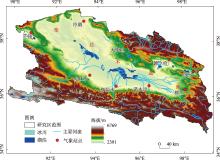
图1
柴达木盆地研究区域示意图"

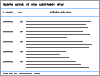
表1
柴达木盆地植被绿度划分等级"
| 等级 | 植被绿度 | 植被NDVI | 面积/km2 | R | G | B | 颜色 |
|---|---|---|---|---|---|---|---|
| Ⅰ级 | 褐 | <0.08 | SⅠ | 115 | 0 | 0 | |
| Ⅱ级 | 橙 | 0.08~0.12 | SⅡ | 230 | 152 | 0 | |
| Ⅲ级 | 黄 | 0.13~0.3 | SⅢ | 255 | 255 | 115 | |
| Ⅳ级 | 绿 | >0.3 | 152 | 230 | 0 |
表2
2000—2023年柴达木盆地气温、降水变化气候倾向率"
| 站点 | 平均降水/mm | 降水倾向率 /[mm·(10a)-1] | 相关系数 | 站点 | 平均气温/℃ | 气温倾向率 /[℃·(10a)-1] | 相关系数 |
|---|---|---|---|---|---|---|---|
| 茫崖 | 48.1 | 1.31 | 0.04 | 茫崖 | 4.4 | 0.08 | 0.13 |
| 冷湖 | 19.1 | 1.45 | 0.12 | 冷湖 | 3.6 | 0.14 | 0.2 |
| 小灶火 | 31.6 | 5.07 | 0.19 | 小灶火 | 5.1 | 0.06 | 0.11 |
| 大柴旦 | 101.7 | -1.48 | -0.03 | 大柴旦 | 3.2 | 0.22 | 0.34 |
| 格尔木 | 47.6 | 5.81 | 0.22 | 格尔木 | 6.5 | 0.11 | 0.21 |
| 诺木洪 | 53 | 0.79 | 0.02 | 诺木洪 | 6 | 0.23 | 0.41* |
| 德令哈 | 238.4 | 17.09 | 0.18 | 德令哈 | 4.9 | 0.01 | 0.01 |
| 乌兰 | 222.9 | 28.12 | 0.36* | 乌兰 | 4.3 | 0.17 | 0.32 |
| 都兰 | 246.3 | 13.41 | 0.16 | 都兰 | 3.9 | 0.08 | 0.14 |
| 平均 | 112.1 | 7.95 | 0.21 | 平均 | 4.7 | 0.12 | 0.23 |
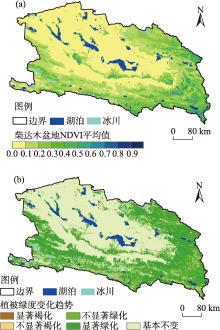
图2
2000—2023年柴达木盆地NDVI平均值(a)和植被绿度变化趋势(b)"

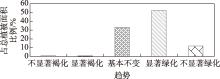
图3
2000—2023年柴达木盆地绿度变化趋势占总植被面积比例"

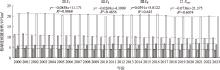
图4
2000—2023年柴达木盆地不同等级绿度植被年际变化"

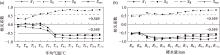
图5
2000—2020年柴达木盆地不同绿度植被分别与平均气温(a)和降水(b)的相关系数 注:+0.549和-0.549表示通过0.05显著性检验水平的相关系数; T s a 、 T d a 、 T 2 a 、 T 3 a … T 11 a 和 R s a 、 R d a 、 R 2 a 、 R 3 a … R 11 a分别表示柴达木盆地9站平均气温(℃)和降水量(mm)上年、当年、近2 a…11 a滑动平均。"

表3
柴达木盆地不同绿度植被气候模拟模型"
| 序号 | 模拟模型 | R | F | Sig |
|---|---|---|---|---|
| 1 | 0.829 | 41.730 | 0.0000 | |
| 2 | 0.775 | 13.544 | 0.0003 | |
| 3 | 0.924 | 110.846 | 0.0000 | |
| 4 | 0.760 | 25.988 | 0.0000 |
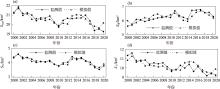
图6
2000—2020年柴达木盆地不同NDVI植被气候模拟模型回代试报检验"

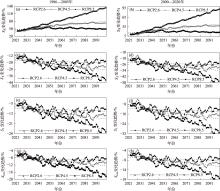
图7
2021—2100年不同排放情景下不同绿度植被较基准值变化过程"

表4
柴达木盆地不同绿度植被气候模拟变化趋势"
| 时段 | SⅢ植被面积与1986—2005年基准值比 | SⅢ植被面积与2000—2020年实测值比 | ||||
|---|---|---|---|---|---|---|
| RCP2.6 | RCP4.5 | RCP8.5 | RCP2.6 | RCP4.5 | RCP8.5 | |
| 2021—2040年 | 5.119 | 9.723 | 11.224 | 4.501 | 8.549 | 9.870 |
| 2041—2070年 | 0.681 | 5.138 | 11.701 | 0.599 | 4.518 | 10.289 |
| 2071—2100年 | -1.288 | 0.842 | 13.703 | -1.133 | 0.740 | 12.049 |
| 时段 | SⅠ植被面积与1986—2005年基准值比 | SⅠ植被面积与2000—2020年实测值比 | ||||
| RCP2.6 | RCP4.5 | RCP8.5 | RCP2.6 | RCP4.5 | RCP8.5 | |
| 2021—2040年 | -0.664 | -3.891 | -3.289 | -0.696 | -4.040 | -3.448 |
| 2041—2070年 | -1.723 | -1.241 | -1.817 | -1.805 | -1.289 | -1.904 |
| 2071—2100年 | 0.699 | -0.052 | -3.387 | 0.733 | -0.054 | -3.550 |
| 时段 | SⅡ植被面积与1986—2005年基准值比 | SⅡ植被面积与2000—2020年实测值比 | ||||
| RCP2.6 | RCP4.5 | RCP8.5 | RCP2.6 | RCP4.5 | RCP8.5 | |
| 2021—2040年 | -0.826 | -4.852 | -4.092 | -0.876 | -5.087 | -4.341 |
| 2041—2070年 | -2.143 | -1.548 | -2.261 | -2.273 | -1.623 | -2.398 |
| 2071—2100年 | 0.870 | -0.065 | -4.214 | 0.923 | -0.068 | -4.469 |
| 时段 | Ssum植被面积与1986—2005年基准值比 | Ssum植被面积与2000—2020年实测值比 | ||||
| RCP2.6 | RCP4.5 | RCP8.5 | RCP2.6 | RCP4.5 | RCP8.5 | |
| 2021—2040年 | -0.368 | -2.149 | -1.824 | -0.378 | -2.193 | -1.872 |
| 2041—2070年 | -0.955 | -0.686 | -1.008 | -0.980 | -0.700 | -1.034 |
| 2071—2100年 | 0.388 | -0.029 | -1.878 | 0.398 | -0.029 | -1.927 |
| [1] | 陈燕丽, 龙步菊, 潘学标, 等. 基于MODIS NDVI和气候信息的草原植被变化监测[J]. 应用气象学报, 2010, 21(2): 229-236. |
| [Chen Yanli, Long Buju, Pan Xuebiao, et al. Grassland vegetation change based on MODIS NDVI data and climate information[J]. Journal of Applied Meteorological Science, 2010, 21(2): 229-236.] | |
| [2] | 谢佩君, 宋小燕, 孙文义, 等. 基于GEE的黄土高原植被绿度线推移变化研究[J]. 中国环境科学, 2023, 43(12): 6518-6529. |
| [Xie Peijun, Song Xiaoyan, Sun Wenyi, et al. Research on the shift change of vegetation greenness line in the Loess Plateau based on GEE[J]. China Environmental Science, 2023, 43(12): 6518-6529.] | |
| [3] | 刘爽, 宫鹏. 2000—2010年中国地表植被绿度变化[J]. 科学通报, 2012, 57(16): 1423-1434. |
| [Liu Shuang, Gong Peng. Change of surface cover greenness in China between 2000 and 2010[J]. Science Bulletin, 2012, 57(16): 1423-1434.] | |
| [4] | 包岩, 田野, 柳彩霞, 等. 中国东部草原植被绿度时空变化分析及其对煤电基地建设的响应[J]. 生态学报, 2018, 38(15): 5423-5433. |
| [Bao Yan, Tian Ye, Liu Caixia, et al. Spatial and temporal variation analysis of vegetation greenness in grassland of eastern China and its response on the construction of coal and electricity base[J]. Acta Ecologica Sinica, 2018, 38(15): 5423-5433.] | |
| [5] | 张宇, 余振, 栾军伟, 等. 1982—2020年东北森林带植被绿度时空变化特征[J]. 生态学报, 2023, 43(16): 6670-6681. |
| [Zhang Yu, Yu Zhen, Luan Junwei, et al. Spatiotemporal variations of vegetation greenness in the forest belt of Northeast China during 1982-2020[J]. Acta Ecologica Sinica, 2023, 43(16): 6670-6681.] | |
| [6] | 徐至真, 王建萍, 韩积斌. 基于SRP模型的柴达木盆地生态脆弱性评价[J]. 盐湖研究, 2024, 32(3): 53-60. |
| [Xu Zhizhen, Wang Jianping, Han Jibin. Ecological vulnerability assessment of the Qaidam Basin based on SRP model[J]. Journal of Salt Lake Research, 2024, 32(3): 53-60.] | |
| [7] |
杨海娇, 魏加华, 任倩慧. 柴达木盆地典型流域地表水-地下水转化关系及水化学特征[J]. 干旱区研究, 2022, 39(5): 1543-1554.
doi: 10.13866/j.azr.2022.05.19 |
|
[Yang Haijiao, Wei Jiahua, Ren Qianhui. Interaction between surface water and groundwater and hydr-ochemical characteristics in the typical watersheds of the Qaidam Basin[J]. Arid Zone Research, 2022, 39(5): 1543-1554.]
doi: 10.13866/j.azr.2022.05.19 |
|
| [8] |
文广超, 李兴, 吴冰洁, 等. 基于Landsat影像的柴达木盆地湖泊提取方法[J]. 干旱区研究, 2022, 39(3): 774-786.
doi: 10.13866/j.azr.2022.03.11 |
|
[Wen Guangchao, Li Xing, Wu Bingjie, et al. An automatic method for delineating lake surfaces in Qaidam Basin usingLandsat images[J]. Arid Zone Research, 2022, 39(3): 774-786.]
doi: 10.13866/j.azr.2022.03.11 |
|
| [9] | 唐文家, 张紫萍, 张志军, 等. 2000—2020年青海省生态环境质量时空变化[J]. 环境科学与技术, 2023, 46(5): 229-237. |
| [Tang Wenjia, Zhang Ziping, Zhang Zhijun, et al. Spatial-temporal changes of ecological environment quality in Qinghai Province from 2000 to 2020[J]. Environmental Science & Technology, 2023, 46(5): 229-237.] | |
| [10] |
王远征, 马启民, 贾晓鹏. 柴达木盆地灌木林地和高寒草甸蒸散发特征研究[J]. 高原气象, 2023, 42(3): 785-794.
doi: 10.7522/j.issn.1000-0534.2022.00055 |
|
[Wang Yuanzheng, Ma Qimin, Jia Xiaopeng. Evapotranspiration characteristics of shrub land and alpine meadow in Qaidam Basin[J]. Plateau Meteorology, 2023, 42(3): 785-794.]
doi: 10.7522/j.issn.1000-0534.2022.00055 |
|
| [11] |
金晓媚, 夏薇, 郭任宏. 柴达木河都兰区植被覆盖率变化特征[J]. 中国沙漠, 2014, 34(2): 603-609.
doi: 10.7522/j.issn.1000-694X.2013.00354 |
|
[Jin Xiaomei, Xia Wei, Guo Renhong. Variation of vegetation coverage in the Dulan area of Qaidam River Basin[J]. Journal of Desert Research, 2014, 34(2): 603-609.]
doi: 10.7522/j.issn.1000-694X.2013.00354 |
|
| [12] | 李艳丽, 杨太保, 曾彪. 基于MODIS数据的柴达木盆地南缘绿洲土地覆盖动态变化研究[J]. 中国沙漠, 2011, 31(1): 34-42. |
| [Li Yanli, Yang Taibao, Zeng Biao. Land cover change of southern fringe oasis in the Qaidam Basin from 2000 to 2009 based on MODIS data[J]. Journal of Desert Research, 2011, 31(1): 34-42.] | |
| [13] | 李学敏, 周定文, 范广洲, 等. 青藏高原冬季NDVI与西南地区夏季气温的滞后关系[J]. 应用气象学报, 2008, 19(2): 161-170. |
| [Li Xuemin, Zhou Dingwen, Fan Guangzhou, et al. The lag relationship between winter NDVI over Tibetan Plateauand temperature of the Southwest China[J]. Journal of Applied Meteorological Science, 2008, 19(2): 161-170.] | |
| [14] | 范广洲, 周定文, 黄荣辉, 等. 我国夏季降水与青藏高原春季NDVI的关系[J]. 应用气象学报, 2009, 20(4): 492-496. |
| [Fan Guangzhou, Zhou Dingwen, Huang Ronghui, et al. The relationship between summer precipitation in China and spring NDVI over the Qinghai-Xizang Plateau[J]. Journal of Applied Meteorology Science, 2009, 20(4): 492-496.] | |
| [15] | 王永立, 范广洲, 周定文, 等. 我国东部地区NDVI与气温、降水的关系研究[J]. 热带气象学报, 2009, 25(6): 725-732. |
| [Wang Yongli, Fan Guangzhou, Zhou Dingwen, et al. Study on the relationship between NDVI, temperature, and precipitation in Eastern China[J]. Journal of Tropical Meteorology, 2009, 25(6): 725-732.] | |
| [16] | 侯光雷, 刘德赢, 张正祥, 等. 松嫩平原不同气候区植被NDVI对气候变化的响应[J]. 中国农业气象, 2012, 33(2): 271-277. |
| [Hou Guanglei, Liu Deying, Zhang Zhengxiang, et al. Response of NDVI in different climatic zone to climate change in Songnen Plain[J]. Chinese Journal of Agrometeorology, 2012, 33(2): 271-277.] | |
| [17] | 吴运力, 张钰, 田佳榕. 气候变化和人类活动对内蒙古高原不同植被类型NDVI的影响[J]. 中国农业气象, 2023, 44(12): 1155-1168. |
|
[Wu Yunli, Zhang Yu, Tian Jiarong. Impacts by climate change and human activities on NDVI in different vegetation types across the Inner Mongolia Plateau[J]. Chinese Journal of Agrometeorology, 2023, 44(12): 1155-1168.]
doi: 10.3969/j.issn.1000-6362.2023.12.008 |
|
| [18] |
赵美亮, 曹广超, 曹生奎, 等. 1980—2017年青海省地表温度时空变化特征[J]. 干旱区研究, 2021, 38(1): 178-187.
doi: 10.13866/j.azr.2021.01.19 |
|
[Zhao Meiliang, Cao Guangchao, Cao Shengkui, et al. Spatial-temporal variation characteristics of land surface temperature in Qinghai Province from 1980 to 2017[J]. Arid Zone Research, 2021, 38(1): 178-187.]
doi: 10.13866/j.azr.2021.01.19 |
|
| [19] |
郝爱华, 薛娴, 尤全刚, 等. 青藏高原近60年降水变化研究进展[J]. 中国沙漠, 2023, 43(2): 43-52.
doi: 10.7522/j.issn.1000-694X.2022.00113 |
|
[Hao Aihua, Xue Xian, You Quangang, et al. Review on precipitation change over the Qinghai-Xizang Plateau in recent 60 years[J]. Journal of Desert Research, 2023, 43(2): 43-52.]
doi: 10.7522/j.issn.1000-694X.2022.00113 |
|
| [20] | 许婉彤, 曾彪, 李博, 等. 柴达木盆地气候变化区域性特征及其影响因素[J]. 兰州大学学报(自然科学版), 2019, 55(3): 357-372. |
| [Xu Wantong, Zeng Biao, Li Bo, et al. Regional differentiation of climate changes in Qaidam Basin and its influencing factors[J]. Journal of Lanzhou University (Natural Science Edition), 2019, 55(3): 357-372.] | |
| [21] | 张旺雄, 刘普幸. 1961—2017年柴达木盆地干湿状况及其影响因子[J]. 干旱区研究, 2019, 36(6): 1391-1400. |
| [Zhang Wangxiong, Liu Puxing. Surface humid situation and its affecting factors in the Qaidam Basin from 1961 to 2017[J]. Arid Zone Research, 2019, 36(6): 1391-1400.] | |
| [22] | 曾方明, 董博, 张西营. 青藏高原东北部60多年来的气候暖湿化: 来自德令哈水文气候的记录[J]. 盐湖研究, 2024, 32(4): 32-39. |
| [Zeng Fangming, Dong Bo, Zhang Xiying. Warming and humidification of climate on the northeastern Qinghai-Xizang plateau over the past 60 years: Evidence from hydroclimatic records of Delingha[J]. Journal of Salt Lake Research, 2024, 32(4): 32-39.] | |
| [23] | 霍佳璇, 任梁, 潘莹萍, 等. 柴达木盆地荒漠植物功能性状及其对环境因子的响应[J]. 生态学报, 2022, 42(11): 4494-4503. |
| [Huo Jiaxuan, Ren Liang, Pan Yingpeng, et al. Functional traits of desert plants and their responses to environmental factors in Qaidam Basin, China[J]. Acta Ecologica Sinica, 2022, 42(11): 4494-4503.] | |
| [24] | 陈犇. 青藏高原高寒草地对气候变化的敏感性及其调控机制[D]. 石家庄: 河北师范大学, 2023. |
| [Chen Ben. Regulatory Mechanisms under Alpine Grasslands Sensitivity to Climate Change on the Qinghai-Xizang Plateau[D]. Shijiazhuang: Hebei Normal University, 2023.] | |
| [25] | 曹旭娟, 干珠扎布, 胡国铮, 等. 基于NDVI3g数据反演的青藏高原草地退化特征[J]. 中国农业气象, 2019, 40(2): 86-95. |
| [Cao Xujuan, Ganzhuzhabu, Hu Guozheng, et al. Characteristics of gr-assland degradation in the Qinghai-Xizang Plateau, based on NDVI3g data[J]. Chinese Journal of Agrometeorology, 2019, 40(2): 86-95.] | |
| [26] |
李庆, 周娜, 王盛, 等. 气候变化和人类活动对土壤风蚀影响的定量评估——以内蒙古自治区为例[J]. 中国沙漠, 2024, 44(1): 178-188.
doi: 10.7522/j.issn.1000-694X.2023.00077 |
|
[Li Qing, Zhou Na, Wang Sheng, et al. Quantitative assessment the impacts of climate change and human actives on wind erosion: A case study of Inner Mongolia Autonomous Region[J]. Journal of Desert Research, 2024, 44(1): 178-188.]
doi: 10.7522/j.issn.1000-694X.2023.00077 |
|
| [27] |
黄梦真, 鲁瑞洁, 赵瑾, 等. 柴达木盆地典型风蚀区土壤质量评价[J]. 中国沙漠, 2023, 43(3): 199-209.
doi: 10.7522/j.issn.1000-694X.2022.00125 |
|
[Huang Mengzhen, Lu Ruijie, Zhao Jin, et al. Assessment of soil quality in typical wind erosion area of Qaidam Basin[J] Journal of Desert Research, 2023, 43(3): 199-209.]
doi: 10.7522/j.issn.1000-694X.2022.00125 |
|
| [28] |
张哲乐, 陈奕云, 郑敏, 等. 基于智能分区的草原资源资产清查价格体系优化[J]. 资源科学, 2023, 45(6): 1107-1122.
doi: 10.18402/resci.2023.06.02 |
|
[Zhang Zheyue, Chen Yiyun, Zheng Min, et al. Optimization of pricing system for the inventory of grassland resource assets based on intelligent zoning[J]. Resources Science, 2023, 45(6): 1107-1122.]
doi: 10.18402/resci.2023.06.02 |
|
| [29] | 胡海伟, 格桑卓玛, 王存, 等. 青海省天然草地区简述[J]. 青海草业, 2022, 31(3): 50-54. |
| [Hu Haiwei, Gesangzhuoma, Wang Cun, et al. A brief description of the grass zong in Qinghai Province[J]. Qinghai Grassland Industry, 2022, 31(3): 50-54.] | |
| [30] |
曹晓云, 祝存兄, 陈国茜, 等. 2000—2021年柴达木盆地地表绿度变化及地形分异研究[J]. 生态环境学报, 2022, 31(6): 1080-1090.
doi: 10.16258/j.cnki.1674-5906.2022.06.002 |
| [Cao Xiaoyun, Zhu Cunxiong, Chen Guoqian, et al. Surface greenness change and topographic differentiation over Qaidam Basin from 2000 to 2021[J]. Ecology and Environmental Science, 2022, 31(6): 1080-1090.] | |
| [31] | 王江山, 殷青军, 杨英莲. 利用NOAA/AVHRR监测青海省草地生产力变化的研究[J]. 高原气象, 2005, 24(1): 117-123. |
| [Wang Jiangshan, Yin Qingjun, Yang Yinglian. A study of Qinghai grassland productivity using NOAA/AVHRR[J]. Plateau Meteorology, 2005, 24(1): 117-123.] | |
| [32] | 魏凤英. 现代气候统计诊断与预测技术[M]. 北京: 气象出版社, 2013. |
| [Wei Fengying. Modern Climate Statistical Diagnosis and Prediction Technology[M]. Beijing: China Meteorological Press, 2013.] | |
| [33] | 唐启义, 唐睿. DPS数据处理系统[M]. 北京: 科学出版社, 2020. |
| [Tang Qiyi, Tang Rui. DPS Data Processing System[M]. Beijing: China Science Publishing, 2020.] | |
| [34] |
孙树娇, 曹晓云, 肖建设, 等. 基于NDVI-Albedo特征空间的柴达木盆地荒漠化监测研究[J]. 干旱气象, 2023, 41(4): 560-569.
doi: 10.11755/j.issn.1006-7639(2023)-04-0560 |
| [Sun Shujiao, Cao Xiaoyun, Xiao Jianshe, et al. Desertification monitoring in the Qaidam Basin based on NDVI-Albedo feature space[J]. Journal of Arid Meteorology, 2023, 41(4): 560-569.] | |
| [35] | 杨航, 马彩虹, 滑雨琪, 等. 宁夏草地绿度时空变化图谱及驱动因素分析[J]. 水土保持研究, 2024, 31(2): 1-12. |
| [Yang Hang, Ma Caihong, Hua Yuqi, et al. Temporal and spatial variation map of grassland greenness in Ningxia and analysis of driving factors[J]. Research of Soil and Water Conservation, 2024, 31(2): 228-239.] | |
| [36] | 陈林, 曹萌豪, 宋乃平, 等. 中国荒漠草原的研究态势与热点分析——基于文献计量研究[J]. 生态学报, 2021, 41(24): 9990-10000. |
| [Chen Lin, Cao Menghao, Song Naiping, et al. Research trends and hotspots analysis of desert grasslands in China: Based on bibliometric research[J]. Acta Ecologica Sinica, 2021, 41(24): 9990-10000.] | |
| [37] | 李文雄, 靳瑰丽, 刘文昊, 等. 基于无人机遥感的荒漠草地地上生物量反演研究[J/OL]. 草地学报, 1-14[2025-04-24]. http://kns.cnki.net/kcms/detail/11.3362.S.20241223.0912.002.html. |
| [Li Wenxiong, Jin Guili, Liu Wenhao, et al. Research on aboveground biomass inversion of desert grassland based on unmanned aerial vehicle remote sensing[J/OL]. Journal of Grassland Science, 1-14[2025-04-24]. http://kns.cnki.net/kcms/detail/11.3362.S.20241223.0912.002.html.] | |
| [38] |
张春雨, 刘爱利, 吕嫣冉, 等. 基于CMIP6青藏高原腹地气候模拟评估及时空分析[J]. 高原气象, 2023, 42(5): 1144-1159.
doi: 10.7522/j.issn.1000-0534.2022.00104 |
|
[Zhang Chunyu, Li Aili, Lü Yanran, et al. Spatial-temporal analysis and assessment of CMIP6 based climate simulation over the Tibet Plateau’s Hinterland[J]. Plateau Meteorology, 2023, 42(5): 1144-1159.]
doi: 10.7522/j.issn.1000-0534.2022.00104 |
|
| [39] | 秦艳红, 金鑫, 金彦香, 等. 气候变化对高寒山区流域径流量的影响模拟及预测[J]. 盐湖研究, 2024, 32(1): 29-38. |
| [Qin Yanhong, Jin Xin, Jin Yanxiang, et al. Simulation and prediction of runoff in cold alpine basins under climate change conditions[J]. Journal of Salt Lake Research, 2024, 32(1): 29-38.] | |
| [40] | 何生录, 严应存, 张亚珍, 等. 祁连山南麓汛期降水时空分布特征研究[J]. 沙漠与绿洲气象, 2022, 16(2): 116-121. |
| [He Shenglu, Yan Yingcun, Zhang Yazhen, et al. Study on the spatiotemporal distribution characteristics of precipitation during flood season in the southern foot of Qilian Mountains[J]. Desert and Oasis Meteorology, 2022, 16(2): 116-121.] |
| [1] | 罗磊, 李曦光, 李萧婷, 王磊, 王蕾. 气候变化下沙棘在新疆潜在分布格局的变化[J]. 干旱区研究, 2025, 42(3): 511-522. |
| [2] | 邹彬, 邹珊, 杨余辉. 1990—2023年新疆地表水体面积动态变化及其驱动因素[J]. 干旱区研究, 2025, 42(1): 40-50. |
| [3] | 张群慧, 常亮, 顾小凡, 王倩, 马卯楠, 李小等, 段瑞, 犹香智. 1979—2020年柴达木盆地人体舒适度指数时空变化及趋势分析[J]. 干旱区研究, 2024, 41(8): 1300-1308. |
| [4] | 吕壮壮, 乔庆庆, 董孙艺, 汪冬. 中中新世气候适宜期全球变暖背景下亚洲内陆干旱区古气候演化特征及驱动机制[J]. 干旱区研究, 2024, 41(8): 1309-1322. |
| [5] | 周杰, 王旭虎, 杜维波, 周晓雷, 杨洁, 张晓玮. 气候变化背景下的天山云杉潜在分布区预测[J]. 干旱区研究, 2024, 41(7): 1167-1176. |
| [6] | 梁双河, 牛最荣, 贾玲. 祖厉河干流近65 a径流变化及归因分析[J]. 干旱区研究, 2024, 41(6): 928-939. |
| [7] | 唐可欣, 郭建斌, 何亮, 陈林, 万龙. 中国旱区GPP时空演变特征及影响因素研究[J]. 干旱区研究, 2024, 41(6): 964-973. |
| [8] | 张嘉琪, 刘招, 韩忠青, 王丽霞, 张晋霞, 岳甲寅, 管子隆. 气候变化下泾河流域蓝绿水变化趋势及预测[J]. 干旱区研究, 2024, 41(12): 2045-2055. |
| [9] | 张倩, 曹广超, 张乐乐, 赵美亮. 祁连山南坡植被绿度时空变化及其对气候变化和人类活动的响应[J]. 干旱区研究, 2024, 41(12): 2143-2153. |
| [10] | 胡广录, 樊亚仑, 陶虎, 李昊辰, 杨鹏华. 石羊河下游蔡旗站径流变化趋势及影响因素[J]. 干旱区研究, 2024, 41(11): 1842-1852. |
| [11] | 杨斐, 张文韬, 张飞民, 王澄海. 1961—2022年祁连山气候特征及其变化[J]. 干旱区研究, 2024, 41(10): 1627-1638. |
| [12] | 张音, 孙从建, 刘庚, 钞锦龙, 耿甜伟. 近20 a塔里木河流域山区NDSI对气候变化的响应[J]. 干旱区研究, 2024, 41(10): 1639-1648. |
| [13] | 程倩, 齐月, 刘明春, 张鹏, 丁文魁, 李兴宇, 任丽雯, 杨华. 气候变化及人类活动背景下石羊河流域生态与水资源变化特征[J]. 干旱区研究, 2024, 41(10): 1672-1684. |
| [14] | 樊玉科, 任菊, 王润龙, 周栋栋, 潘自凯, 张晓玮, 周晓雷. 气候变化背景下白皮松在中国潜在适宜分布预测[J]. 干旱区研究, 2024, 41(10): 1719-1730. |
| [15] | 齐容镰, 李庆波, 任佳, 邹苗, 杨昊鹏, 魏耀峰, 唐琼. “三北”工程地区植被覆盖变化特征及其驱动力分析——以宁夏为例[J]. 干旱区研究, 2024, 41(10): 1740-1752. |
|
||
